INTRODUCTION
INTRODUCTION
The importance of testing.... User safety
In an era of soaring liability costs, original manufacturers of electrical and electronic
products must make sure every item is as safe as possible. All products must be designed
and built to prevent electric shock, even when users abuse the equipment or bypass built-
in safety features.
To meet recognized safety standards, one common test is the "dielectric voltage-
withstand test". Safety agencies which require compliance safety testing at both the
initial product design stage and for routine production line testing include: Underwriters
Laboratories, Inc. (UL), the Canadian Standards Association (CSA), the International
Electrotechnical Commission (IEC), the British Standards Institution (BSI), the
Association of German Electrical Engineers (VDE), the Japanese Standards Association
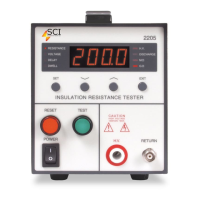
(JSI). These same agencies may also require that an insulation resistance test and high
current ground bond test be performed.
The Dielectric Withstand (Hipot) Test....
The principle behind a dielectric voltage-withstand test is simple: if a product will
function when exposed to extremely adverse conditions, it can be assumed that the
product will function in normal operating circumstances.
The most common applications of the dielectric-withstand test are:
Design (performance) Testing.... determining design adequacy to meet service
conditions.
Production Line Testing.... detecting defects in material or workmanship during
processing.
Acceptance Testing.... proving minimum insulation requirements of purchased parts.
Repair Service Testing.... determine reliability and safety of equipment repairs.
During a dielectric voltage-withstand test, an electrical devise is exposed to a voltage
significantly higher than it normally encounters. The high voltage is continued for a
given period of time.
If stray current flow remains within specified limits during the time the component is
tested, the device is assumed to be safe under normal conditions.
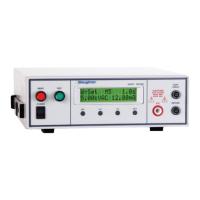
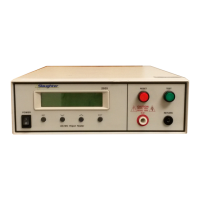
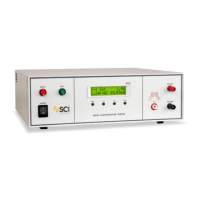
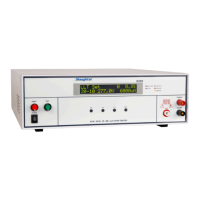
The equipment used for this test, a dielectric-withstand tester, is often called a "Hipot"
(for high potential tester). The "rule of thumb" for testing is to subject the product to
twice its normal operating voltage, plus 1,000 volts. However, specific products may be
tested at much higher voltages than 2X operating voltages + 1,000 volts.


 To Next Page