A-2
DNW-A75/A75P
AT
Head
AT
Erase
Head
CTL
Head
Full
Erase
Head
Betacam SP
Tape Speed 101.51 mm/s
Azimuth
15.264°
4.621°
0.4
Audio CH2
Y Track
C Track
4.681°
Audio CH1
Betacam SX
Tape Speed 59.575 mm/s
AUX
70.057
37.464
36.358
1.142
3.015
165.7u
80.5u
86u
73u
0.7
2.653
11.306
11.85
12.45
12.65
32u
36.358
108.663
Head Travel
Azimuth
15.15°
1.1
AT
Head
AT
Erase
Head
CTL
Head
Full
Erase
Head
Tape Speed 118.6 mm/s
Betacam SP
Azimuth
15.264°
4.621°
0.4
Audio CH2
Y Track
C Track
4.679°
Audio CH1
Tape Speed 59.515 mm/s
Betacam SX
AUX
70.057
37.464
36.358
1.142
3.015
161.4u
80.5u
86u
73u
Control
0.7
2.653
11.306
11.85
12.45
12.65
32u
36.358
108.663
Head Travel
Azimuth
15.15°
1.1
525/60 System
625/50 System
Time Code
Control
Time Code
Control
Time Code
Control
Time Code
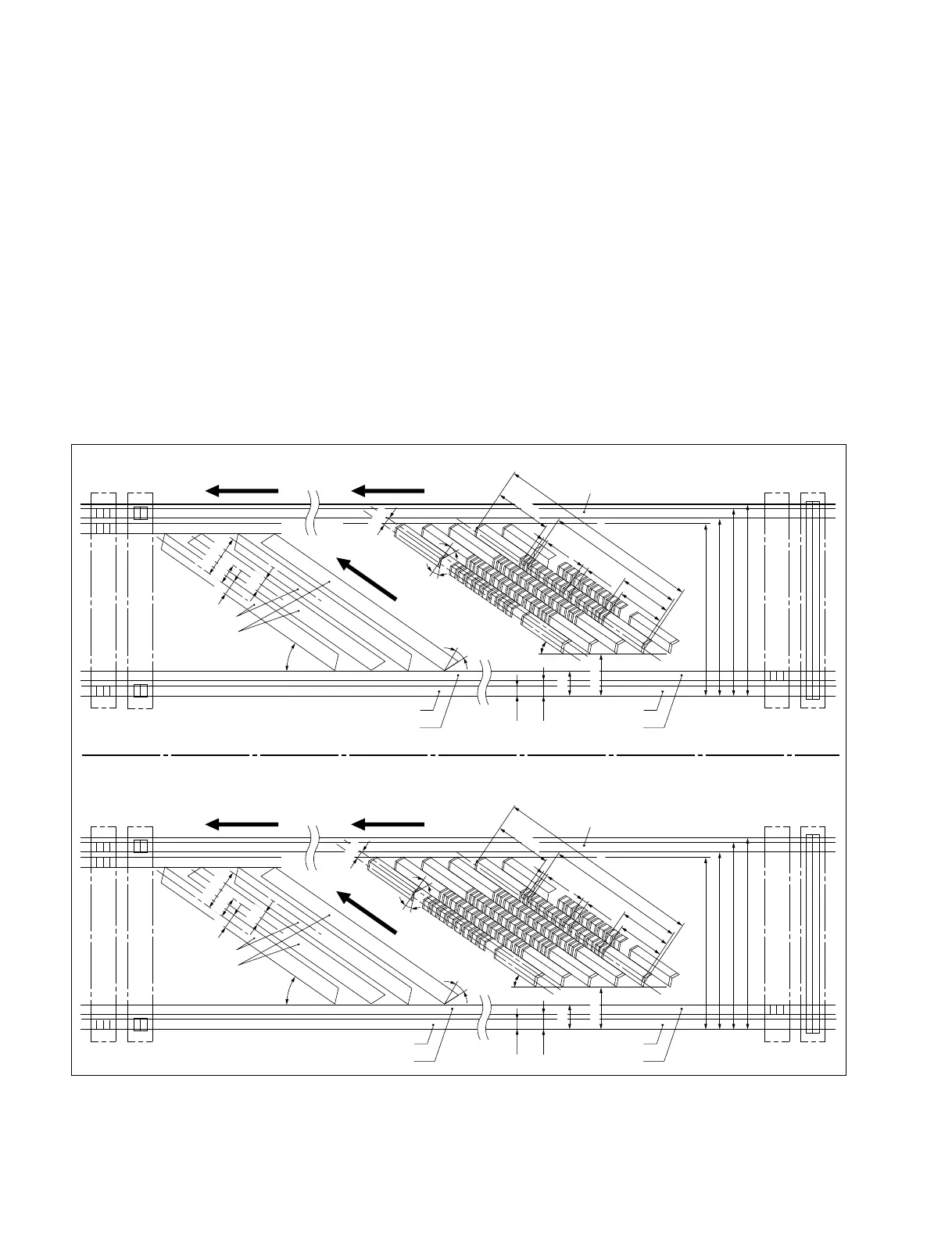
Footprint of Longitudial Track
The footprint of the Betacam SX format has three longitu-
dinal tracks (control track, time code track, and AUX
track). These tracks coincide with the footprint of the
Betacam/Betacam SP format (except audio CH1 track) .
In this unit, the all longitudinal tracks of the Betacam/
Betacam SP format can be played back with additional
stationary head (AT head) which play back audio CH1
track of the Betacam/Betacam SP format to the Betacam
SX VTR.
A-2. Recording Format
Fig.A-2-1. Footprint
Reference
The drum diameter of the Betacam SX VTR is larger than
that of the Betacam/Betacam SP VTR as approximately
9%.
Therefore the helical track of the Betacam/Betacam SP
format is played back with a time-compressed signal as
9%.
(Since the relative speed of the head to tape increases
proportionally to the drum diameter even if the drum
rotation and the tape speed is made same as the Betacam
SX format.)
This playback signal is extended time by a signal process-
ing circuit in the next stage (TBC*), and output.
*TBC: Time Base Corrector


 To Next Page