OPERATION
Axio Imager Illumination and contrast methods Carl Zeiss
M70-2-0020 e 06/2009 430000-7344-001 177
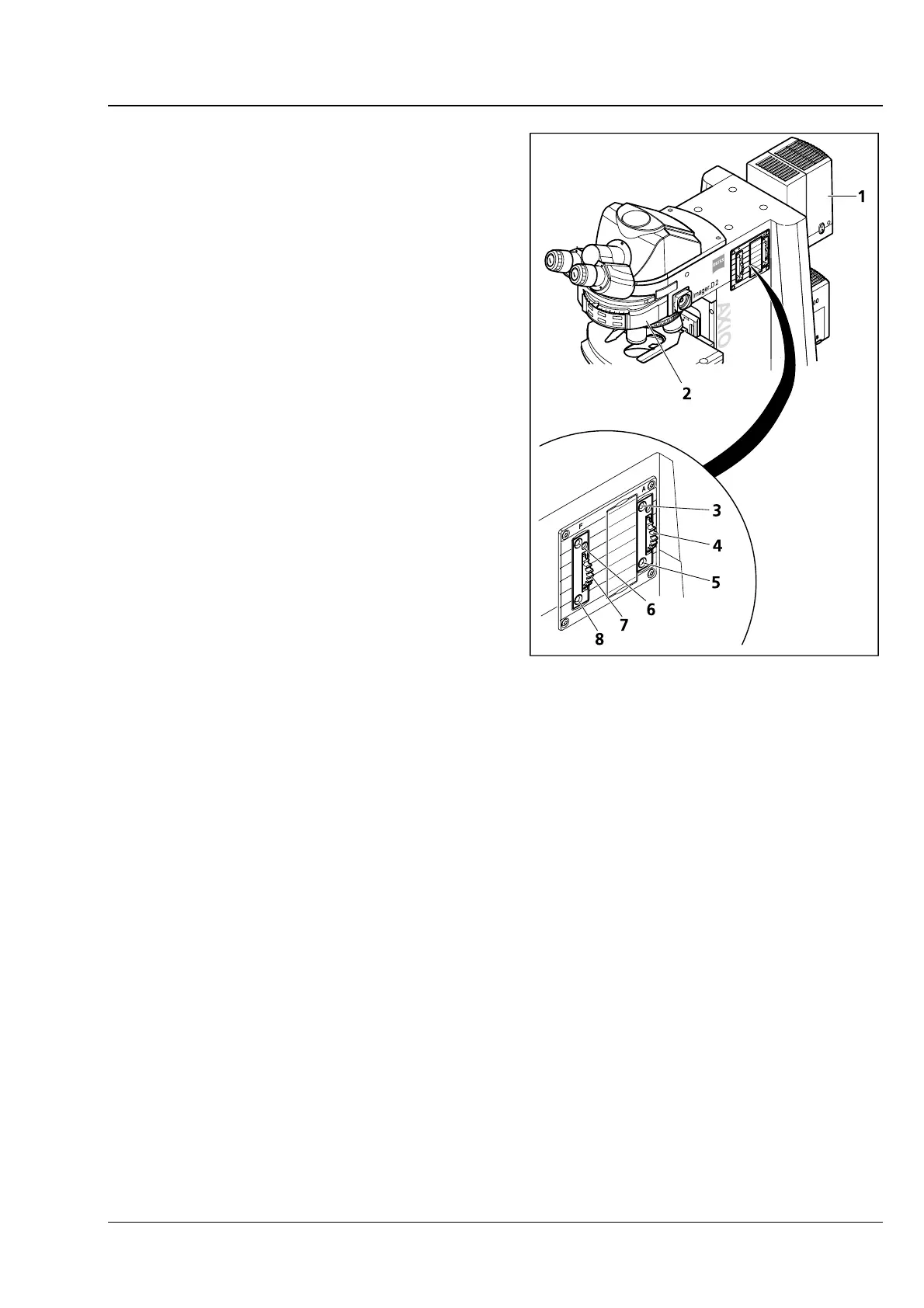
• Switch on the HBO 100 mercury vapor short-arc
lamp (
4-134/1) and allow it to warm up to
operating temperature for about 15 minutes.
• On the reflector turret (4-134/2), select the
reflector module FL P&C containing the desired
fluorescence filter combination (depending on
the desired kind of excitation) and swivel it in.
• Remove the reflected-light shutter RL from the
light path in the reflected-light illuminator and
close the transmitted-light shutter TL.
• Remove one eyepiece from the tube and set the
aperture diaphragm with your eye. For that,
open the aperture diaphragm (
4-134/4) until it
clears the full exit pupil of the objective. Center
the aperture diaphragm to the exit pupil using
the two centering screws (
4-134/3 and 5), if
necessary.
• Reinsert the eyepiece in the tube and close the
luminous-field diaphragm (
4-134/7) until it is
visible in the field of view.
• Use the two centering screws (4-134/6 and 8)
to center the luminous-field diaphragm to the
edge of the field of view.
• Open the luminous-field diaphragm until it just
disappears from the field of view or, if there is a
risk of specimen bleaching, close it so far that it
is visible in the field of view.
• Finally, refocus on the specimen and optimize
the position of the HBO 100 collector as
described in Section
3.31.3. Adjust the collector
in such a manner that the field of view is
illuminated as evenly as possible when using the
short-wave excitation reflector module. When
you use long-wave excitation modules,
correction of the collector position is not
required.
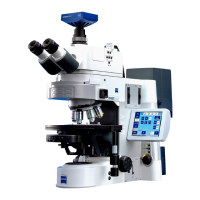
Fig. 4-134 Components for epi-fluorescence
on Axio Imager



 To Next Page