System Planning 70
System Planning
Site planning
This section describes factors to be considered when planning the proposed link end sites, including
grounding, lightning protection, and equipment location for Outdoor Units (ODUs) and power supply
units (PSU).
Grounding and lightning protection
Warning
Electro-magnetic discharge (lightning) damage is not covered under warranty. The
recommendations in this guide, when followed correctly, give the user the best protection
from the harmful effects of EMD. However, 100% protection is neither implied nor possible.
Structures, equipment, and people must be protected against power surges (typically caused by
lightning) by conducting the surge current to the ground via a separate preferential solid path. The actual
degree of protection required depends on local conditions and applicable local regulations. To
adequately protect a 60 GHz cnWave installation, both ground bonding and transient voltage surge
suppression are required.
Full details of lightning protection methods and requirements can be found in the International Standards
IEC 61024-1 and IEC 61312-1, the U.S. National Electric Code ANSI/NFPA No. 70-1984, or section 54 of the
Canadian Electric Code.
Note
International and national standards take precedence over the requirements in this guide.
Lightning protection zones
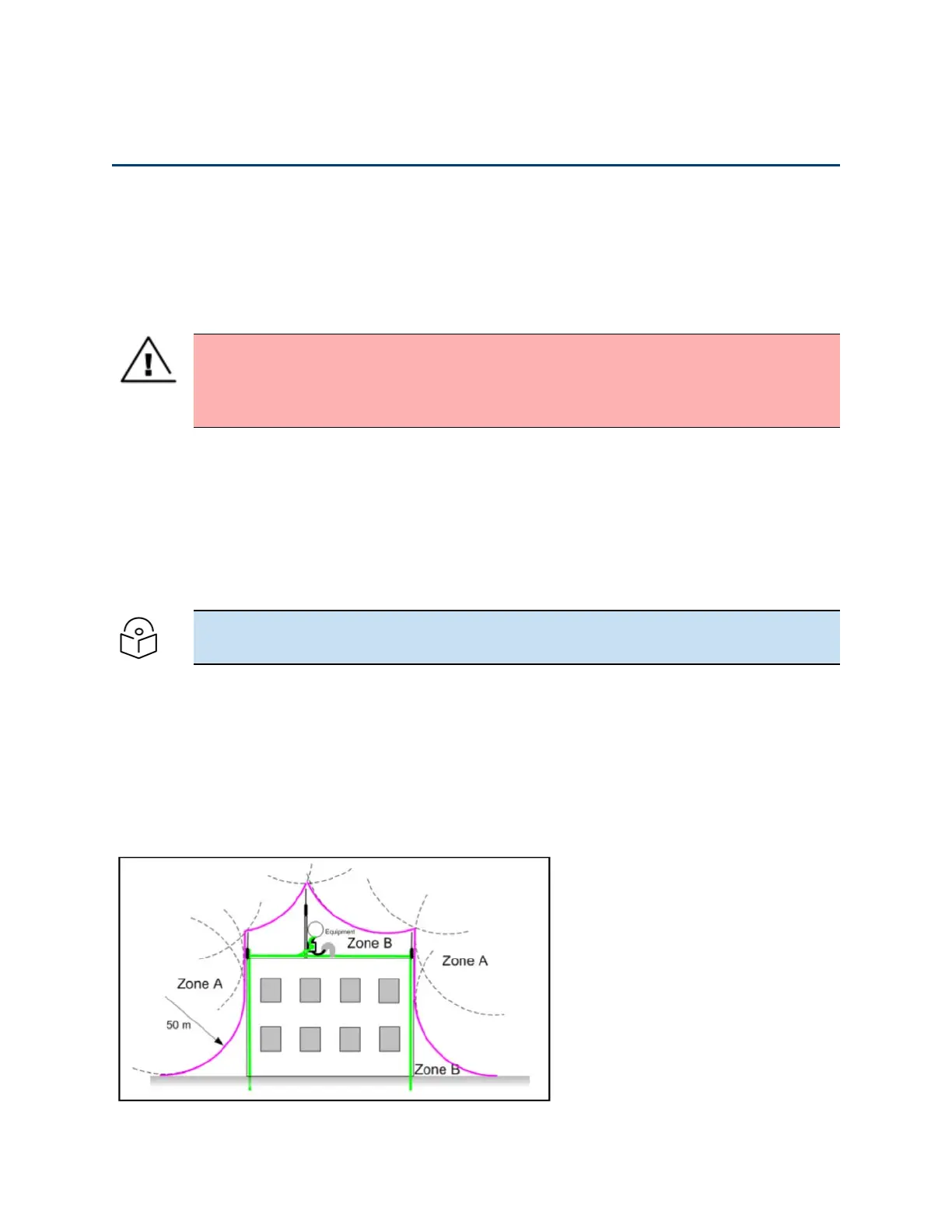
Use the rolling sphere method (Rolling sphere method to determine the lightning protection zones) to
determine where it is safe to mount equipment. An imaginary sphere, typically 50 meters in radius, is
rolled over the structure. Where the sphere rests against the ground and a strike termination device
(such as a finial or ground bar), all the space under the sphere is in the zone of protection (Zone B).
Similarly, where the sphere rests on two finials, the space under the sphere is in the zone of protection.
Figure 49:
Rolling sphere method to determine the lightning protection zones




 To Next Page