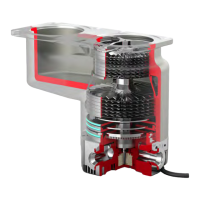
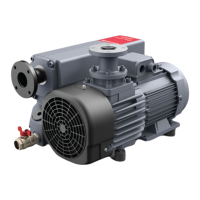
CAUTION: CONDENSATION IN PUMP
Risk of damage to equipment. Condensaon can occur if you use a water-cooling
block in a high humidity environment. Protect the pump and other equipment by
considering the design of the installaon.
Pipes in the water-cooling circuit can get blocked if the cooling water has too much
calcium carbonate or large parcles. Corrosion of the water-cooling circuit can occur if
the cooling water has too less quanty of calcium carbonate and oxygen. A drinking
water of a good quality is applicable. If in doubt, check the quality of the cooling water
supply. If necessary, do the treatment and ltraon.
1.
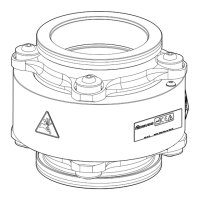
Connect the cooling water supply to the water cooler at the pump. Use one of the
two push‑t connectors on the water cooler for the water supply or return
connecons.
2.
Push the nylon hose (approximately 10 mm outer diameter) into the ends of the
hose connectors of the water cooler at the pump. You can also remove the hose
connectors from the water cooler to make a connecon to the 1/8 inch BSP female
threaded installed on the water cooler.
To prevent the breaking of the cooling water circuit when you remove the pump for the
maintenance, remove the two M6 screws. Remove the water cooler from the pump.
Table 19
Water cooling block supply requirements
Parameter Specicaon
Quality Mechanically and opcally clean with no
deposits or turbidity
pH Value 6.0 to 8.0
Maximum calcium carbonate
concentraon
75 parts per million
Maximum chloride concentraon 100 parts per million
Minimum oxygen concentraon 4 parts per million
Minimum water-cooling ow rate (at 15
°C)
15 l h
-1
Water temperature range 10 °C to 40 °C
Maximum water pressure
5 bar (gauge), 72.5 psig, 5 x 10
5
Pa gauge
Materials exposed to cooling water Nickel plated brass
Page 57
B8G000880_D - Installaon



 To Next Page