7. Maintenance
WARNING: PERSONAL PROTECTIVE EQUIPMENT
Risk of injury. Use personal protecve equipment when you remove the pump to
prevent injury from failed components and possible accumulaon of hazardous
materials. Check that the pump is vented to atmosphere at a safe temperature. Be
careful of possible spillages, sharp edges and debris. Removal of the pump inlet
screen will expose the risk of injury from sharp edges.
WARNING: MAINTENANCE SAFETY
Risk of injury. Allow the pump rotor to stop before you disconnect the logic interface
cable from the power supply. Isolate other power sources. Remove the pump from
the vacuum system for maintenance or fault nding procedures.
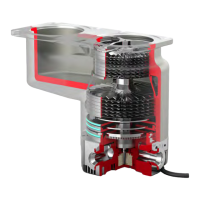
7.1 Bearing and oil cartridge maintenance
Replace the oil cartridge and oil-lubricated bearing when its service life ends. This is
approximately aer 35,000 hours.
When the oil cartridge or bearing are necessary to replace, we recommend you to:
▪
send the pump to our Service Centre for a bearing or oil cartridge replacement.
▪
purchase an oil cartridge or bearing service kit and replace the bearing or oil
cartridge on-site.
Refer to Service on page 97.
7.2 Rotor life
The fague life of Turbomolecular pump rotors is approximately 40,000 to 50,000 cycles.
As a precauonary measure, we recommend you to return the pumps for a major
service (rotor replacement) aer 20,000 cycles of acceleraon to full speed and back to
a stop, or aer ten years of use, whichever occurs rst.
7.3 Cleaning the pump
CAUTION: CLEANING SOLUTIONS
Risk of damage to equipment. Clean the external surfaces of the pump in a well
venlated locaon. When using cleaning soluons and solvents to clean the pump,
obey the precauons given by the manufacturer. Do not inhale parculates which can
be in the pump.
Do not clean the parts of the pump other than external surfaces. Use of organic
solvents can damage the internal pump components. Do not use abrasive materials
to clean the pump parts.
Page 82
B8G000880_D - Maintenance



 To Next Page