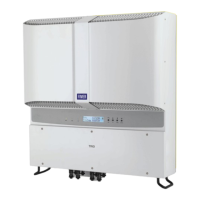
FIMER_PVS-175-TL A.1 Version_Product manual_EN_RevC-
F
32
Power derating
In order to allow inverter operation in safe thermal and electrical conditions, the unit automatically
reduces the value of the power fed into the grid.
Power derating may occur due to:
• Adverse environmental conditions (thermal derating)
• Percentage of output power (value set by the user)
• Grid voltage over frequency (mode set by user)
• Grid overvoltage U>10min Der. (enabling carried out by user)
• Anti-islanding
• Grid under voltage
• Input voltage values too high.
• High input current values.
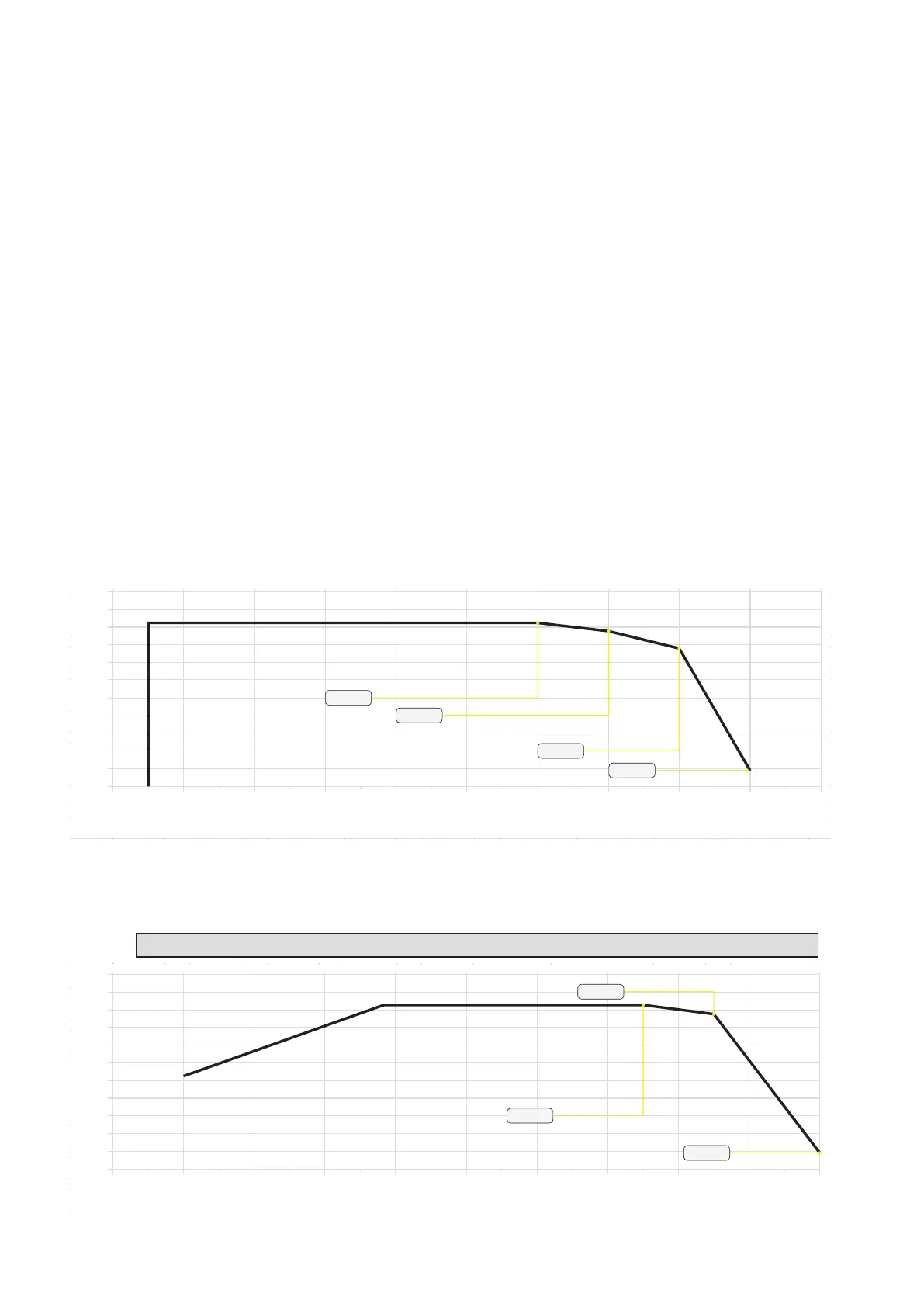
Power derating due to environmental conditions
The power reduction value and the inverter temperature at which it occurs depend on the ambient
temperature and on many operating parameters. Example: input voltage, grid voltage and power
available from the photovoltaic field.
The inverter can therefore reduce the power during certain periods of the day according to the value
of these parameters. The graph shown below the power reduction in relation to the ambient temperature
at 1150 Vdc input voltage.
-30
-22
-20
-4
-10
14
0
32
10
50
20
68
30
86
40
104
50
122
60
140
70
158
60
40
20
0
80
100
120
160
140
180
200
220
Ambient temperature (°C / °F)
155 kW
18.5 kW
175 kW
185 kW
Power derating due to the input voltage
The power reduction occurred for too high or too low DC input voltage values is adjusted automatically.
NOTE – D Power reduction behaviour is guaranteed only in case of balanced input channels.
500 600 700 800 900 1000 1100 1200 1300 1400
60
40
20
0
80
100
120
160
140
180
200
220
Input voltage (Vdc)
18.5 kW
175 kW
185 kW


 To Next Page