FIMER_PVS-175-TL A.1 Version_Product manual_EN_RevC-
F
58
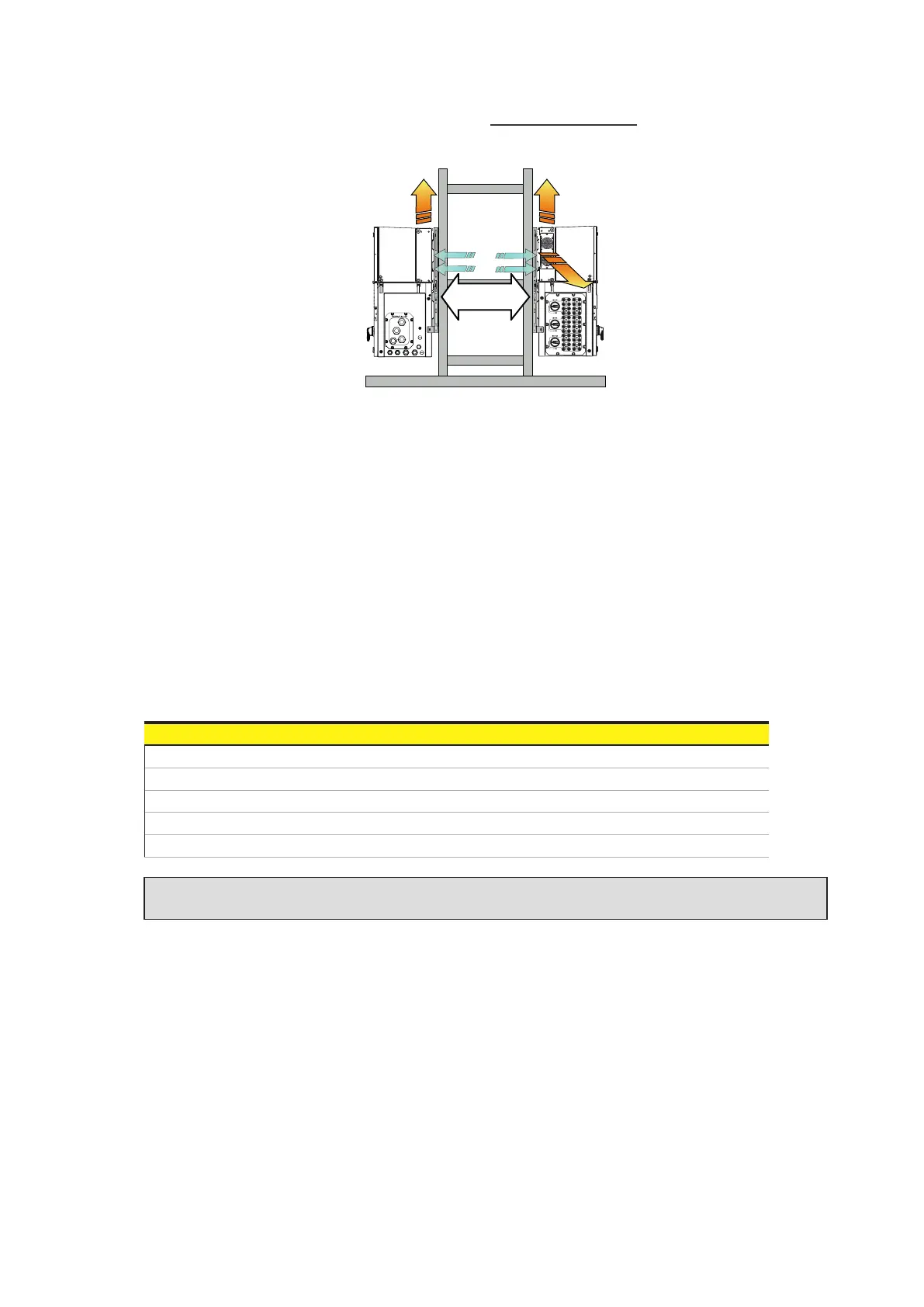
be composed of a 2 or 3 frame supports (refer to “Bracket assembly” paragraph). In this case the
minimum recommended clearance distance between the units in order to avoid the use of an air
deflector is 30cm.
30 cm
Wireless signal environmental checks
The inverter can be commissioned and monitored using the wireless communication channel. The
WLAN board of the inverter uses radio waves to transmit and receive data. It is therefore important
to assess this factor in order to have an optimal installation.
Walls made in reinforced concrete and surfaces covered with metal (doors, shutters, etc.) might
significantly reduce the reach of the device which, even in optimal conditions, is approximately 40
metres in free space.
Before installing the inverter it is therefore recommended to check the strength of wireless signal by
means a mobile device (smartphone, tablet or notebook) by connecting it to the wireless router from
a position which is close to the intended installation position of the inverter.
The radio signal level between the inverter and the wireless router can be improved in a two ways:
1. Find a new position for the router considering the different types of materials which the radio signal
will have to pass through
Material Relative signal reduction
Open field 0% (strength of approximately 40 metres)
Wood / Glass From 0 to 10%
Stone / Plywood From 10 to 40%
Reinforced concrete From 60 to 90%
Metal Up to 100 %
NOTE – D The quality of the RF signal can be assessed during the installation stage where
the signal is displayed in dBm.
2. Install a wireless signal repeater and place it in an area between the inverter and the router, trying
in this way to skip the most critical obstacles.
Installations above 2000 metres
Due to the rarefaction of the air (at high altitudes), particular conditions may occur and it should be
considered when choosing the place of installation:
• Less efficient cooling and therefore a greater likelihood of a device power reduction (derating) occur
due to high internal temperatures.
• Reduction in the dielectric resistance of the air which, in the presence of high operating voltages
(DC input), can create electric arcs (electrical discharges) that may damage the device.
When the altitude increases, the failure rate of some electronic components increases exponentially
due to cosmic radiation.


 To Next Page