
 Need help?
Do you have a question about the Fujitsu ETERNUS CS800 and is the answer not in the manual?
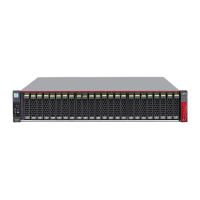
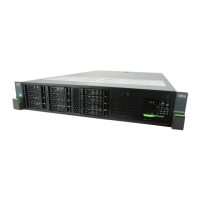
Describes the server systems used, PRIMERGY RX2540 M1, and their role in controlling the CS800 software.
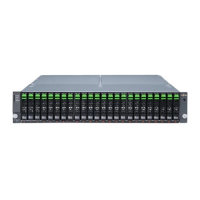
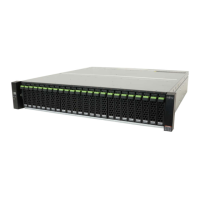
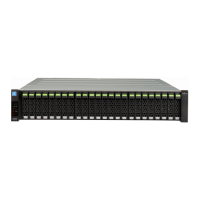
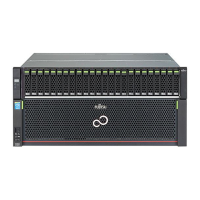
Describes Entry and Scale models' storage modules, including JX40 S2 and DX100 S3 variants.
Provides step-by-step instructions for turning the system on and shutting it down, including remote management.
Guides on selecting rack positions, allowing vertical space, and considering weight for stability.
Provides CAUTIONS and instructions for installing server modules and storage modules in PRIMECENTER racks.
Provides cabling diagrams for different ETERNUS CS800 S6 configurations and explains mains connection setup.
Provides step-by-step instructions for switching on the system and background initialization.
Guides on connecting a notebook via Ethernet and configuring network settings in Windows for initial setup.
Details the steps for running the Getting Started Wizard, including login, welcome, license agreement, and access control.
Guides on configuring ETERNUS CS800 for NAS shares, including Windows domain joining and user management.
Guides on configuring VTL partitions, adding drives, storage slots, and mapping partitions to hosts.
Guides on configuring OST storage servers, LSUs, users, and target IP mapping for backup applications.
Guides on configuring replication targets and allowed sources, managing replication activity.
Explains data replication capabilities for disaster recovery, allowing data copies on another system at scheduled intervals.
Manages outgoing replication for NAS shares or VTL partitions, allowing scheduling and status viewing of jobs.
Manages incoming replication for NAS shares, allowing recovery or failback if the source system is unavailable.
Manages incoming replication for VTL partitions, allowing recovery or failback if the source system is unavailable.
Allows generating and downloading diagnostic files and performing healthchecks for data deduplication blockpool integrity.
Manages space reclamation activity, allowing start/stop and monitoring of progress to free up disk space.
Provides methods to securely and permanently erase sensitive data, including file deletion and tape cartridge erasure.
Allows uploading new software images to update the system software, including pre-flight checks and installation steps.
Guides on rebooting or shutting down the ETERNUS CS800 system, with CAUTIONs about backup/replication jobs.
Provides general actions for troubleshooting, including viewing service tickets and checking hardware status.
Describes handling Customer Replaceable Units (CRUs), identifying defective CRUs, and replacing them.
Lists required TCP and UDP ports that must be opened for management, replication, and data traffic to function correctly.
 General
| Model | ETERNUS CS800 |
|---|---|
| Data Compression | Yes |
| Supported Protocols | NFS, CIFS |
| Supported Interfaces | 10 Gigabit Ethernet |
| RAID Levels | RAID6 |
| Encryption | Yes |
| Data Deduplication | Yes |
| Replication | Yes |
| Power Supply | Redundant Power Supplies |
| Scalability | Scalable with additional expansion units |
| Management Software | ETERNUS CS Management Software |





 To Next Page
