2.0 — 48 — 12 October 2012
Flight behavior
Climb
6.3 Climb
The X100 first flies horizontally. In the next phase, it climbs up.
C
AUTION: Make sure that:
● There are no obstacles on the path of the aircraft
● There is enough horizontal and vertical space available for the turn from 75m AGL to the
preferred height
6.4 Cruise flight
Once the aircraft passed its first waypoint, the second waypoint is initiated. From now on, the
aircraft will follow the preprogrammed flight path.
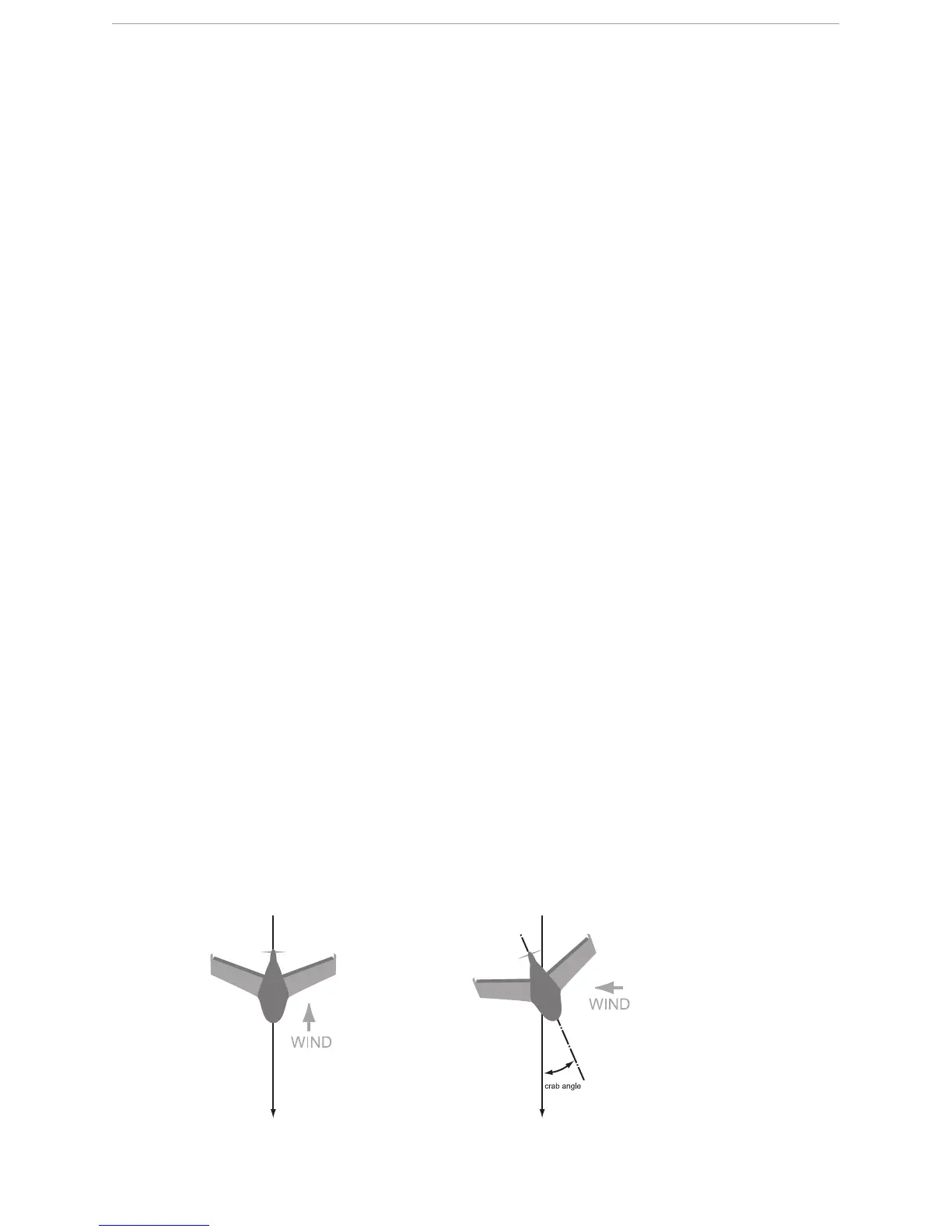
Ideally, the flight must be programmed to have a 90° angle between the route and the wind
direction (crab angle). This way, the X100 will:
● Fly a stable course along the flight path
● Be well positioned to take pictures
● Use less battery energy to make turns
When flying with crosswinds above 50 km/h (6 bft), the aircraft has a crab angle above 30 °
which will result in an unstable flight. This has the following consequences for the image acqui-
sition:
● Reduced picture quality
● Overlap not optimal due to constant pitch corrections
6.4.1 Crab angle
When flying with crosswind, an aircraft will put its nose in the wind as much as possible to keep
flying along the flight path. The crab angle is the angle between the nose of the aircraft
(=coarse) and the flight path (=route).
Flight path with frontal wind and crosswind



 To Next Page