MX8000 Installation and Operation Guide
1–6
numbers. When using the MX8000-LRR with the VPN feature, 685 or CAPS automation protocol, and
Virtual Receiver Line numbers, assign the MX8000-LRR as line 8.
• When using the 685, CAPS, or CP-220 automation protocol, a limit applies to the number of line cards
that should be used for proper processing by most automation systems.
– The following examples apply when NOT using Virtual Receiver/Line numbers while using 685,
CAPS, or CP-220 automation protocols and are currently supported by most automation systems.
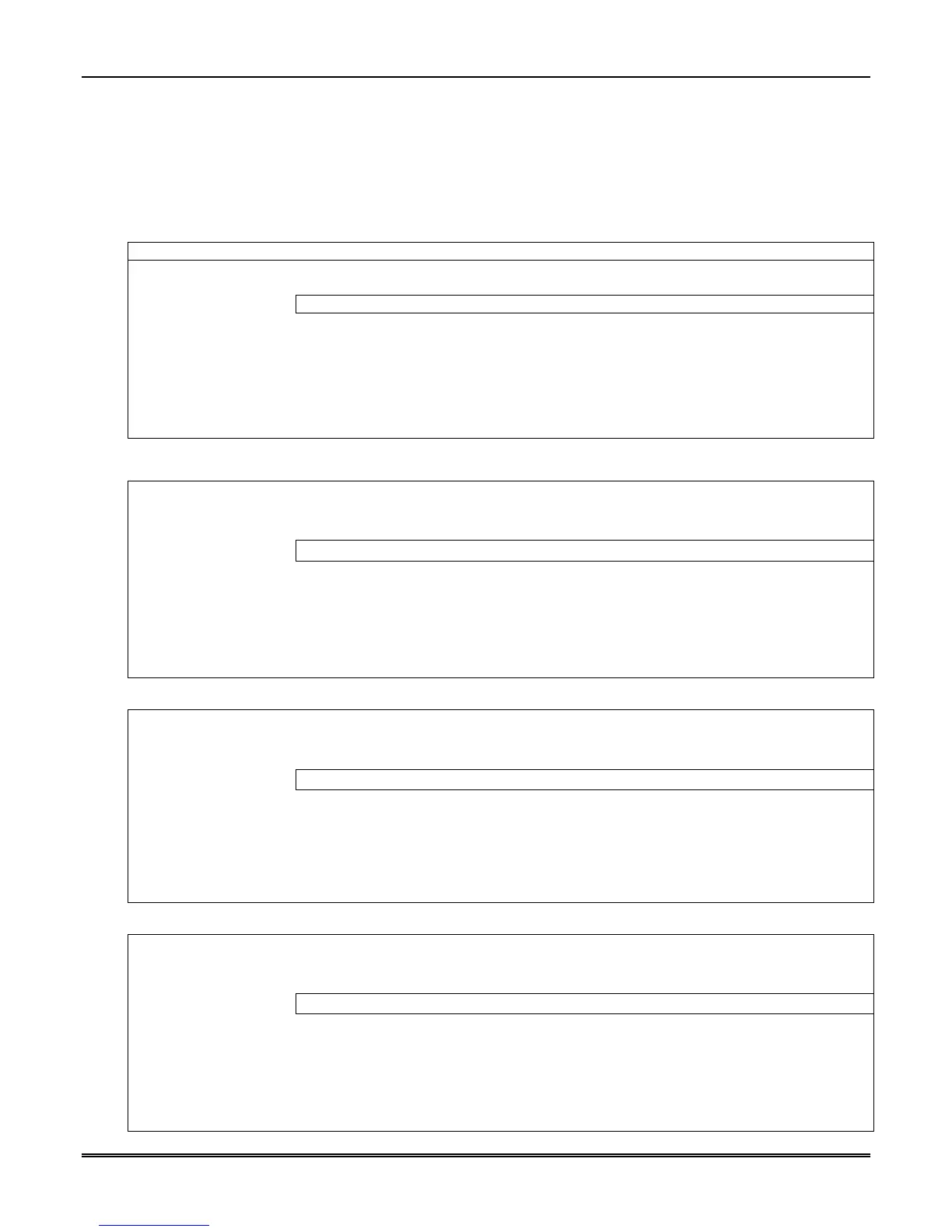
685 OR CAPS MODES - The example below allows up to 3 MX8000-LC3 cards giving 8 usable lines:
For MX8000-LC3 (If using an LRR card, insert it as a replacement for the LC3 in slot 3.)
Line Number 1 4 7 10 13 16 19 22 25 28 31 34
MX8000-LC3 (Y = used) Y Y Y N N N N N N N N N
Device Slot
1 2 3 4 5 6 7 8 9 10 11 12
Alarms Report as Lines: 1,2,3 4,5,6 7,8
Line Faults as Line: 1,2,3 4,5,6 7,8
Notes: •
••
• Cards in slot 4 or higher may not be supported by your automation system when using 685, CAPS, or
CP-220 automation protocol.
• Cards in slot 4 or higher cannot report alarms or line troubles correctly when ADEMCO 685 or CAPS
automation protocol is chosen.
• Line 9 in slot 3 may not be used when using 685, CAPS, or CP-220.
CP-220 MODE - The example below allows up to 5 MX8000-LC3 cards giving 15 usable lines:
For MX8000-LC3 (LRR card not supported by CP-220 mode.)
Line Number 1 4 7 10 13 16 19 22 25 28 31 34
MX8000-LC3 (Y = used) Y Y Y Y Y N N N N N N N
Device Slot
1 2 3 4 5 6 7 8 9 10 11 12
Alarms Report as Lines: 1,2,3 4,5,6 7,8,9 A,B,C D,E,F
Line Faults as Line: 1,2,3 4,5,6 7,8,9 A,B,C D,E,F
Notes: •
••
• Cards in slot 6 or higher may not be supported by your automation system when using CP-220
automation protocol.
• Cards in slot 6 or higher cannot report alarms or line troubles correctly when CP-220 automation protocol
is chosen.
685 OR CAPS MODES - The example below allows 3 MX8000-LC1 cards only:
For MX8000-LC1 (If using an LRR card, insert it as a replacement for the LC1 in slot 3.)
Line Number 1 4 7 10 13 16 19 22 25 28 31 34
MX8000-LC1 (Y = used) Y Y Y N N N N N N N N N
Device Slot
1 2 3 4 5 6 7 8 9 10 11 12
Alarms Report as Lines: 1 4 7
Line Faults as Line: 1 4 7
Notes: •
••
• Cards in slot 4 or higher may not be supported by your automation system when using 685, or CAPS
automation protocol.
• Cards in slot 4 or higher cannot report alarms or line troubles correctly when ADEMCO 685 or CAPS
automation protocol is chosen.
CP-220 MODE - The example below allows 5 MX8000-LC1 cards only:
For MX8000-LC1 (LRR card not supported by CP-220 mode.)
Line Number 1 4 7 10 13 16 19 22 25 28 31 34
MX8000-LC1 (Y = used) Y Y Y Y Y N N N N N N N
Device Slot
1 2 3 4 5 6 7 8 9 10 11 12
Alarms Report as Lines: 1 4 7 A D
Line Faults as Line: 1 4 7 A D
Notes: •
••
• Cards in slot 6 or higher may not be supported by your automation system when using CP-220
automation protocol.
• Cards in slot 6 or higher cannot report alarms or line troubles correctly when CP-220 automation protocol
is chosen.



 To Next Page