83
10.5 On-The-Fly (OTF) Processing
On-The-Fly processing is becoming more prevalent in today’s manufacturing environment with the
continued demand to decrease process cycle time.
This process is similar to Point and Shoot processing in that the optics are manipulated by a motion
device such as a robot or gantry; although instead of stopping motion before processing begins, the
Scanner processes while in motion.
The following sections provide examples and details relating to process requirements for On-The-Fly
processing.
10.5.1 Robotic On-The-Fly Processing
10.5.1.1 Robotic On-The-Fly Example System
Please refer to the example system diagram in section 10.4.1.1 for a system layout. The only additional
connection for Robotic On-The-Fly processing is an Ethernet connection from the robot controller to the
computer running IPGScan. This connection is for capturing robot trajectory information.
10.5.1.2 Hardware
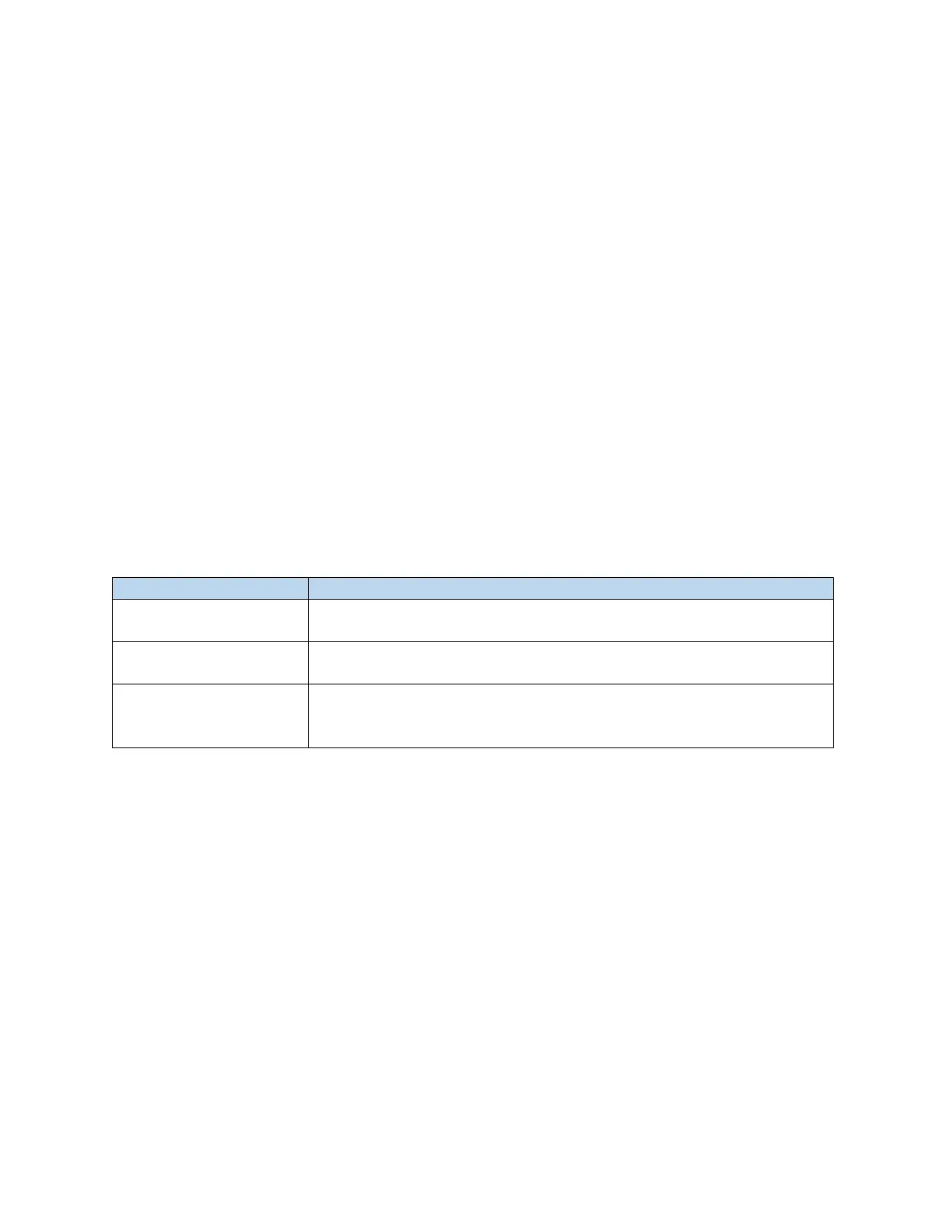
In addition to the outlined items in Table 10-1, Table 10-3 outlines the minimum required number of
Robot I/O given the proper External Control Interface.
Table 10-3 Required Hardware - Robotic On-The-Fly Processing
24V Interface: 2 outputs are required
Extended IO Interface: 2 outputs are required
24V Interface: 3 inputs are required, 4 inputs can be used
Extended IO Interface: 3 inputs are required, 16 can be used
24V Interface or
Extended IO Interface
Interface between robot signals and scanner signals. Cables between the
robot I/O, external interface board, and the Scan Controller are supplied
by the customer.
Sometimes users will use a PLC as a pass-through for digital signals. This is
acceptable in most cases but will result in inconsistent process timing with On-The-
Fly processing. DO NOT RUN THE START BIT FROM THE ROBOT THROUGH A PLC TO
THE 24V INTERFACE BOARD OR EXTENDED IO INTERFACE BOARD. IT SHOULD BE A
DIRECT DISCRETEE IO CONNECTION FOR CONSISTENT PROCESSS TIMING.
10.5.1.3 Optional Connections
Because digital I/O is relatively cheap and easy to setup, it never hurts to configure the system so it has
the ability to process with Point and Shoot. This would entail using 12 digital outputs and 4 digital inputs
for the 24V interface or 19 digital outputs and 16 digital inputs with the Extended IO Interface instead of
the outlined quantities in Table 10-3. Refer to Table 10-2 for Robotic Point and Shoot required
hardware, which will allow the use of On-The-Fly processing.


 To Next Page