DCE80-100E
Technical Handbook
Parking brake system
Description
26
P.Group 70
TDCE01
04GB
Parking brake
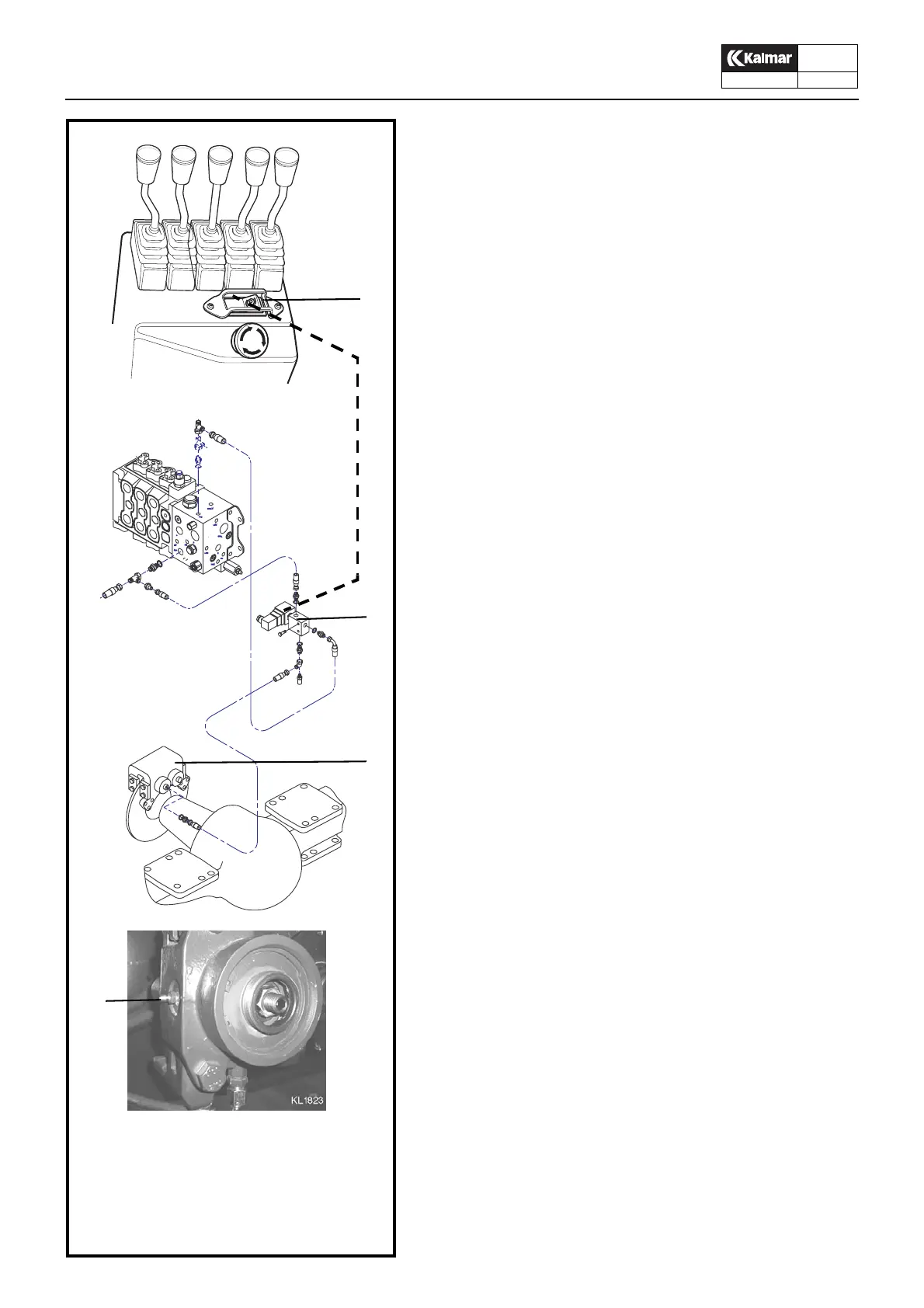
The parking brake consists of a disc brake with a brake cylinder
on the drive axle input shaft. The brake is applied by a heavy
spring in the brake cylinder.
The parking brake can also be used as an EMERGENCY
BRAKE. During emergency braking, the brake linings are sub-
jected to very heavy wear. The linings should therefore be
checked after any emergency braking operations and changed if
necessary.
The parking brake is released by hydraulic pressure being sup-
plied to the cylinder to counteract the spring force.
The brake is controlled electrically by means of a switch adjacent
to the hydraulic levers. The switch is connected to a solenoid
valve which controls the brake cylinder hydraulic supply and re-
turn.
When the parking brake is applied, the flow of fluid to the brake
cylinder is interrupted and the fluid in the cylinder is discharged
to the tank. The brake is then applied by the spring in the cylinder.
Bleeding and checking the parking brake
1. Release the parking brake
2. Check that the yoke can move freely on its suspension axles.
If not, this mus be remedied.
3. Carefully open the bleed niple 4, see illustration, tighten the
nipple when oil free from any air comes out.
4. Check the plat between between brake pads and brake disc.
the play should be between 1-1.5 mm
Adjust if necessary, see group 40.
Description and adjustment of parking brake cylinder ,
see group 40
Parking brake
1. Switch parking brake
2. Parking brake valve
3. Brake cylinder
4. Bleed nipple
KL1756
KL1739
1
2
3
4



 To Next Page