Saia-Burgess Controls AG
Hardware manual for PCD3 series │ Document 26-789 ENG19│ 2018-06-29
Storage space on the PCD3
PCD3.Mxxx0 Classic CPU and expansion enclosure
3-46
3
3.18 Storage space on the PCD3
3.18.1 Storage types in the Saia PCD
®
systems
A user program may contain various data types. This includes data that is relevant
for a fast regulation process and data records that must be collected over a long
period or saved permanently. Data and web pages to the PCD internal web server
are also to be stored. A backup function for program and data is also important,
e.g.inthelesystem.
Allthesedatatypeshavedierentrequirementsintermsofhardware.For
example, a regulation-relevant process requires a fast memory to calculate and
provide current values.
However,historicaldatarecordsrequiresucientremanentmassmemoryto
cover a long period of time.
Depending on the PCD system, storage is available for all this data in the form
of RAM, FRAM, SRAM, Flash (see glossary in the appendix for details) system-
internally and in the form of pluggable memory.
User memory = RAM
The user memory, which ensures fast access for reading and writing, contains
time-critical content such as media, RAM-DB and RAM texts. However, this
memoryisnotaprogrammableread-onlymemory(PROM)andisbueredby
a battery.
Flash memory
Topreventthelossoftheprogram,aashmemoryforthebackupoftheUser
Program Memory is available as standard onboard each PCD3 CPU.
It is also possible to save DBs to Flash during runtime (data backup or extension
memorybackup).Thus,importantvaluesofregistersandagscanbesavedto
the fash memory at runtime and than later be reloaded.
OnFlash,alesystemmayexist,whichisavailableforwebpagesandlogles
(CSV).
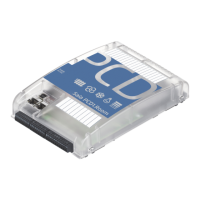
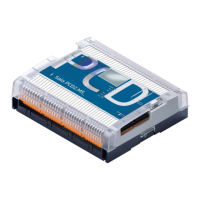
Inadditiontotheashmemoryinstalledon-board,acorrespondingashmemory
for the user backup memory can also be used (see chapter 3.19.1 Optional
memory expansions). The use of these cards makes it possible to transfer the user
programaswellasthecongurationfromonecontrollertoanother.



 To Next Page