M90 Fusion Splicer 7-4 Operating Instructions
Troubleshooting and Care/Maintenance Issue 02/97
"Fixed parameters
(video)"
Optimize if possible the parameters using the LID system as described above. You can
then use the optimized parameters in the video program.
If the LID cannot be used, employ the method described below. This method requires
an external attenuation test set because in the video programs the attenuation display
provides correct results only if the parameters have already been correctly set.
- First make splices with the default values for fusion current and time. Leave the LID
flaps open for the purpose. Do
not
remove the splice from the splicer and do
not
start the tension test.
- Measure the attenuation with the attenuation test set.
- Press button
and initiate "Fuse again" with .
- Measure the attenuation again.
The parameters are correctly set when the attenuation is slightly worse than the first
measurement (by 0.01 to 0.03 dB). If the attenuation stays the same, the fusion current
or the time has been selected too low. If the attenuation increases sharply, the current
or the time is too high. Change either the current (prefusion current and fusion current)
in steps of 0.5 mA or the time in steps of 0.5 s.
You should select the current so that the fusion time is in the range 3 to 5 s.
Fibers with high
core eccentricity
For fibers with high core eccentricity you should use if possible the program "Automatic
fusion time control". If the splice loss is too high and the fusion time tends to be very
close to the minimum fusion time, you should reduce the prefusion and the fusion cur-
rent by 0.5 to 1 mA. For initial trials use the following parameters:
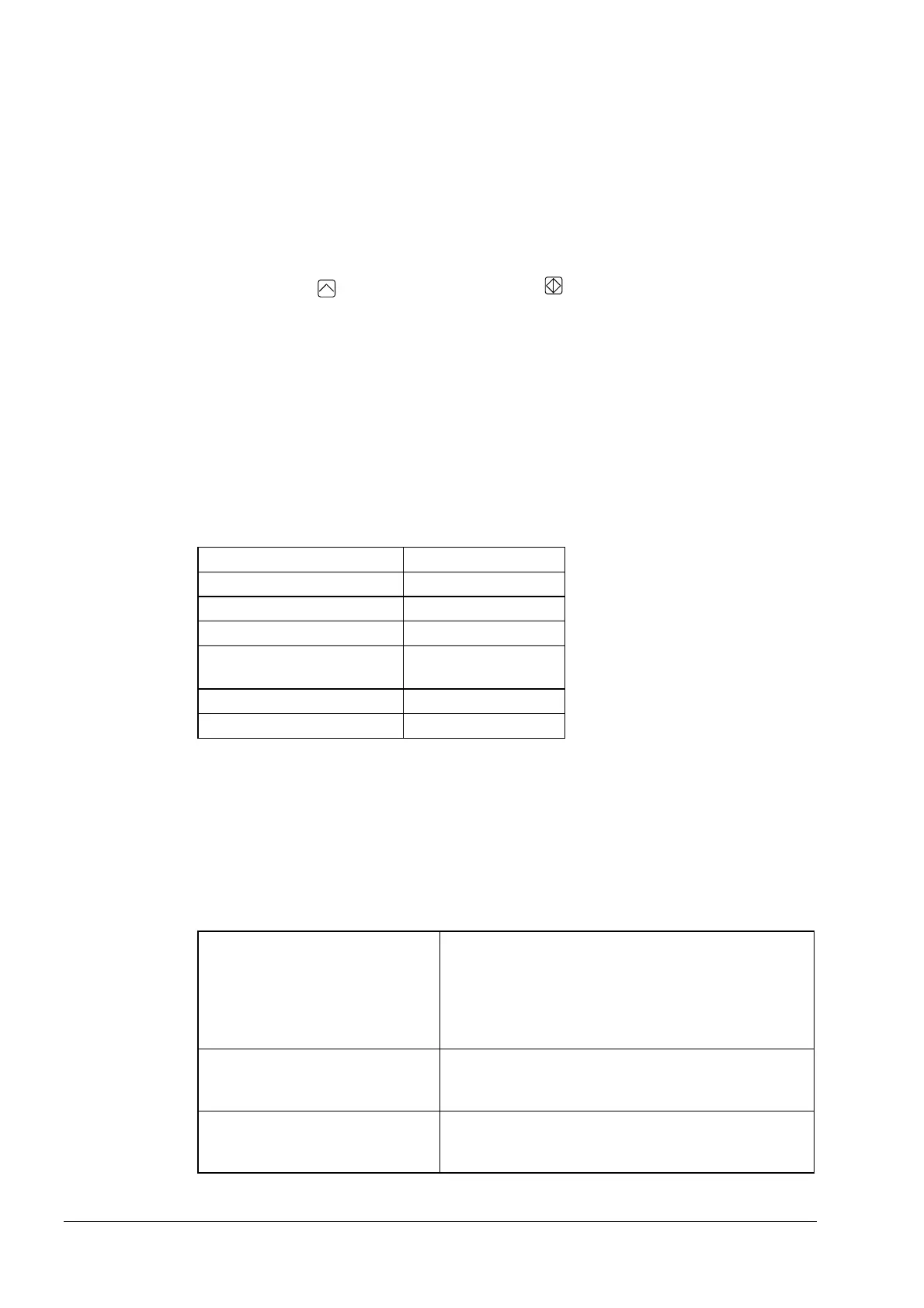
Parameter Value
Prefusion current: 15 mA
Prefusion time: 0.25 s
Fusion current 15 mA
Fusion time: min. 1.0 s
max. 5.0 s
Z-gap: 7 µm
Autofeed: 4.5 µm
Parameter op-
timization for
multimode fibers
With multimode fibers the parameter optimization is largely uncritical as regards the
attenuation. Unlike single-mode fibers it can be assumed that the splice loss is good
whenever the splice is visually ok. It is not therefore necessary to have an attenuation
test set for the optimization.
With multimode fibers the prefusion current is generally lower than the fusion current. In
addition the prefusion time is longer than for single-mode fibers.
During fusion the following problems may occur:
Blistering The splice is much thickened and
uneven. The splice breaks ex-
tremely easily. This problem
occurs mainly on fiber with high
core refractive index (e.g. 62.5 or
63-µm fiber).
Extend the prefusion time in steps of 0.1 s. At the
same time reduce the prefusion current in steps of
0.5 mA. If this is not adequate, reduce also the fu-
sion current in steps of 0.5 mA.
Joints not fused
through
The bright line in the center of
the fiber is interrupted at the
fused joint.
If "fuse again" produces an improvement in each
case, increase the fusion time, otherwise the fusion
current.
Constriction The fiber appears thinner in the
center of the monitor than at the
sides.
Reduce the prefusion current in steps of 0.5 mA.
Artisan Technology Group - Quality Instrumentation ... Guaranteed | (888) 88-SOURCE | www.artisantg.com



 To Next Page