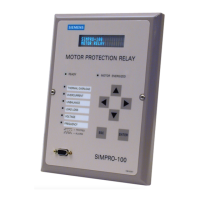
SIMPRO-100
Motor Thermal Element
E
PRIM-2400C 205
E Motor Thermal Element
E.1 Introduction
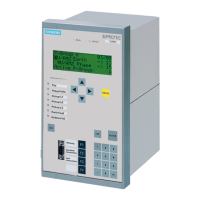
The SIMPRO-100 Relay provides effective motor
thermal protection using a patented protection
algorithm. The relay offers three convenient
methods to set the thermal element. They are:
• Motor ratings method
• Generic thermal limit curve method
• User thermal limit curve method
These setting methods are described in detail in
Chapter 4, page 41. The three methods
accommodate differences in protected motors
and in the amount and type of motor information
available. They also offer the majority of relay
users at least one familiar setting method.
While the implementation details of each setting
method vary, the fundamental thermal element is
the same for all three, so this generalized
discussion applies to all three methods equally.
Regardless of the setting method used, the
thermal element provides motor protection for the
following potentially damaging conditions:
• Locked Rotor Starts
• Running Overload
• Operation Under Unbalanced Currents
• Too Frequent or Prolonged Starting
In order to provide integrated protection for all
these conditions, the thermal element:
• Continuously maintains a numeric estimate
analogous to the heat energy in the motor
• Adjusts the heat estimate based on the
measured positive-sequence and
negative-sequence current flowing in the
motor
• Weights the heating effect of
negative-sequence current as five times the
heating effect of positive-sequence current
when the motor is running
• Weights the heating effects of positive- and
negative-sequence current equally when the
motor is starting
• Models the heat lost to the surroundings
when the motor is running
• Compares the present heat estimate to a
starting trip threshold or a running trip
threshold, depending on the state of the
motor
• Provides a trip output if the present heat
estimate exceeds the present trip threshold
• Provides an alarm output if the present heat
estimate exceeds the present alarm threshold
(user settable as a percentage of the trip
threshold)
• Adjusts the present trip threshold based on
RTD ambient temperature measurement
when enabled
E.2 Purpose of Motor
Thermal Protection
A typical induction motor draws six times its rated
full load current when starting. This high stator
current induces a comparably high current in the
rotor. The rotor resistance at zero speed typically
is three times the rotor resistance when the motor
is at rated speed. Thus, the I
2
r heating in the rotor
is approximately 62 • 3 or 108 times the I
2
r
heating when the motor is running normally.
Consequently, the motor must tolerate an
extreme temperature for a limited time in order to
start. Manufacturers communicate the motor
tolerance through the maximum locked rotor time
and locked rotor amps specifications for each
motor. In a similar manner, the motor
manufacturer communicates the motor’s ability to
operate under continuous heavy load through the
service factor specification.



 To Next Page