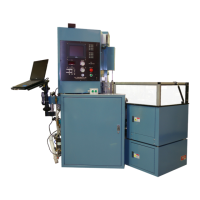
Operation and Maintenance Manual Model 7AA Wafer Grinder
1 - 20 U Version 1.2 - April 18, 1996; Update 11/6/96
APPENDIX TO LOCKOUT SAFETY PROCEDURE:
TRAINING, LOCKOUT/TAGOUT, PER 29 CFR 1910.147
Introduction
On October 30, 1989, the Lockout/Tagout Standard, 29 CFR 1910.147, went
into effect. It was created to help reduce the death and injury rate caused by
the unexpected energization or startup of machines, or the release of stored
energy. The standard covers the servicing and maintenance of machines and
equipment in which the unexpected energization, start-up or release of stored
energy could cause injury [29 CFR 1910.147 (a)(1)(i), 1910.147 (a)(2)(I)].
Normal production operations, cords and plugs under exclusive control, and
hot tap operations are not covered [29 CPR 1910.147 (a)(2)(ii)]. This is
intended to apply to energy sources such as electrical, mechanical, hydraulic,
chemical, nuclear and thermal.
Lockout is the placement of a lockout device on an energy isolation device
(circuit breaker, slide gate, line valve, disconnect switch, etc.) to ensure that
the energy isolating device and equipment being controlled cannot be operated
until the lockout device is removed. A lockout device utilizes a positive means
such as a lock (key or combination type) to hold an energy isolating device in a
safe position and prevent the energization of a machine or equipment. The
lockout device must be substantial enough to prevent removal without use of
excessive force or unusual techniques.
Tagout is the placement of a tagout device (a tag or other prominent warning
device and a means of attachment) on an energy isolation device to indicate
that the energy isolating device and the equipment being controlled may not be
operated until the tagout device is removed. The lockout device shall be used
unless the employer can demonstrate that the utilization of a tagout system will
provide full employee protection. The tagout device shall be non-reusable,
attached by hand, self-locking, and non-releasing with a minimum unlocking
strength of no less than 50 pounds and must be at least equivalent to an all-
environment tolerant nylon cable tie.


 To Next Page