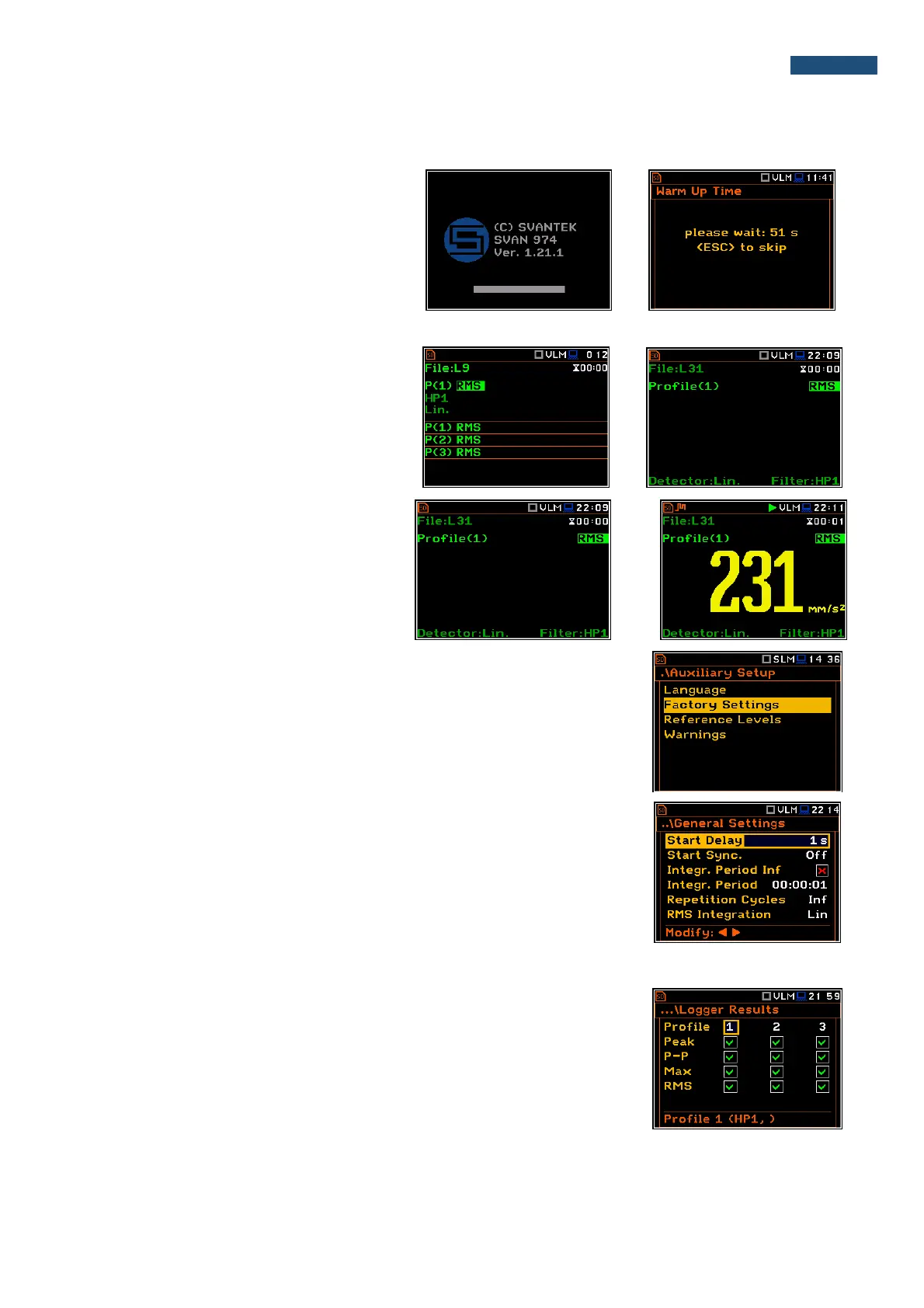
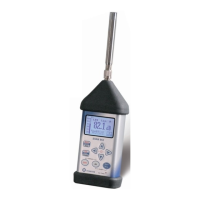
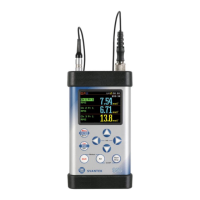
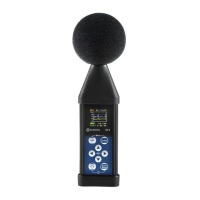
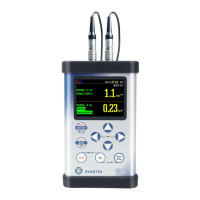
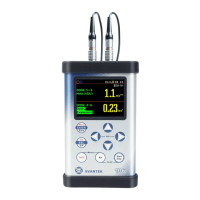
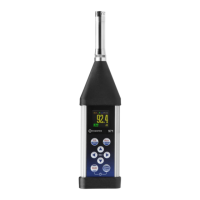
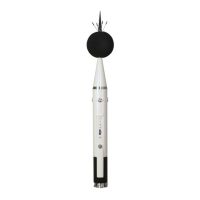
Turning the instrument on
To switch the power on the user should press
the <Alt> and <Start/Stop> push-buttons at
the same time.
The instrument goes through the self-test
routine after switching on, displaying during
this time: manufacturer logo and name of the
instrument.
After the self-test the instrument displays the
last result view which was used just before the
unit had been switched off.
Starting measurement
To start the measurements the user should
press the <Start/Stop> push-button. The
measurement will be performed with the
current instrument settings, which are
preserved in the internal memory of the
instrument.
Setting up the measurement parameters
The instrument as sold has default settings which the user may change, but
always return to them with the use of Factory Settings option in the
Auxiliary Setup menu.
Next chapters of the manual will describe in detail what each parameter means
and how to change the instrument settings.
Main default settings
With default settings, the instrument will measure vibration level by virtual
meters, so called profiles (Measurement Mode: Acceler. IEPE;
Measurement Function: Level Meter) with 1 second delay from the <Start>
push-button pressure (Start Delay: 1 s), 1 second integration time
(Integration Period: 00:00:01), infinitive repetition till press <Stop> push-
button (Repetition Cycle: Inf), linear integration (RMS Integration: Lin), active
logging of the selected results with 1 sek step (Logger: On; Logger Step: 1 s;
Logger Results: Peak, P-P, Max and RMS for all profiles).
Other functions are switched off like:
- measurement trigger (Measurement Trigger: Off),
- logger trigger (Logger Trigger: Off),
- event recording (Events: Off)
- wave recording (Wave Rec.: Off),
- timer (Timer Mode: Off).


 To Next Page