
 Need help?
Do you have a question about the adept technology Python and is the answer not in the manual?
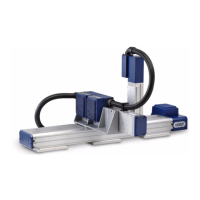
Overview of Adept Python Linear Modules, their configurations, and components.
Details on ordering unique module or system configurations not outlined in the manual.
Information about the Adept SmartController CX, a high-performance motion and vision controller.
Description of the Power Distribution Unit (PDU3) and its safety and power functions.
Steps for installing a typical Adept Python modules system using a SmartController.
Information on obtaining the Manufacturer's Declaration of Incorporation and Conformity.
Guidance on obtaining assistance and accessing Adept's corporate website for support.
Lists other manuals providing additional information on Adept systems and components.
Explanation of special alert notations used in the manual for safety information.
Specifies the intended applications and non-intended uses of Adept Python Modules.
Analysis of potential hazards, exposure, and safety standards relevant to Adept Python Modules.
Essential safety precautions, including thrust limits, barriers, and hazard avoidance.
Guidelines for acceptable and unacceptable modifications to Adept equipment.
Safe procedures for lifting and transporting Adept Python modules and related components.
Requirements for personnel qualifications, training, and roles for system operation.
Recommended safety equipment for operators working within the robot workcell.
Procedures to follow in case of an emergency, including fire safety and E-Stop activation.
Introduction to Adept Python Linear Modules, their capabilities, and system configurations.
Overview of configurable options for Adept Python linear modules, including types and features.
Details on the L18, L12, and L08 L-Series linear module types and their construction.
Table showing maximum payload and transportable moments for module carriage bearings.
Available standard stroke lengths for Adept Python linear modules, depending on module type.
Specified positional accuracy, straightness, and flatness values for Python modules.
Maximum speed capabilities of Python linear modules based on length and ball screw lead.
Maximum acceleration rates achievable for Python modules based on various factors.
Axial thrust force capabilities of Python linear modules for applications like insertion.
Information on configuring modules with or without payload-holding brakes.
Available options for motor mounting orientation on linear modules (in-line, side, bottom).
Information on standard and cleanroom versions of module assembly and their features.
Explanation of descriptor numbers used to define module configuration and selected options.
Introduction to the LT1 Theta module for adding a 4th axis to Python systems.
Overview of configurable options for Adept Python Theta modules.
Details on the LT1 Theta module and its construction features.
Details on standard and optional ESD-resistant covers for Theta modules.
Explanation of descriptor numbers used to define Adept Python Theta module configurations.
Example and key for understanding LT1 Theta module descriptor numbers.
Overview of available system configuration options for Adept Python modules.
Explanation of descriptor numbers used to define entire Adept Python module systems.
Details on system configurations and module types, including drawings for axis arrangements.
Drawings illustrating available two-axis system configurations (D, G, K, X, Z).
Drawings illustrating available three-axis system configurations (P, Q).
Drawings illustrating available four-axis system configurations (P with Theta, Q with Theta).
Options for mounting positions and module alignment in a system configuration.
Information on mounting feet and toe clamps for securing module systems.
Details on automatically configured gantry support modules for specific systems.
Information on Adept IO Blox for adding digital input/output capability to Python systems.
Safe procedures for lifting and transporting Adept Python modules and multi-axis systems.
Specifications for mounting structures, plates, and rigidity for Adept systems.
Steps for installing a Python module system, including general notes and torque values.
Specific instructions for installing modules in a cleanroom environment, including air line connections.
Steps for installing the Adept SmartController, including mounting, chassis, and power connections.
Diagram illustrating system component connections for a typical Adept Python system.
Steps for installing the Adept Front Panel with Emergency Stop and Manual/Auto switches.
How to connect the optional T2 pendant to the SmartController for system operation.
Instructions for setting up the AdeptWindows PC software or Adept DeskTop for system control.
Overview of the Power Distribution Unit (PDU3) and its functions in an Adept Python system.
Step-by-step instructions for installing the PDU3, including cable connections and placement.
Details on PDU3 connectors, indicators, and their respective functions.
Information on PDU3 fuses, their ratings, and procedures for replacement.
Technical specifications for the PDU3 unit, including power requirements and environmental ratings.
Circuit diagram illustrating the E-Stop functionality and connections within the PDU3.
Introduction to the Adept MotionBlox-10 (MB-10) distributed servo controller and amplifier.
Information on MB-10 operation, including status panel codes, indicator LEDs, and brake release.
Explanation of status panel codes indicating robot operating status and fault conditions.
Overview of MB-10 connectors, their locations, and mating connector details.
Technical specifications for the Adept MB-10 amplifier, including power, output, and communication.
Pinout details for MB-10 motor, encoder, brake, and communication connectors.
Overview of chapter topics: verifying installation and turning on the system.
Checks to ensure correct installation and safety equipment functionality before system operation.
Verification of module mounting, fasteners, and overall mechanical integrity.
Verifying correct power connections and voltage levels to the SmartController and PDU3.
Procedure for powering on the system after completing installation and verification checks.
Steps for performing software configuration, including loading DC_SETUP and module calibration.
Guide to loading and running the DC_SETUP.V2 program for system initialization and axis configuration.
Procedure for calibrating modules after software configuration is complete.
Steps to enable High Power for system operation and test all E-Stop functionalities.
Performing run-time calibration on the system after enabling High Power.
Summary of preventive maintenance procedures and recommended frequencies for Adept systems.
Procedures for regularly checking safety systems, including E-stops, interlocks, and switches.
Procedure for replacing the MB-10 amplifier's internal battery, including time periods and steps.
Step-by-step guide for replacing the MB-10 internal battery, covering different accessibility scenarios.
Procedure for replacing the module encoder backup battery, including time periods and replacement steps.
Procedures and considerations for decommissioning MB-10 units and proper disposal.
Overview of advanced system configurations and their corresponding installation and cable connection drawings.
 General
| Brand | adept technology |
|---|---|
| Model | Python |
| Category | Control Unit |
| Language | English |

 To Next Page