Chapter 5: IP Core Interfaces 5–13
Avalon-ST TX Interface
November 2011 Altera Corporation Cyclone V Hard IP for PCI Express
User Guide
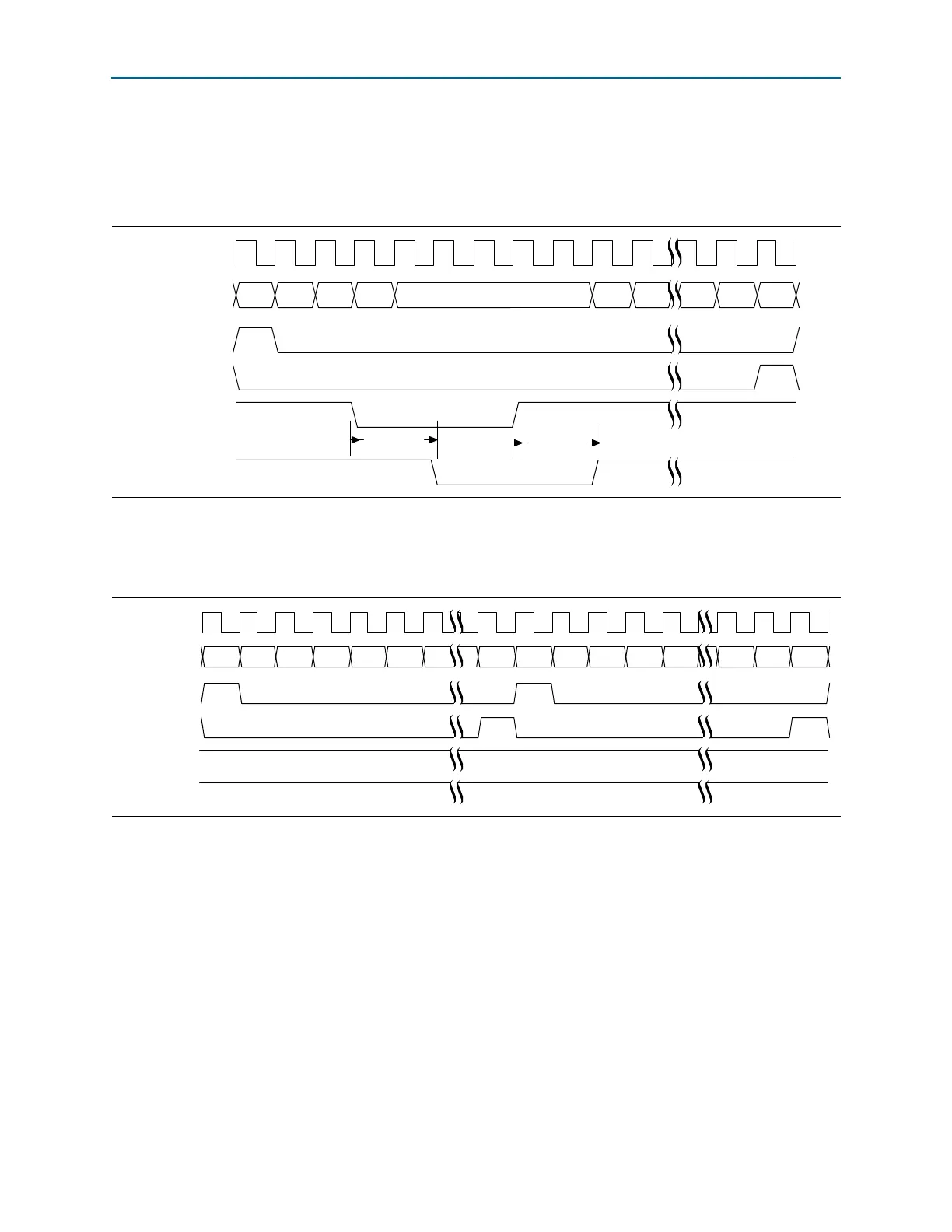
Figure 5–12 illustrates the timing of the TX interface when the Cyclone V Hard IP for
PCI Express IP core backpressures the Application Layer by deasserting
tx_st_ready
.
Because the
readyLatency
is two cycles, the Application Layer deasserts
tx_st_valid
after two cycles and holds
tx_st_data
until two cycles after
tx_st_ready
is asserted.
Figure 5–13 illustrates back-to-back transmission of 64-bit packets with no intervening
dead cycles between the assertion of
tx_st_eop
and
tx_st_sop
.
Root Port Mode Configuration Requests
If your Application Layer implements ECRC forwarding, it should not apply ECRC
forwarding to Configuration Type 0 packets that it issues on the Avalon-ST interface.
There should be no ECRC appended to the TLP, and the
TD
bit in the TLP header
should be set to 0. These packets are processed internally by the Hard IP block and
are not transmitted on the PCI Express link.
Figure 5–12. 64-Bit Transaction Layer Backpressures the Application Layer
coreclkout
tx_st_sop
tx_st_eop
tx_st_ready
tx_st_valid
tx_st_data[63:0]
.. . . . . . . . . 00. . 00 ... BB... BB ... BBBB0306BBB0305A BB ... BB ... BB ... BB ... BB....
readyLatency
readyLatency
Figure 5–13. 64-Bit Back-to-Back Transmission on the TX Interface
coreclkout
tx_st_sop
tx_st_eop
tx_st_ready
tx_st_valid
tx_st_data[63:0]
01 . 00 . BB . BB . BB . BB . B. . BB . 01 . 00 . CC . CC . CC . CC . CC . CC .


 To Next Page