Appendix A—Lithium Battery Information
Lithium Battery Disposal
Once a lithium battery is removed from a device and/or is destined for disposal, it is classied as solid waste under EPA
guidelines. Depleted lithium batteries are also considered to be hazardous waste because they meet the denition of Re-
activity, as per 40 CFR 261.23(a)(2), (3) and (5). This document describes how the lithium reacts violently with water,
forms potentially explosive mixtures with water, and when exposed to certain pH conditions, generates toxic cyanide or
sulde gases.
Federal law requires that depleted lithium battery packs be sent to a fully permitted Treatment, Storage and Disposal Fa-
cility (TSDF) or to a permitted recycling/reclamation facility.
Important Do not ship lithium battery packs to our factory. Cameron facilities are not permitted recycling/rec-
lamation facilities.
CAUTION Proling and waste characterization procedures must be followed prior to shipping a lithium bat-
tery to a disposal site. It is the shipper’s responsibility to comply with all applicable federal trans-
portation regulations (see below).
Transportation Information
!
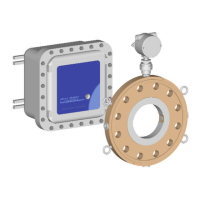
WARNING: The Scanner 3100 contains lithium batteries. The internal component (thionyl chloride) is haz-
ardous under the criteria of the Federal OHSA Hazard Communication Standard 29 CFR 1920.1200. Before
shipping a lithium battery or equipment containing a lithium battery, verify that the packaging and label-
ing conforms with the latest version of all applicable regulations.
The transport of the lithium batteries is regulated by the United Nations, “Model Regulations on Transport of Dangerous
Goods,” (special provisions 188, 230, and 310), latest revision.
Within the United States, the lithium batteries and cells are subject to shipping requirements under Part 49 of the Code of
Federal Regulations (49 CFR, Parts 171, 172, 173, and 175) of the US Hazardous Materials Regulations (HMR), latest
revision.
Shipping of lithium batteries in aircraft is regulated by the International Civil Aviation Organization (ICAO) and the In-
ternational Air Transport Association (IATA) requirements in Special Provisions A45, A88 and A99, latest revision.
Shipping of lithium batteries on sea is regulated the International Maritime Dangerous Goods (IMDG) requirements in
special provisions 188, 230 and 310, latest revision.
Shipping of lithium batteries on road and rail is regulated by requirements in special provisions 188, 230 and 310, latest
revision.
Battery Safety Datasheet
For a link to the current MSDS for the lithium batteries used to power the Scanner 3100, see the Valves & Measurement
section of the our website: www.cameron.slb.com/owcomputers.
A-1
Scanner 3100 EFM Appendix A





 To Next Page