5322A
Operators Manual
178
Sources of Mistakes when Using the Multiplier
Some of the three terminal megohmmeters use a protective resistance in the
sense L terminal, the source H terminal or in the COM/GUARD terminal. The
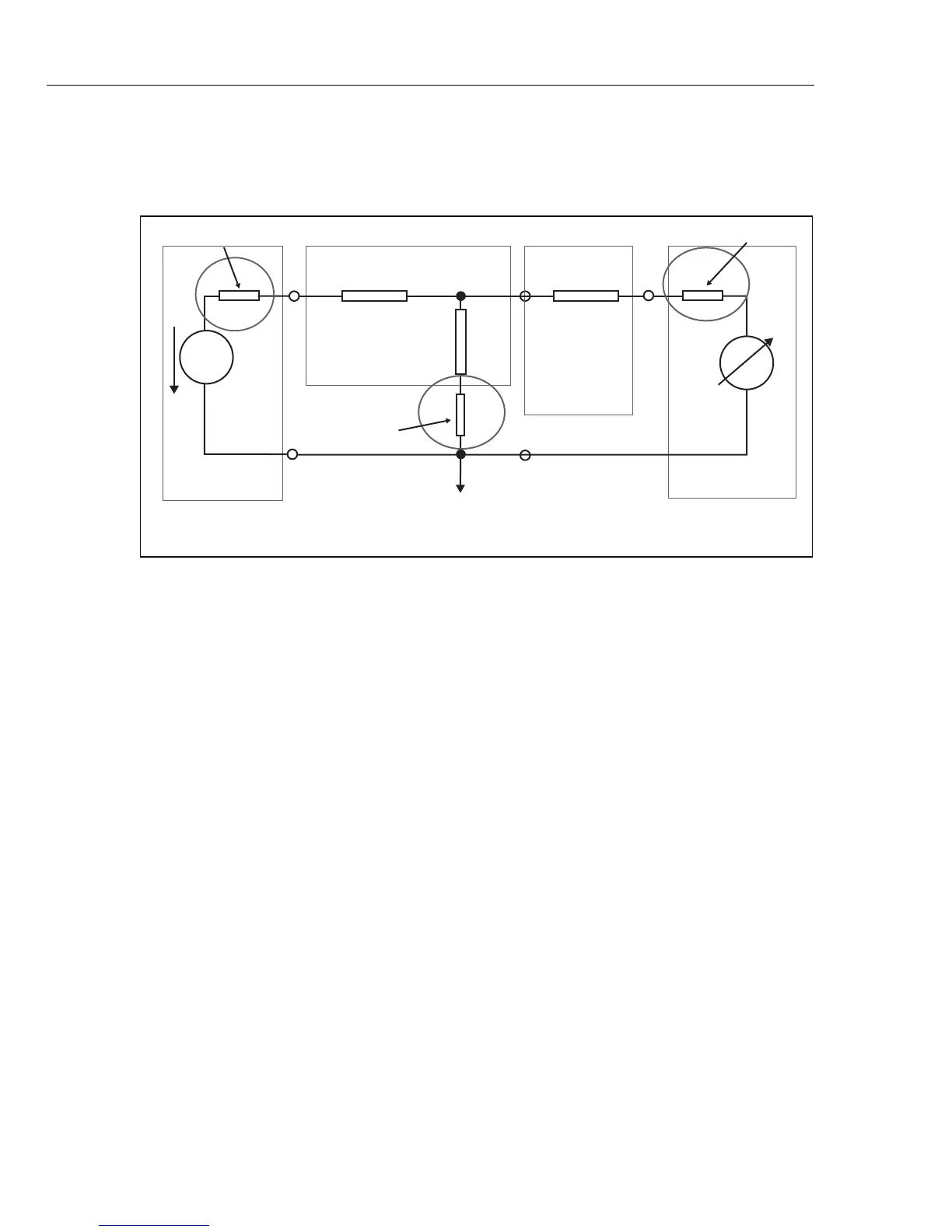
meters can cause errors as discussed below. See Figure 41.
HV
Source
Rc
Ro
Ri
DUT
R in DUT
R in DUT
R in DUT
DUT
R1
R21 = R1 + Rcal + R1/R2 *Rcal
R1 = 300 Mohm
R2 = 300 kohm
5322A
HV optionHV option
R2
Rcal
I
iep182.eps
Figure 41. Sources of Error when Using the Resistance Multiplier
a) Resistance Ri is connected in series with the Rcal resistor. It influences the
accuracy of the effective resistance. However, the effect of Ri can be
corrected by the previously mentioned input resistance constant in the 5322A
Setup menu.
b) Resistance Ro is the output resistance of the DUTs meter test source. If the
output resistance is >1 MOhm it can significantly influence the result of the
effective resistance output. Typical DUT output resistance is in the order of
kOhm which should not cause a problem. Check the DUT documentation.
c) Any protective resistor Rc in the DUT fully influences the effective multiplier
output. Rc becomes a part of the R2 resistor which determines the multiplying
coefficient. DUT with an Rc resistor higher than 300 Ohm cannot be directly
calibrated with Resistance multiplier.
When you use the Resistance multiplier, these guidelines for high-resistance
measurements should be taken into consideration:
• The Product does not sense test voltage when the resistance multiplier is
connected. Do not apply >10 kV peak on the multiplier input terminals.
• The Product high-resistance source that is connected to the resistance
multiplier should be set to Ground OFF in the Setup menu.


 To Next Page