EasyManua.ls Logo

Korg PA800 - User Manual

Korg PA800
344 pages
Print Icon
To Next Page IconTo Next Page
Loading...
User’s Manual
ENGLISH
OS Ver. 2.0
MAN00010002
12E

Table of Contents

Other manuals for Korg PA800

Questions and Answers

  • T
    Tammie WillisSep 9, 2025
    What does it mean when Korg Musical Instrument displays message 'Over Current Condition Detected on USB port'?
    • S
      Sylvia ColemanSep 9, 2025
      This message indicates that the USB device is probably defective, likely due to a short circuit. While this will not damage the Pa800, it is advisable to remove the device.
  • S
    Sheryl JonesSep 8, 2025
    What to do if percussive instruments are not played correctly on Korg Musical Instrument?
    • L
      Laura BeckSep 8, 2025
      Make sure that the Drum track is set to Drum Mode and the external device has not transposition applied.
  • W
    William GarzaSep 7, 2025
    Why does my Korg Musical Instrument play wrong sounds?
    • H
      Holly DavidsonSep 7, 2025
      This can happen if the USER banks contain modified data, one of the USER Drum Kits has been modified, or the Styles or Performances have been modified. To resolve this, load the appropriate data for the Song or Style you wish to playback, load the appropriate Drum Kits, or load the appropriate data (Styles or Performances).
  • S
    Stacy MarksAug 22, 2025
    How to fix Korg Musical Instrument when power does not turn on?
    • L
      Lynn BaileyAug 22, 2025
      First, ensure the power cable is correctly plugged into both the outlet and the back of the instrument, and that the cable isn't damaged. Next, verify that the power switch is in the ON position. If the power still fails to turn on, it is advisable to contact your dealer or the nearest KORG Service Center.
  • C
    Catherine RobbinsSep 4, 2025
    What does 'Over Current Condition Detected on USB port' mean on Korg Synthesizer?
    • S
      sullivanandrewSep 4, 2025
      If you see the message “Over Current Condition Detected on USB port: please remove the USB media” on your Korg Synthesizer, the USB device is likely defective due to a short circuit and should be removed. While this won't damage the Pa800, removing the device is recommended.
  • B
    Brittany CurrySep 3, 2025
    Why percussive instruments are not played correctly on my Korg Synthesizer?
    • D
      Daniel CordovaSep 3, 2025
      If percussive instruments are not playing correctly on your Korg Synthesizer, make sure that the Drum track is set to Drum Mode and the external device has no transposition applied.
  • D
    Deborah HuntSep 2, 2025
    What to do if the lowest notes are not played on Korg PA800?
    • A
      andrea70Sep 2, 2025
      If the lowest notes are not playing on your Korg Synthesizer, and the SPLIT button is lit, the keyboard is divided into Lower and Upper parts. Check if the Lower track is muted and unmute it.
  • C
    Carlos JonesSep 1, 2025
    How to stop sound that doesn't stop on Korg PA800?
    • L
      lherreraSep 1, 2025
      If the sound on your Korg Synthesizer doesn't stop, ensure that the damper switch polarity parameter is set correctly.
  • A
    adrianaguilarAug 31, 2025
    Why the selected Style or Song cannot start on my Korg PA800?
    • G
      Gene Peters IIAug 31, 2025
      If the selected Style or Song cannot start on your Korg Synthesizer, ensure that the Clock parameter is set to Internal. If you're using the MIDI Clock of another device, set the MIDI Clock parameter to MIDI or USB (depending on the port the Pa800 is connected through) and confirm that the external device is transmitting MIDI Clock data.
  • M
    Melanie GardnerAug 29, 2025
    What to do if my Korg Synthesizer plays wrong sounds?
    • C
      Christian FrazierAug 30, 2025
      If your Korg Synthesizer is producing the wrong sounds, it may be due to modified data in the USER banks. Try loading the appropriate data for the Song or Style you wish to playback. Also, check if any of the USER Drum Kits have been modified and load the correct Drum Kits. Finally, ensure that the Styles or Performances haven't been altered; if so, load the appropriate Styles or Performances data.

Summary

Front panel

Rear panel

Welcome!

Data Backup and Management

Guidance on backing up original data, OS, and musical resources.

Start up

Quick Guide

Playing Sounds on the Keyboard

Guide to selecting and playing single sounds on the keyboard.

Layering Multiple Sounds

Instructions for playing two or three sounds simultaneously on the keyboard.

Selecting and playing Styles

Selecting and Saving Performances

Guide to selecting and saving Performances, including saving settings to a Performance.

Selecting and Playing Styles

Instructions for selecting Styles, Style Elements, and Style Controls.

Song Play

Selecting and Playing Songs

Guide to selecting songs for Sequencer 1 and 2, and opening the Song Select window.

Playing Back and Controlling Songs

Instructions for playing back songs using sequencer controls and transport buttons.

The SongBook

Selecting Entries from the Main List

How to open and navigate the SongBook database to select entries.

Adding and Editing SongBook Entries

Instructions for adding new entries and editing existing ones in the SongBook database.

Creating and Using Custom Lists

Guide to creating custom lists of SongBook entries for specific shows.

Singing with a connected microphone

Connecting the Microphone

Instructions for connecting a microphone to AUDIO INPUT 1 and setting initial levels.

Applying Harmony to Your Voice

Guide to selecting Voice Processor Presets and enabling harmony for vocal performances.

Soloing Your Voice (TalkBack)

Instructions for using the TalkBack function to attenuate music for speaking.

Locking Voice Processor Settings

How to lock Voice Processor settings to prevent changes when selecting different presets.

Recording a new Song

Entering Backing Sequence (Quick Record) Mode

Steps to enter the Quick Record mode for recording Styles and performances.

Preparing for Recording

Guide to setting parameters like Style, Tempo, and track status before recording.

Realtime Recording Procedure

Instructions for performing and recording live with Styles, including Intro, Variation, Fill, Ending.

Second-Take Recording (Overdubbing)

Method for re-recording or adding to existing tracks in a song.

Saving a Song to Disk

Procedure for saving recorded songs to a storage device to prevent data loss.

Style Play operating mode

Main Page (Normal View) Description

Detailed description of the main Style Play screen layout and its elements.

Edit Menu and Page Structure

Overview of the Edit menu and the structure of edit pages within Style Play mode.

Mixer;Tuning: Tuning and Sub Scale

Guide to setting octave transpose, fine-tuning, and alternative scales for tracks.

Effects: FX Select and Assignment

How to select and assign effects to internal FX processors (A-D).

Preferences: Style Settings

General parameters for Style Play mode, including Chord Recognition and Velocity Control.

Dialog Boxes for Saving Settings

Explanation of Write Performance and Write Single Touch Setting dialog boxes.

Style Record mode

Saving Changes and Listening to Styles

Instructions for saving or aborting changes and listening to styles during editing.

Realtime and Step Record Procedures

Step-by-step guides for performing realtime and step recording of Styles.

Edit Menu and Event Editing

Overview of the Edit menu and procedures for editing MIDI events.

Style Edit: Transpose and Velocity

Guide to transposing tracks and changing note velocity values.

Copying Style Elements and Tracks

Guide to copying tracks or entire Style Elements/Chord Variations from Styles.

Style Element Track Controls

Parameters for Sound/Expression assignment and Keyboard Range settings.

Importing Standard MIDI Files (SMF)

Guide to importing SMF data to create Chord Variations or entire Styles.

Exporting SMF Files

Instructions for exporting Chord Variations or entire Styles as SMF files.

Pad Record mode

Saving Changes and Listening to Pads

Instructions for saving or aborting changes and listening to pads during editing.

Main Page - Record 1 Overview

Detailed description of the Main page in Pad Record 1 mode.

Main Page - Guitar Mode

Description of Guitar Mode parameters for recording guitar parts.

Edit Menu for Pad Record Mode

Overview of the Edit menu and structure for Pad Record mode.

Pad Edit: Copy Functions

Guide to copying tracks from Styles or Chord Variations from other Pads.

Song Play operating mode

Main Page Layout

Detailed layout of the Song Play main page, including Song areas and controls.

Mixer;Tuning: FX Send

Guide to setting the level of direct signals sent to internal FX processors.

Mixer;Tuning EQ Parameters

Details on setting EQ Gain and EQ Control for song tracks.

SongBook

Organizing Entries with the Book

Overview of the SongBook database for organizing Styles, MIDI files, and MP3 files.

Sequencer operating mode

Sequencer Main Page Layout

Detailed description of the Sequencer Play main page, including song areas and controls.

Multitrack Sequencer Record Mode

Instructions for multitrack recording, including overdub, overwrite, and auto punch.

Step Backing Sequence Record Mode

Guide to step-recording chords and controls for songs.

Backing Sequence (Quick Record) Procedure

Step-by-step guide for performing realtime recording using Styles.

Save Song Window

Instructions for saving songs to a storage device, including overwrite warnings.

Global edit mode

Voice Processor

Accessing Voice Processor Edit Pages

Guide to accessing Voice Processor Setup and Preset pages via the Global mode menu.

Voice Processor Setup: Basic Settings

Explanation of Lead Setting, Harmony Settings, and Low Cut Filter for voice processing.

Voice Processor Setup: Dynamics and EQ

Parameters for Compressor/Gate, Equalizer, and Talk function settings.

Voice Processor Preset: Effects

Guide to adjusting FX Mix, Reverb, Delay, and other effect parameters.

Harmony and Tuning with Voice Processor

Explanation of harmony modes (Notes, Shift, Chordal, Scalic) and tuning.

Voice Processor Preset: Harmony Voices

Parameters for setting up individual harmony voices, including voicing and scale modes.

Media edit mode

Media Edit Mode Main Page

Overview of the Media edit mode's main page, navigation tools, and commands.

MIDI

Connecting Pa800 to External Devices

Instructions for connecting Pa800 to a master keyboard and MIDI accordion.

Connecting Pa800 to a Computer

Guide for connecting Pa800 to a computer via USB for MIDI and file transfer.

Installing the MP3 Board (EXBP-Dual MP3)

Precautions and Installation Procedure

Safety precautions and step-by-step guide for installing the MP3 board.

Playing and Recording MP3 Files

Instructions for playing MP3 files and recording performances as MP3 files.

Installing the Video Interface (VIF4)

Video Interface Installation and Setup

Guide to connecting the Pa800 to a video monitor and selecting video standards.

Installing the Korg USB MIDI Driver

Connecting Pa800 to a Personal Computer

Instructions for connecting Pa800 to a PC via USB and installing the required driver.

Mac OS X: Installing KORG USB-MIDI Driver

Guide for installing the KORG USB-MIDI Driver on Mac OS X systems.

Shortcuts

SHIFT Button Shortcuts

List of functions accessible by pressing SHIFT + other buttons.

Troubleshooting

General Problems and Solutions

Common issues like no power, no sound, and incorrect note playback with solutions.

Media Related Problems

Troubleshooting steps for device formatting, saving, loading, and USB connection issues.

Technical specifications

MIDI Data

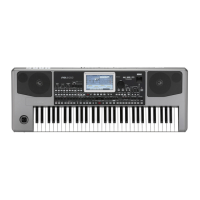
Korg PA800 Specifications

General IconGeneral
TypeArranger Workstation
Keyboard61 keys with Velocity and Aftertouch
Sound EngineEDS (Enhanced Definition Synthesis)
MIDIIn, Out, Thru
DisplayColor TouchView™ Graphic Touch Screen
Sequencer16-track
StorageSD Card Slot
Audio Inputs2 x Mic/Line
Audio OutputsHeadphones

Related product manuals