EMISSION SOLUTION AND CONTROL
AFTERTREATMENT, MACK
CAUTION
Do not perform active regeneration, if the
vehicle is located in a hazardous location.
If the vehicle is located in such a location,
stop the regeneration by pushing the DPF
switch to the "Stop Regeneration"
position. If active regeneration is stopped,
restart when the vehicle is in a safe
location. However, if active regeneration is
stopped repeatedly, take the vehicle to a
certied service facility. The technician
uses a service tool to initiate the
regeneration.
CAUTION
Use of improper diesel fuel or engine oils
adversely affects performance, efciency,
and durability of the DPF system and the
engine. Engine failure can occur.
Warranties are rendered void due to usage
of improper fuel. Unapproved fuel
additives (including engine oil) are NOT
permitted.
The chassis is equipped with a 2010 or
newer emission-compliant engine, with a
Diesel Particulate Filter (DPF) and
Selective Catalytic Reduction (SCR)
system. Vehicles equipped with a DPF
require EO-O Premium Plus (or VDS-4)
high performance diesel engine oil and
Ultra Low Sulfur Diesel (ULSD) fuel.
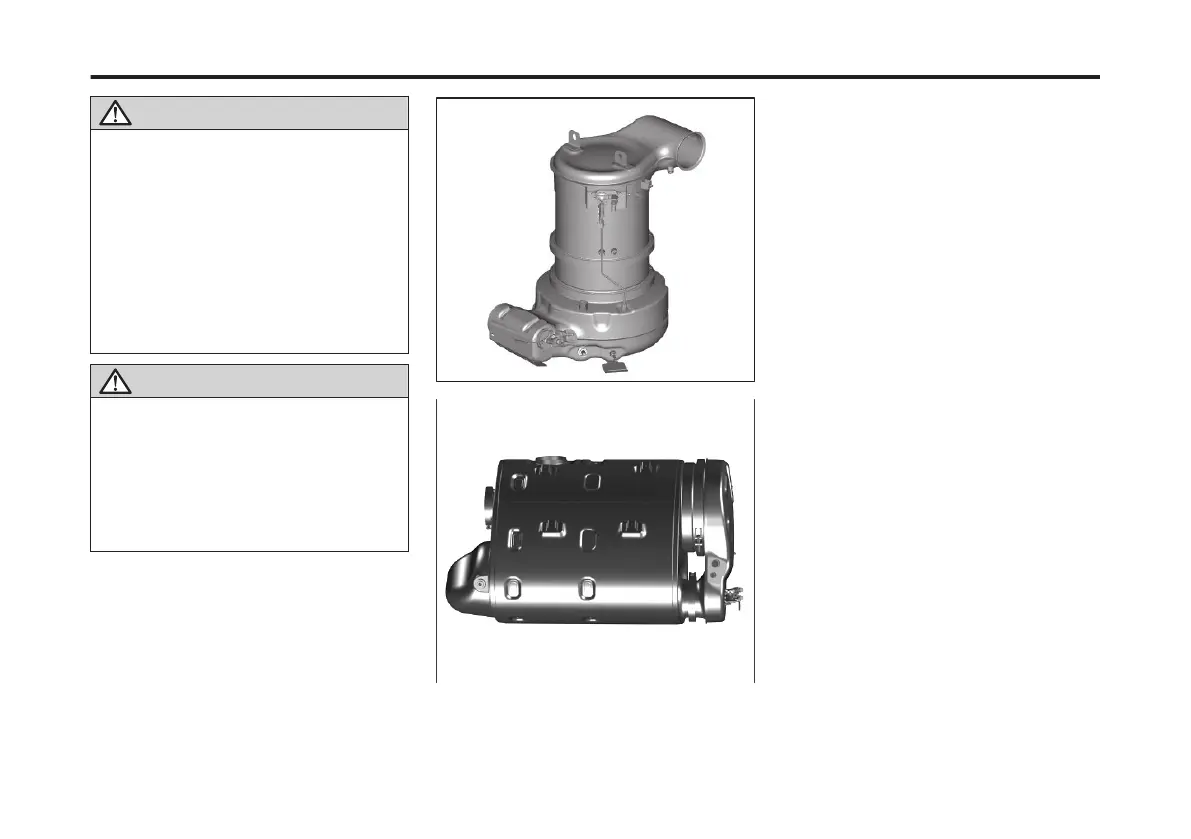
A Diesel Particulate Filter (DPF) takes
the place of the standard mufer. The
DPF is used to meet EPA requirements
to help reduce soot and particulate
emissions into the atmosphere. The
particulates are removed by collecting in
the DPF unit, where they are eventually
oxidized with passive regeneration or
active regeneration of the lter. The
Enginge Control Unit (ECU) and exhaust
aftertreatment system determines when
regeneration is required.
Conventional exhaust aftertreatment
systems use passive and active
regeneration. The passive regeneration
process oxidizes the particulates
captured in the DPF while the vehicle is
in operation. An oxidation catalyst raises
the exhaust temperature to
approximately 260°C (500°F). This
temperature is when a chemical reaction
takes place to oxidize the soot (passive
regeneration).
211
X Publication_PC28


 To Next Page