MAINTENANCE, LUBRICATION AND SERVICE
STEERING AND BRAKES MAINTENANCE
Steering System
Excessive play in the steering system is
checked by turning the steering wheel
while the engine is stopped. With the
front wheels pointing straight ahead,
turn the steering wheel until the front
wheels starts moving. Then, turn the
steering wheel the other way until the
front wheels move. Play should not be
more than 25 mm (1 in) at the rim of the
steering wheel. If the steering play is
excessive, check the steering linkage for
looseness, wear, etc. Make necessary
repairs before driving the vehicle.
Power Steering Fluid
The power steering uid reservoir is
lled with Automatic Transmission Fluid
(ATF) Dexron III. This uid helps maintain
the health of the power steering system.
If the uid has darkened, it indicates that
the power steering system is running
hotter than normal and the uid is
overheating. If this symptom is noticed,
take the vehicle to a dealer for
troubleshooting and have the uid
changed.
Checking Power Steering Fluid
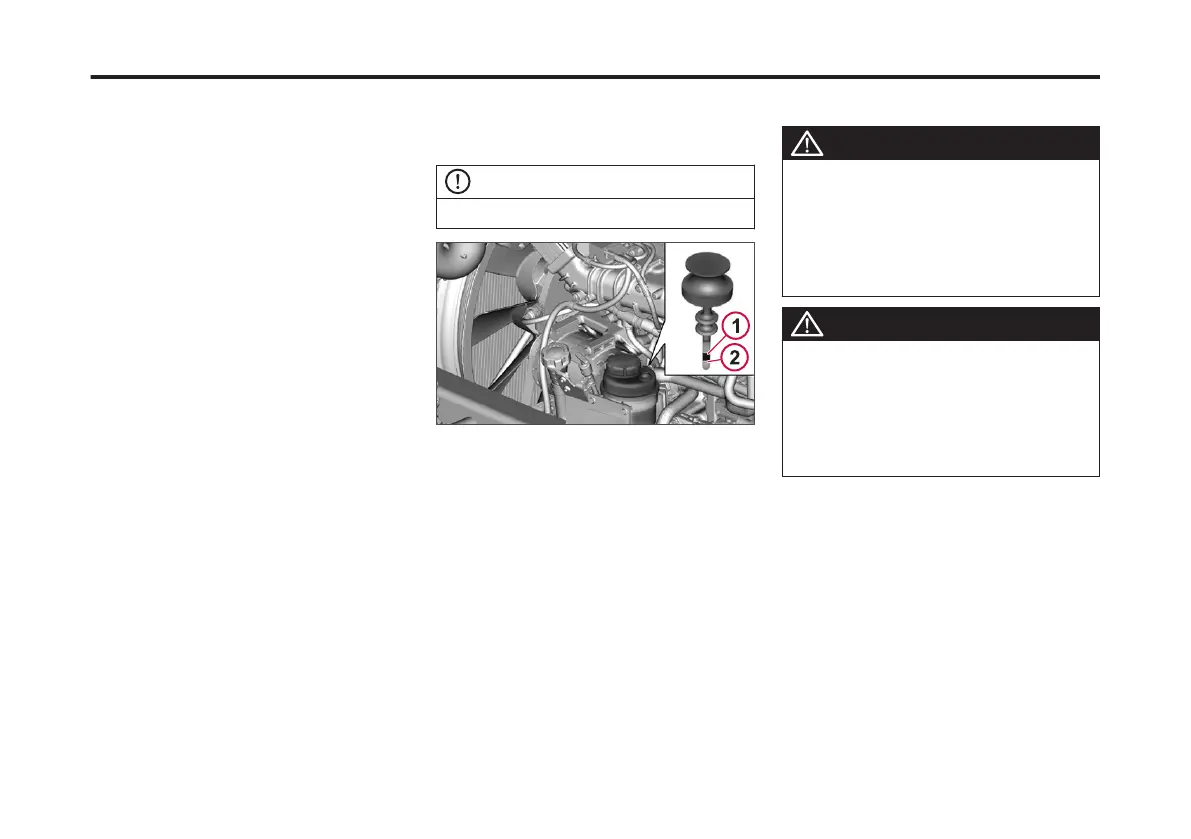
Proper uid level should be between the
lines on the dipstick.
NOTE
CHECK COLD
1 Maximum Level
2 Minimum Level
Brake System
DANGER
DO NOT use replacement parts anywhere
in the brake system unless it conforms
exactly to original specications. A
nonconforming part in your vehicles brake
system could cause a malfunction, leading
to loss of control of the vehicle resulting in
severe personal injury or death.
DANGER
DO NOT release the parking brake or
attempt to move the vehicle until brake air
pressure in both circuits is at least 100 psi
(690 kPa). Failure to follow this procedure
may lead to uncontrolled vehicle
movement and cause severe personal
injury or death.
Air Brake System
This chassis features a dual braking
system which has two complete air
circuits: a primary circuit for rear brakes
and a secondary circuit for front brakes.
Each circuit receives air from separate
reservoirs. Although there are two air
circuits, they operate as one brake
system through the dual-circuit treadle
valve. This provides the driver with easy,
graduated control when applying and
releasing the brakes.
The air pressure in the two circuits is
monitored by gauges on the instrument
287
X Publication_PC28


 To Next Page