SAFETY
CARBON MONOXIDE DETECTION
A by-product of combustion, carbon
monoxide is invisible, tasteless, odorless
and is produced by all engines.
DANGER
Actuation of this device indicates the
presence of carbon monoxide (CO) which
can be FATAL. In the event of an alarm,
immediately open the cab windows, safely
stop the vehicle, shut down the engine
and turn off the ignition. Exit the cab and
leave the doors and windows open to vent
the vehicle.
CAUTION
The following symptoms are related to
CARBON MONOXIDE POISONING and
should be
discussed with ALL passengers:
• Mild exposure: Slight headache,
nausea, vomiting and fatigue (often
described as “Flu like symptoms”).
• Medium exposure: Severe throbbing
headache, drowsiness, confusion, and
fast heart rate.
• Extreme exposure: Unconsciousness,
convulsions, cardio-respiratory failure,
and death.
• Many cases of reported CARBON
MONOXIDE POISONING indicate that
while victims are aware they are not
well, they become so disoriented they
are unable to save themselves by
either exiting the location or calling for
assistance.
NOTE
To reduce the risk of carbon monoxide
poisoning, test alarm operation when not
in use for 10 days or more.
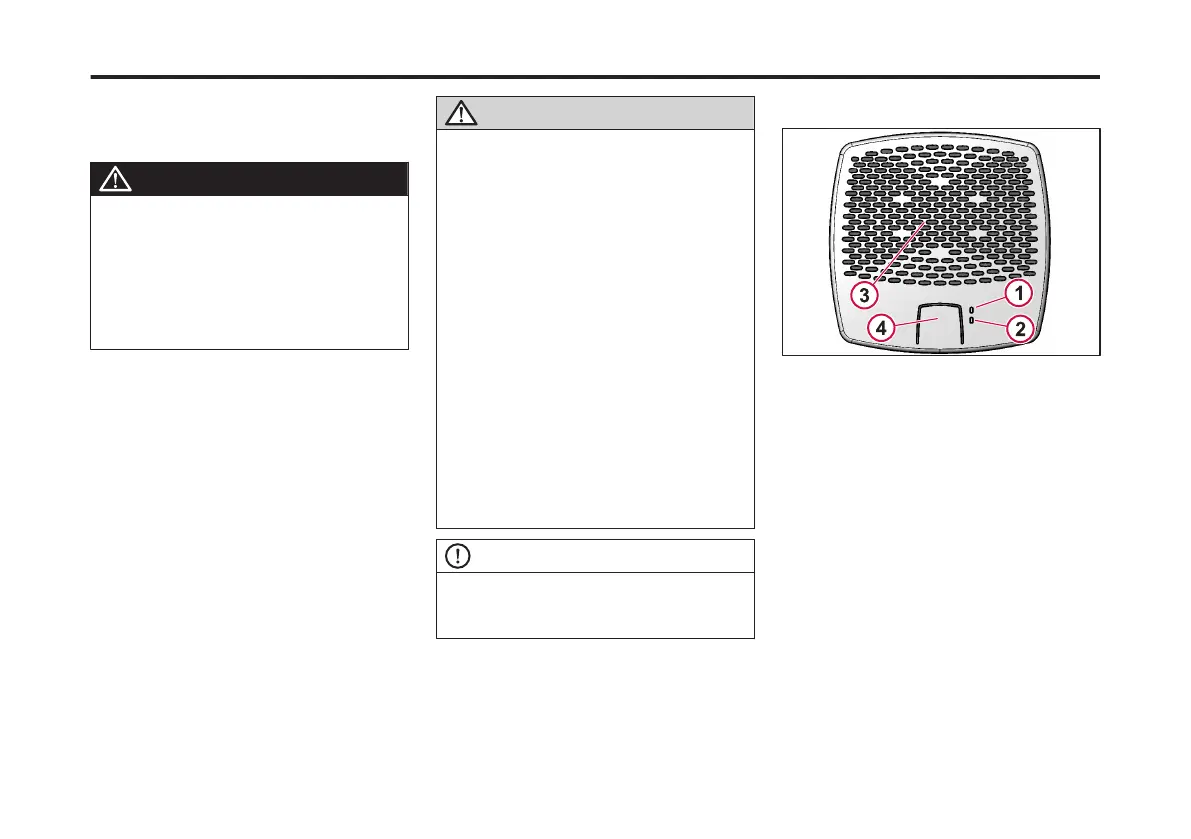
Alarm Unit
1 Power Indicator
2 Danger Indicator
3 Horn
4 Test/Silence button
Normal Operation - The Green LED, (1)
Power Indicator, ashes once every 3
minutes while in normal operation.
Alarm- When the CO alarm enters the
danger alarm, the (2) Danger Indicator,
ashes red and the horn beeps four
times and pauses 4-5 seconds in a
repeat pattern. This indicates that the
COHb level has been reached.
System Operation
The system uses a microprocessor to
measure and accumulate CO levels.
Should a high level of carbon monoxide
exist, the system sounds an alarm.
However, if small quantities of CO are
73
X Publication_PC28



 To Next Page