MAINTENANCE, LUBRICATION AND SERVICE
TURBOCHARGER / CHARGE AIR COOLER
DANGER
If oil leaks internally from the turbocharger
to the engine intake, the oil acts as a fuel.
Watch for excessive exhaust smoke. DO
NOT operate engine until problem is
corrected. There is no way to regulate the
engine speed if it runs on oil and it may
over speed. Loss of control of vehicle may
lead to an accident causing severe
personal injury or death.
WARNING
DO NOT remove, attach, or tighten
turbocharger air intake ducting while the
engine is operating, or operate the engine
while the ducting is removed. Working
around the turbocharger with the ducting
removed may cause severe personal
injury.
Visually inspect turbo mountings, intake
and exhaust ducting and connections
for leaks on a daily basis. Check oil inlet
and outlet for leaks or signs of
restrictions to oil ow. Check for unusual
noise or vibration. If any faults are
detected, do not operate the engine until
the cause is determined and repaired.
Charge Air Cooler and Radiator
Package Cleaning
WARNING
Always wear eye protection when cleaning
radiator, charge-air cooler and condenser.
Failure to follow this recommendation may
result in eye injury.
CAUTION
When using a pressure washer to clean
the vehicle, do not direct the spray at
electrical components in the engine
compartment such as the alternator,
starter and compressors. Water spray
from pressure washers can damage
electrical components.
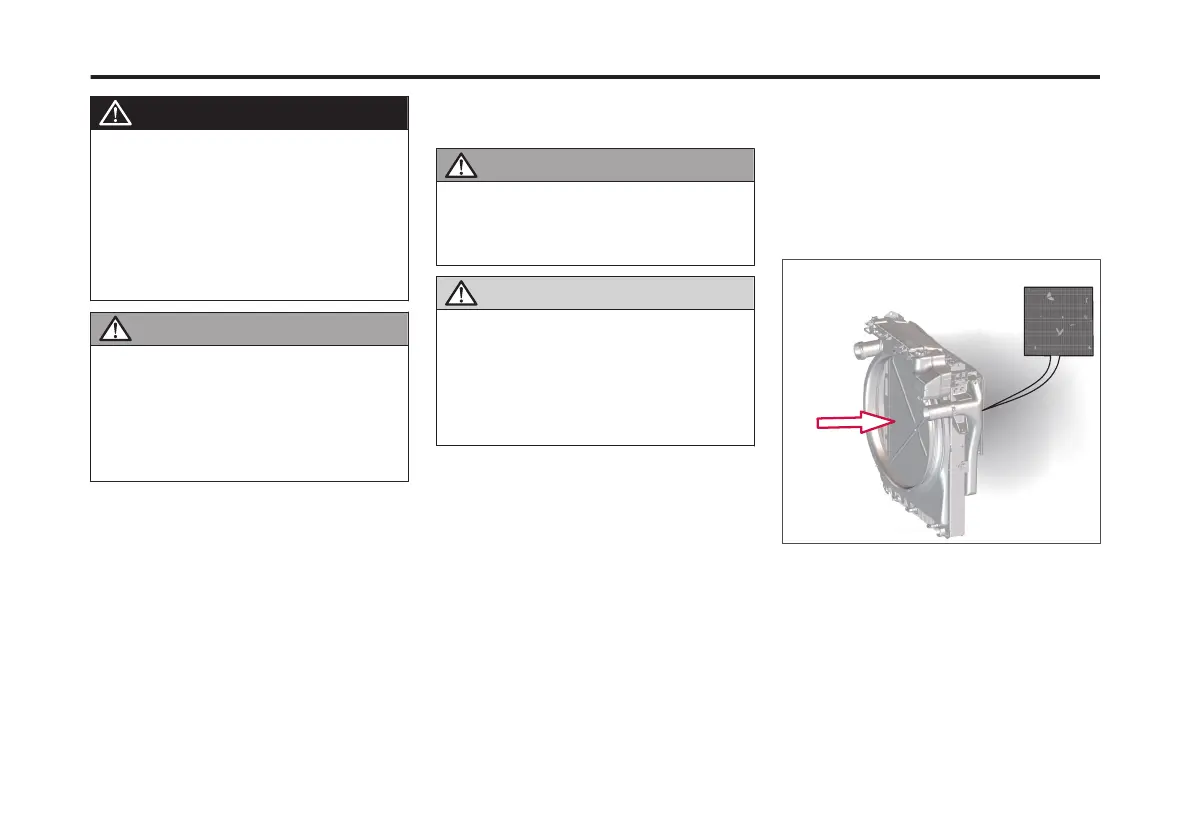
Periodically inspect the front of the
radiator/charge-air-cooler package. Over
time, there may be a build-up of dirt,
mud, insects, etc., between the radiator
and charge air cooler.
Over time the reduced air ow reduces
the heat transfer from the components
to the air. This increases the load on the
fan and air conditioning compressor and
can result in engine overheating and
other performance related problems,
such as high fuel consumption. Inspect
for build-up and contact your authorized
dealer, if necessary.
The simplest method to clean the
package is to use air pressure or a water
stream. This should be done from the
back of the core. Air pressure should not
exceed 30 psi (200 kPa) for radiator and
charge air cooler cores. The use of a n
comb is also a good tool to loosen bugs
and dirt from the ns. If dirt cannot be
cleaned off with this procedure, consult
your dealer.
Inspect the charge air cooler for cracks
at every inspection. DO NOT operate the
vehicle with a damaged or broken
charge air cooler. To do so would void
the warranty and the engine will not
meet emission regulation requirements.
264
X Publication_PC28


 To Next Page