8 TROUBLESHOOTING
This chapter provides machine-specific
troubleshooting information.
General interactive troubleshooting guides are avail-
able at dentalportal.info.
There you will find help on error codes displayed by
DENTALCNC (E-2, E-6, E58, etc.). This includes the
following topics:
n
Problems with tools
n
Inadmissible operating parameters during
machining
n
Problems with machine mechanics (axes, end
switches, etc.)
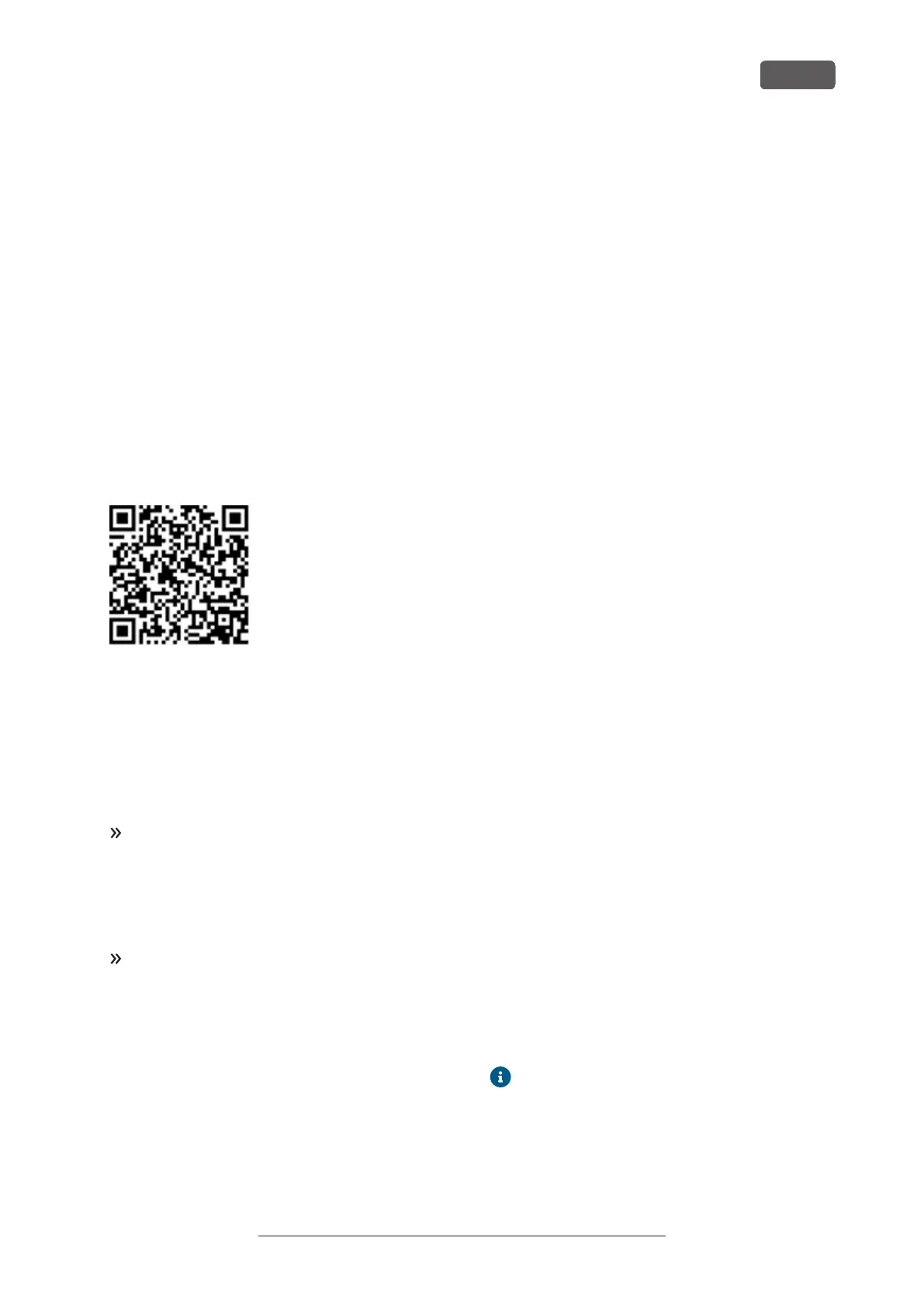
8.1 Links to troubleshooting guides
https://www.dentalportal.info/en-us/Global_
Troubleshooting/GLB_DEN_Troubleshooting.htm
8.2 Machine-specific notes
8.2.1 Loud machining noise
The actual sound emission of the machine varies
heavily depending on the manufacturing material and
the machining conditions.
If the machine is exceptionally loud, check the fol-
lowing operating conditions:
n
Cleanliness of the blank holder
n
Condition of the tools
n
Quality of the blank
If loud noise cannot be avoided, wear ear pro-
tection during machining.
8.2.2 How to proceed in the event of a
machine malfunction
A machine malfunction was recognized by the internal
control unit in case of a critical event. The working
chamber will be illuminated in red. DENTALCNC
displays the error code and error message that was
sent by the control unit.
1. Record the error message and error code that is dis-
played.
2. Restart the machine and the CAM computer. If the
problem persists, continue with the next step.
3. Disconnect the machine from the electrical source
and prevent it from being restarted.
4. Contact customer service. Have the error message
and error code readily available.
5. To remove a blank from the working chamber,
open the working chamber door manually if neces-
sary.
8.2.3 How to proceed in the event of a tool
breakage
If a tool breaks during machining, the machine will not
recognize this immediately. Instead, the spindle will
continue to move with the broken tool. The tool
breakage will be recognized upon the following
events:
n
The next regular tool change
A tool breakage can be caused by the following:
n
The tool was damaged or worn
n
The tool was put into the wrong tool position or
was manually inserted into the spindle at the
wrong time. As a consequence, it was not suit-
able for the processing step.
n
The distribution of the objects in the blank (“nest-
ing”) was not correct.
If a tool breaks, do the following:
1. Open the working chamber door.
2. Remove all parts of the broken tool from the work-
ing chamber and the collet chuck.
3. Re-add the tool to the virtual ATB and virtual tool
magazine in DENTALCNC.
4. If the spindle picked up the tool from the tool
magazine, check if the tool was inserted into the
correct position. Insert a backup tool into the cor-
rect position in the tool magazine.
5. If you manually inserted the tool into the collet
chuck, check if the broken tool corresponds to the
tool type which you were prompted to insert. Have
a correct spare tool ready.
6. Close the working chamber door.
7. Resume the job.
DENTALCNC allows you to resume the job
from the last tool change. For more inform-
ation, see the corresponding documentation.
8.2.4 How to proceed in the event of a
pow er failure
Troubleshooting
EN 97
Original Operating Instructions: E5
Version: 4/27/2023


 To Next Page