This is the type of filtering that you will find more than often on synthesizers that use
subtractive synthesis. It can be found on most of the recent analog and digital
synthesizers.
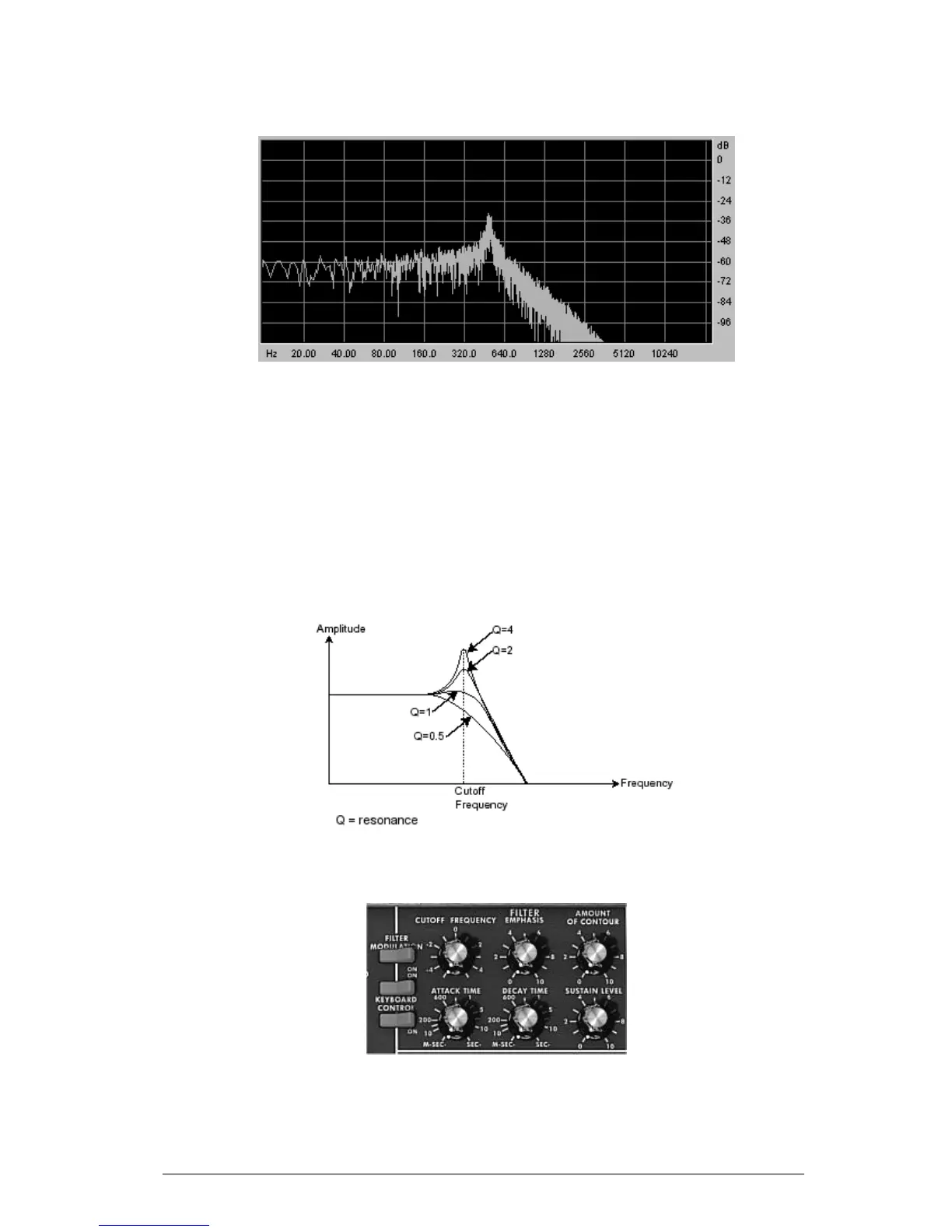
Spectrum of a noise signal proceed with a low-pass filter
6.1.4.2 The resonance
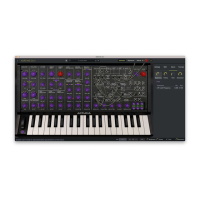
A second setting to compliment the cut-off frequency: the resonance. You will also find it
called “Emphasis” or “Q” – for Quality of filtering.
The resonance amplifies frequencies close to the cut-off frequency. The other frequencies
remaining are either unchanged (below the cut-off frequency) or reduced (above the cut-
off frequency).
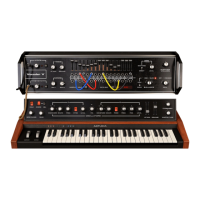
On the Mini V, you can increase the rate of resonance through the “emphasis” knob.
When you increase the resonance, the filter becomes more selective, the cut-off
frequency is amplified, and the sound begins to “whistle”.
With a high resonance level, the filter will begin to produce a sound close to a sine
waveform. At this stage, the use of a key follow is very important as you can create a
melody by tuning the cut-off frequency of the filter with the frequency of the oscillators.
The filter settings of the Mini V
6.1.5 The amplifier or VCA
The amplifier (Voltage Controlled Amplifier) receives the audio signal coming from the
filter to be adjusted before the volume is sent to the speakers.



 To Next Page