*: Bob Moog, quoted by Mark Vail, in his book Vintage Synthesizers © Miller Freeman 1993
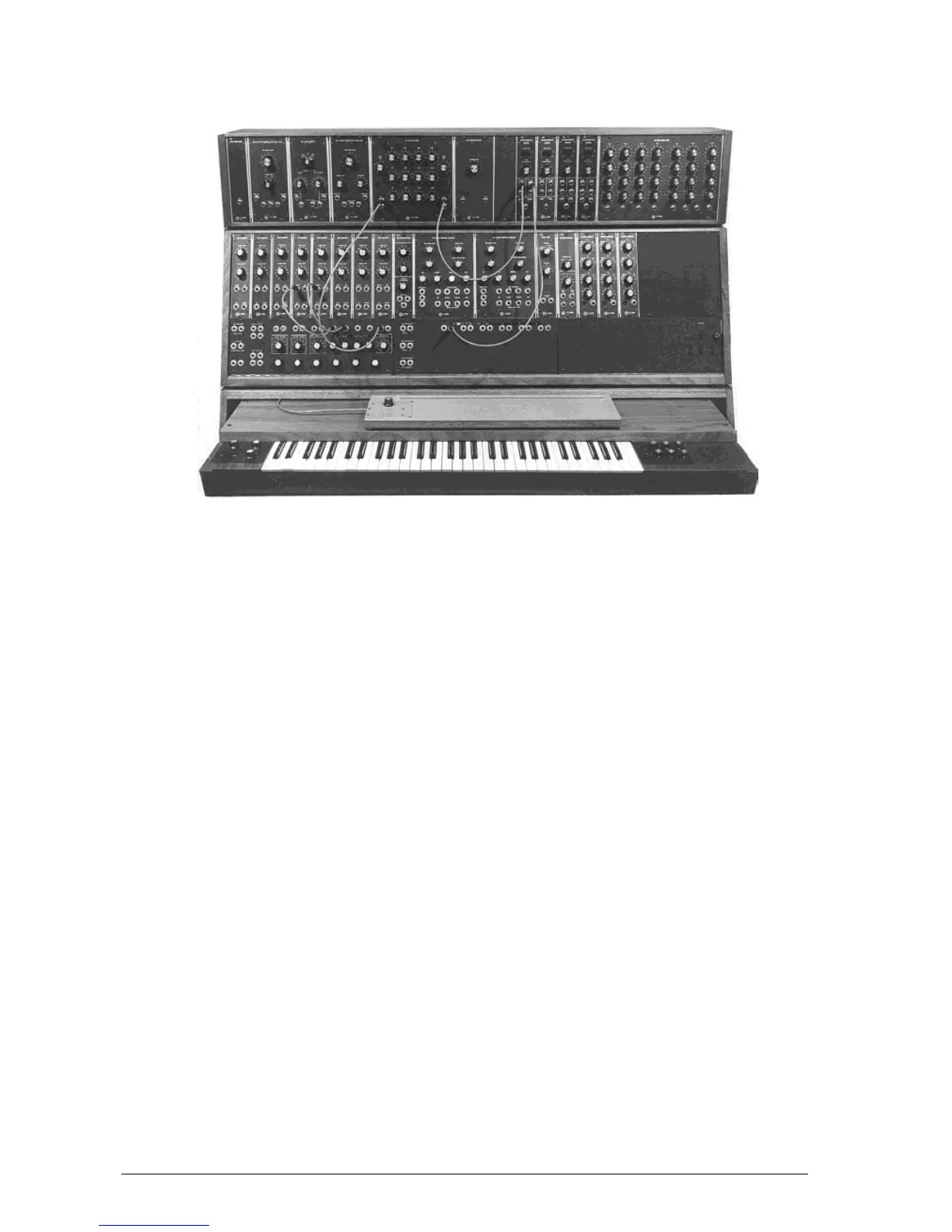
The modular system III (1967)
Courtesy of Roger Luther, MoogArchives.com
Success grew, and big groups like Tangerine Dream, the Beatles and the Rolling Stones would
also become modular system owners.
In 1969, the company which at that time had around 40 employees was building up to 3
modulars per week and the order book was always full. The modular synthesizer series had 5
years of high sales, and sold around 200 models in the United States*.
However, the sales would rapidly decrease, because the gigantic proportions of modular units
puts a damper on the interest of most musicians and also prevents the instrument from
entering most music shops, and therefore from being known. Furthermore, a serious
competitor, ARP, has just arrived on the market.
In the same time, Bob Moog received requests for a more compact instrument that could be
transported more easily, directed more to stage than studio. With the help of an engineer from
Berkeley, Jim Scott, and the advice from numerous musicians he was about to create another
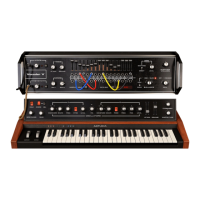
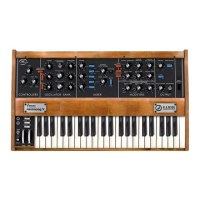
legendary synthesizer: its famous 1971 monosynth…
“Here it is! A compact, moderately priced electronic music synthesizer designed for live
performance.” This is the way this new synthesizer is introduced on the very first promotional
brochure, in the midst of 1971. The monophonic synthesizer required several months of
research and development and 4 prototypes, before leading to the commercial model. More
than 12,000 units were sold until 1981. They were quite far from the 10 modular units per
month that the company produced in the late 60’s.



 To Next Page