KBF P + KBF LQC + KBWF (E6) 11/2016 page 145/189
20.5.4 Spatial sensitivity
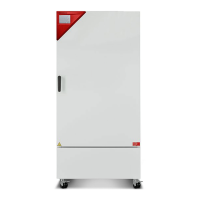
Spherical sensors are used for UVA and the visible spectral range.
Thus, the spatial sensitivity of the detectors is adapted to the spatial effect of radiation in relation to the
photochemical effect to be weighted in the charging material. Due to the spatial extension of the sample,
the real impinging radiation dose can be determined much more realistic than with planar (cosine
adapted) sensors.
Characteristic features of spherical sensors
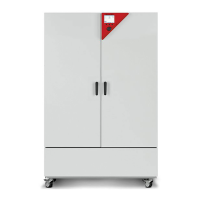
Compared to planar (cosine adapted) sensors, spherical sensors measure largely independent of direc-
tion. They are suitable for all samples with spatial extension and spatially distributed objects (e.g. bottles
and other vessels, pills, dissolved substances). Here, the radiation intensity or illumination really entering
the sample can be realistically determined with spherically measuring light sensors. The energy entering
the sample in the visible, and UV range is thus weighted in optimal approximation to its real photochemical
effects.
Use of planar sensors with spatial objects leads to underrating of the radiation energy, leading to exces-
sive exposure duration and possible false positive photochemical effects. The ICH guideline Q1B propos-
es actinometric systems in glass ampoules as a reference for exposition to radiation; the photochemical
effect to a defined test solution caused by radiation exposure is photometrically determined. Here, the
photochemical effect is determined independent of direction using a liquid in an ampoule. The use of the
spherical sensors in the BINDER measurement system imitates this quantification of the photochemically
effective radiation in the best approximation. It enables and permits an exposition exactly responding to
the demands of ICH guideline Q1B.
Figure 31: Spherical BINDER sensors for VIS, and UVA measurement
Divergence [%]
Angle of incidence [degrees]



 To Next Page