M (E3.1) 1/2023 page 105/136
Connection
Observe the legal requirements and relevant standards and regulations for the safe handling of gas cylin-
ders and inert gases.
General information for safe handling of gas cylinders:
• Store and use gas cylinders only in well ventilated areas.
• Open the gas cylinder valve slowly to avoid pressure surges
• Secure gas cylinders during storage and use against falling (chaining).
• Transport gas cylinders with a cylinder cart, do not carry, roll, or throw them
• Always close the valve even with apparently empty cylinders; screw on the cap when not in
use. Return gas cylinders with the valve closed
• Do not open gas cylinders by force. Mark them when damaged
• Observe relevant regulations for dealing with gas cylinders.
Connect a flexible gas tube to the gas hose connection adapter (A) or (B) (outer diameter 10mm), which is
used for gas inlet, and secure it with hose clamps (hose and hose clamps are not enclosed). There is a
constant gas flow after establishing the connection.
After connecting the gas cylinder, check all gas connections for leaks (e.g. with leak spray or
diluted soap solution).
Use a pressure reducer and make sure to avoid any excessive outlet pressure when connecting the gas
hose to the chamber.
The chamber is not entirely gas-tight. Inert gases from inside the chamber can escape into
the surrounding atmosphere.
Inert gases in high concentrations is hazardous to health. They are colorless and almost odorless and
therefore practically imperceptible. Inhalation of inert gases can cause drowsiness up to respiratory arrest.
When the O
2
content of the air decreases below 18%, there is risk of death from lack of oxygen. Any gas
that might escape has to be led out via good room ventilation or a suitable exhaust system.
DANGER
Risk of suffocation through high concentration of inert gas.
Death by suffocation.
∅ Do NOT set up chambers in non-ventilated recesses.
Ensure technical ventilation measures.
Observe the relevant regulations for handling inert gases.
Close the gas supply when decommissioning the chamber.
Inert gases, which are heavier than air, may accumulate in low-lying areas of the installation
site.
The “Mostly gas-tight version” reduces the loss of gas.
Setting (sample values):
If you want to flush the chamber with an air exchange rate of 1 per hour, set the flow rate on the
pressure reducer according to the interior volume.
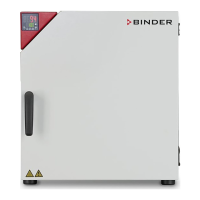
Chamber with 56 l internal volume: The flow rate corresponding to 56 l / h is 0.9 l / min.
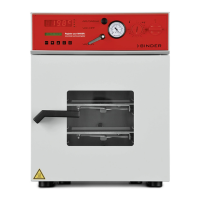
Chamber with 115 l internal volume: The flow rate corresponding to 115 l / h is 1.9 l / min.
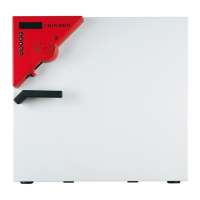
Chamber with 260 l internal volume: The flow rate corresponding to 260 l / h is 4.3 l / min.


 To Next Page