EasyManua.ls Logo

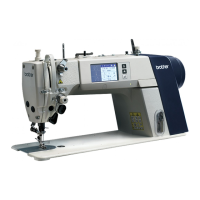
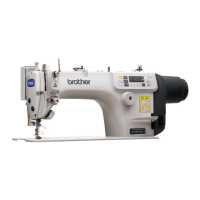
Brother S-7300A - Service Manual

Brother S-7300A
196 pages
Print Icon
To Next Page IconTo Next Page
Loading...
S-7300A
Please read this manual before making any adjustments.
SINGLE NEEDLE DIRECT DRIVE LOCK STITCHER WITH
ELECTRONIC FEEDING SYSTEM AND THREAD TRIMMER
SERVICE MANUAL

Table of Contents

Other manuals for Brother S-7300A

Questions and Answers

  • M
    Mark SchroederSep 8, 2025
    What to do if my Brother Sewing Machine has incorrect thread trimming (Upper thread is not being trimmed.) (Lower thread is not being trimmed.)?
    • W
      William JamesSep 8, 2025
      If the upper or lower thread is not being trimmed, check the following: * Ensure the needle is correctly installed; if not, install it correctly. * The fixed knife or movable knife may be blunt; replace them if necessary. * Ensure there is enough meshing between the upper and lower knives; the tip of the upper knife should reach the lower knife index position for proper meshing.
  • K
    Kayla CordovaAug 26, 2025
    Why are skipped stitches occurring while sewing with my Brother Sewing Machine?
    • D
      Diamond BrowningAug 26, 2025
      Skipped stitches can occur for a number of reasons. Here's what to check: * If the needle tip is bent or blunt, replace the needle. * Ensure the needle is properly installed. * Make sure the machine is correctly threaded. * Adjust the presser foot pressure if it is too weak. * Replace the needle with a thicker one if the current needle is too thin. * Adjust the height of the presser foot if it is too high. * Adjust the tension of the thread take-up spring if it is too weak. * Adjust the height of the needle bar and the clearance between the needle and the tip of the rotary hook to ensure the needle and rotary hook timing is correct.
  • P
    pgrimesAug 26, 2025
    Why is my Brother S-7300A Sewing Machine forming large bird's nests at the sewing start?
    • K
      kayla12Aug 27, 2025
      Large bird's nests at the sewing start can form if the upper thread trailing length is too long after thread trimming. To fix this, increase the tension of the pre-tension.
  • M
    Mary WestSep 17, 2025
    What to do for broken needle on my Brother S-7300A?
    • J
      Justin SmithSep 17, 2025
      If the needle breaks, consider the following: * Avoid pushing or pulling the material with excessive force during sewing. * Ensure the needle is properly installed. * Replace the needle if the tip is bent, broken, or the needle hole is blocked. * Adjust the height of the needle bar and the clearance between the needle and the tip of the rotary hook to ensure the needle and rotary hook timing is correct. * Adjust to the standard timing to ensure the needle and feed mechanism timing is correct. * Try pressing the special locus key and selecting No. 2 or No. 3.
  • K
    Katherine LeonardNov 28, 2025
    What to do if my Brother Sewing Machine has skipped stitches at sewing start and thread unraveling?
    • E
      erikevansDec 1, 2025
      If you're experiencing skipped stitches or thread unraveling at the start of sewing, consider the following: * Reduce the tension of the thread take-up spring if it's too strong. * Lower the position of the thread take-up spring if its operating range is too large. * Adjust the pretension if the trailing length of the upper thread is too short after thread trimming. * Replace the upper and lower knives if the threads aren't being trimmed cleanly. * Replace the needle with a thinner one if the current needle is too thick. * If the length of thread trailing out from the bobbin case after thread trimming is too short, replace the anti-spin spring in the bobbin case if the bobbin is spinning loosely. * Use the slow start key if the sewing speed is too fast at the start. * Adju...
  • J
    James GreenSep 12, 2025
    Why is the lower thread tangled at the sewing start on my Brother S-7300A Sewing Machine?
    • R
      Ryan ValdezSep 12, 2025
      If the lower thread is tangled when you start sewing, and the bobbin spins during thread trimming: * Ensure the bobbin turns in the opposite direction to the rotary hook. * Make sure the bobbin winding amount is not more than 80%. * Attach the anti-spin spring. * Replace the bobbin if it is not turning smoothly. * Use only bobbins which are specified by Brother.
  • J
    Jennifer TaylorSep 3, 2025
    Why is the upper thread pulling out of the needle after thread trimming on my Brother Sewing Machine?
    • M
      maria80Sep 4, 2025
      If the upper thread is pulling out of the needle after thread trimming, possible solutions include: * Decreasing the tension of the pre-tension if the upper thread trailing length is inappropriate. * Polishing the thread path with a file or sandpaper if it's not smooth enough. * Turning the needle bar bush thread guide D sideways to increase resistance if the thread slips easily.
  • H
    hortonkimberlySep 4, 2025
    Why is my Brother Sewing Machine's upper thread raised above the material surface after thread trimming?
    • W
      wilsonjohnSep 4, 2025
      If the upper thread protrudes from the material surface after thread trimming: 1. Increase the pitch during thread trimming. 2. Set the feed direction for sewing end processing to '?'.
  • T
    Taylor SaundersSep 23, 2025
    Why does thread break during backtack sewing on my Brother S-7300A?
    • M
      Michael NewtonSep 23, 2025
      If the thread breaks during backtack sewing, use the panel to reduce the backtack sewing speed, if the backtack sewing speed is too fast.
  • R
    Ruben WilliamsonAug 30, 2025
    What to do if there is nothing appears on the operation panel display of my Brother S-7300A?
    • N
      nfrankAug 30, 2025
      If nothing appears on the operation panel display: * Insert the connectors securely, if the power supply connector is disconnected from the control box. * Insert the connectors securely, if the operation panel connector inside the control box is disconnected.

Summary

SAFETY INSTRUCTIONS

Indications and Warnings

Explains hazard levels (DANGER, WARNING, CAUTION) and safety symbols for user protection.

Warning Labels

Details the meaning and importance of various warning labels found on the sewing machine.

General Safety Precautions

Outlines essential safety measures for machine setup, environment, and handling.

NOTES ON HANDLING

Machine Setup and Location

Advises on optimal placement to avoid electronic interference and ensure proper operation.

Safe Machine Handling and Tilting

Provides instructions for safely carrying the sewing machine and tilting its head.

FUNCTION SETTINGS

Special Functions and Memory Settings

Covers accessing special functions via power-on key combinations and advanced memory switch configuration.

Operational Checks and Data Management

Details methods for checking inputs/outputs, managing protect settings, error history, and software versions.

Energy Saving and Protect Settings

Explains how to enable energy saving mode and configure protection for machine functions.

MECHANICAL DESCRIPTIONS

Key Mechanism Overviews

Describes the upper, lower, feed, and lubrication mechanisms of the sewing machine.

Thread Trimming and Tension;Wiper Mechanisms

Details the operation and components of the thread trimming, tension release, and thread wiper systems.

DISASSEMBLY

Basic Component Disassembly

Covers the disassembly of knee lifter, cable ties, connectors, covers, and panel assemblies.

Wire, Oil, and Sensor Component Disassembly

Details the removal of tension wires, solenoids, oil systems, sensors, and hand switches.

Mechanism Component Disassembly

Explains the disassembly of tension, feed, motor, pulley, shaft, and trimming mechanisms.

ASSEMBLY

Shaft, Gear, Pulley, and Motor Assembly

Guides on assembling shaft, gear, pulley, motor, belt, and related components.

Core Sewing Mechanism Assembly

Details the assembly of tension, feed, presser foot, trimming, oil, and cover components.

ADJUSTMENTS

Thread Tension and Spring Adjustments

Covers adjusting thread tension springs, arm thread guides, and presser foot height.

Feed Mechanism Adjustments

Provides detailed procedures for adjusting feed motor home position, pitch, stitch length, and dog height/angle.

Timing and Release Wire Adjustments

Guides on adjusting needle/hook timing, thread take-up, presser foot floating, tension release, and X-over sensor.

Touch Key Calibration

Explains the process for calibrating the touch panel's key reading coordinates.

REPLACING PARTS

Thread Trimming and Motor Replacement

Provides steps for replacing thread trimming parts and motors, including adjustments.

Panel and Tension Assembly Replacement

Guides on replacing the control panel and adjusting the tension stud bracket assembly.

APPLYING GREASE

ELECTRIC MECHANISM

Electrical Safety and Connector Checks

Emphasizes electrical safety precautions and the importance of checking connector integrity before adjustments.

Component Electrical Checks

Details procedures for checking fuses, motors, power supply, and solenoids for proper function.

TROUBLESHOOTING

General Troubleshooting Guide

Lists common sewing problems, their potential causes, and suggested remedies with page references.

Error Code and Specific Issue Resolution

Provides a list of error codes and detailed steps for resolving specific operational issues.

Brother S-7300A Specifications

General IconGeneral
BrandBrother
ModelS-7300A
CategorySewing Machine
LanguageEnglish

Related product manuals