67
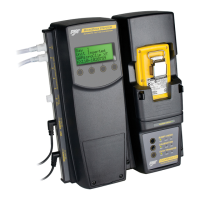
MicroDock II
Calibration
Calibration
Guidelines
a Caution
If adjustments are made to the real-time clock, the calibration due
date will be invalid for the
• GasAlert Extreme,
• GasAlertMicro,
• GasAlertMicro 5/PID/IR,
• GasAlertMicroClip,
• GasAlertMax XT, and
• GasAlertQuattro detectors.
Recalibrate the detector immediately.
When calibrating the sensors, adhere to the following guidelines:
• Recommended gas mixture:
O
2
: clean air, 18% vol.
CO: (low H
2
sensitivity): 50 to 500 ppm balance N
2
CO: 50 to 500 ppm balance N
2
H
2
S (high range): 10 to 100 ppm balance N
2
H
2
S (low methanol): 10 to 100 ppm balance N
2
H
2
S: 10 to 100 ppm balance N
2
PH
3
: 1 to 5 ppm balance N
2
SO
2
: 10 to 50 ppm balance N
2
NH
3
: 20 to 100 ppm balance N
2
NH
3
: (high range) 20 to 100 ppm balance N
2
NO
2
: 5 to 50 ppm balance N
2
HCN: 5 to 20 ppm balance N
2
ETO: 5 to 50 ppm balance N
2
NO: 10 to 250 ppm balance N
2
Cl
2
: 3 to 25 ppm (for bump checks only)
VOC: 100 ppm isobutylene
CO
2
: 5000 ppm balance air or 0-5.0 % v/v CO
2
LEL: 10 to 100% LEL or 0.5 to 5% by vol. methane balance air
Note
The base station cannot calibrate Cl
2
, O
3
, and ClO
2
sensors.
• Calibrate only in a safe area that is free of hazardous gas, in an
atmosphere of 20.9% oxygen. Do not operate the base station in
a hazardous area. Failure to adhere to this guideline can result in
possible personal injury and/or property damage.
• BW recommends using premium grade calibration gases and
cylinders that are certified to National Standards. The calibration
gases must meet the accuracy of the detector.
• Do not use a gas cylinder beyond its expiration date.
• All calibration cylinders must be used with a demand flow regula-
tor and must meet the following maximum inlet pressure specifi-
cations:
• Disposable cylinders 0-1000 psig/70 bar
• Refillable cylinders 0-3000 psig/207 bar
• Do not calibrate the detector during or immediately after charging
is complete.
• For ETO sensors (before each work shift) allow the detector to
fully stabilize in the temperature that it will be operated in, and
then zero the detector.
• It is necessary to periodically re-zero the ETO sensor.


 To Next Page