How do Endpoint Policy Servers Work?
R81 Harmony Endpoint Server Administration Guide|161
How do Endpoint Policy Servers Work?
External Endpoint Policy Servers decrease the load of the Endpoint Security Management
Server and reduce the bandwidth required between sites. By default, the Endpoint Security
Management Server also acts as an Endpoint Policy Server, in addition to the other Endpoint
Policy Servers. The work of communication with the Endpoint Security clients is distributed
among all of them.
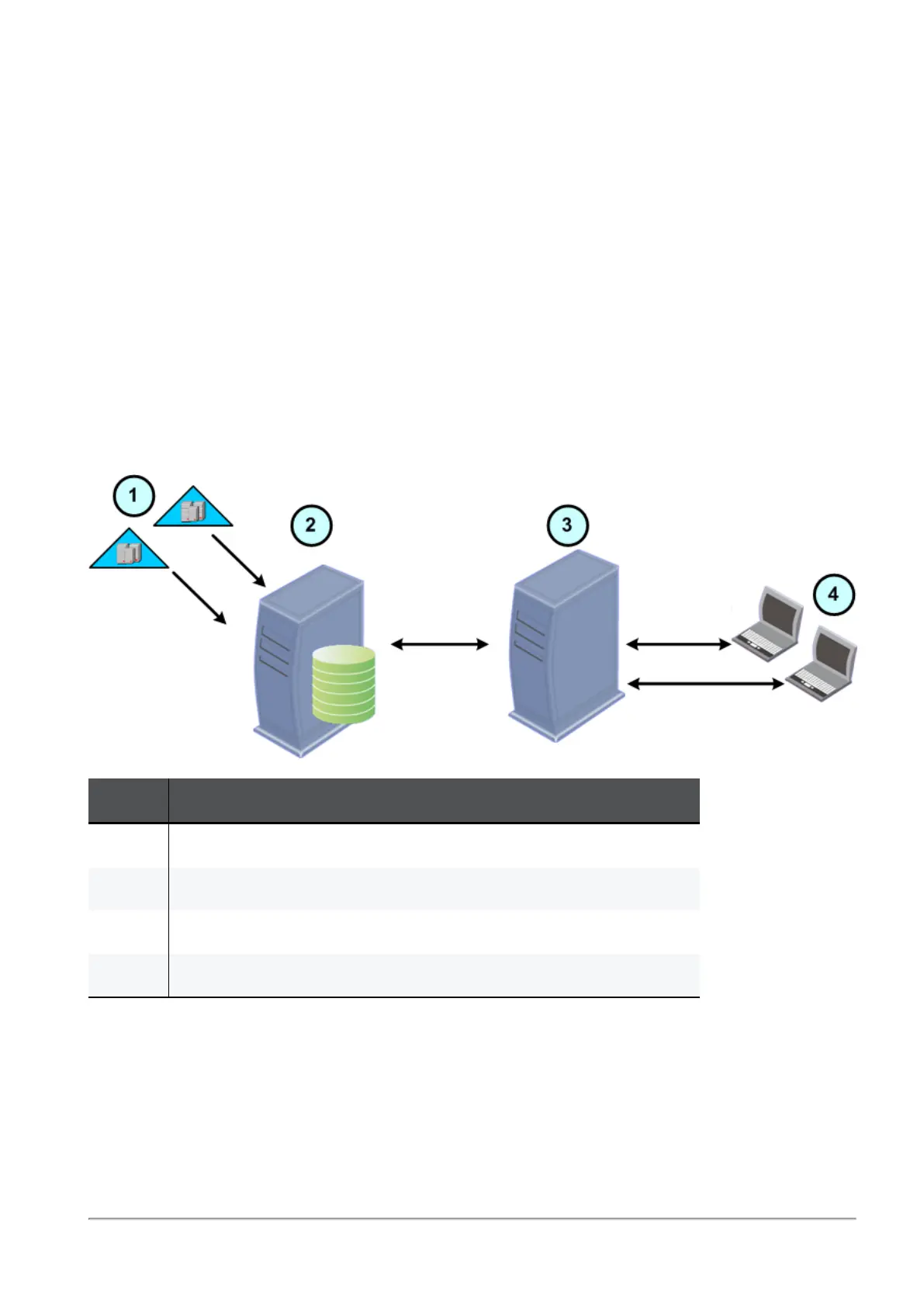
The Endpoint Policy Servers are located between the Endpoint Security clients and the
Endpoint Security Management Server. For most tasks, Endpoint Security clients
communicate with the Endpoint Policy Servers and the Endpoint Policy Servers communicate
with the Endpoint Security Management Server.
If there are multiple Endpoint Policy Servers in an environment, each Endpoint Security client
does an analysis to find which Endpoint Policy Server is "closest" (will be fastest for
communication) and automatically communicates with that server.
Item Description
1 Active Directory Domains
2 Endpoint Security Management Server
3 External Endpoint Policy Server
4 Enterprise workstations with Endpoint Security clients installed
The Endpoint Policy Server handles the most frequent and bandwidth-consuming
communication. The Endpoint Policy Server handles these requests without forwarding them
to the Endpoint Security Management Server:
n
All heartbeat and synchronization requests.
n
Policy downloads



 To Next Page