
 Need help?
Do you have a question about the Check Point UTM-1 Edge and is the answer not in the manual?
Introduces the UTM-1 appliance, its features, and integration with Check Point's SMART architecture.
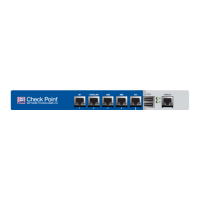
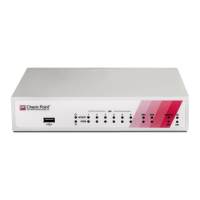
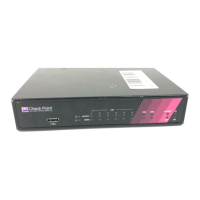
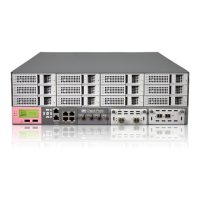
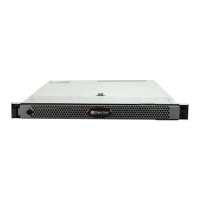
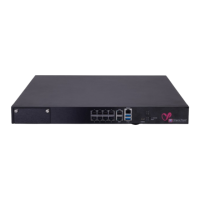
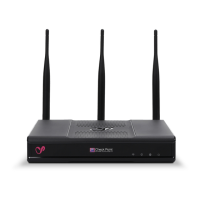
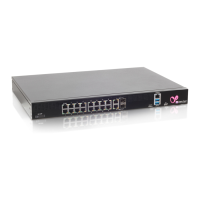
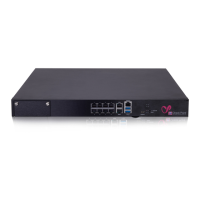
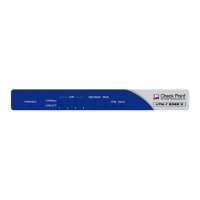
Details the different hardware series and models within the UTM-1 Edge X and Edge W product families.
Provides information on how to obtain technical assistance for the UTM-1 appliance.
Explains basic security concepts and the value of information in an organizational context.
Defines firewall functionality, security requirements, and Check Point's Stateful Inspection technology.
Details pre-installation requirements and checks, including TCP/IP configuration.
Provides step-by-step instructions for installing UTM-1 Edge X and Edge W appliances.
Guides users through the first-time login process and initial password setup for the UTM-1 Portal.
Explains how to log in to the UTM-1 Portal via HTTP or HTTPS.
Introduces the different types of Internet connection configurations supported by the UTM-1 appliance.
Provides a step-by-step guide for configuring Internet connections using the wizard interface.
Explains manual configuration of Internet connections, including advanced options.
Details how to configure LAN, IP addresses, NAT, DHCP, DMZ, and VLAN settings for network management.
Explains how to add and manage computers and networks as objects for policy configuration.
Describes how to add and edit custom network services for policy definition.
Explains how to configure static routes for directing network traffic.
Introduces bridging functionality for connecting network segments and provides advantages like network segmentation.
Provides steps for adding and editing bridges for network connectivity.
Explains how to add internal networks, including VLANs, to a bridge configuration.
Details how to add Internet connections to bridge configurations.
Explains High Availability (HA) clustering, master/backup roles, and virtual IP address management.
Provides the procedure to configure HA settings on a single gateway.
Introduces Traffic Shaper for bandwidth management and prioritizing important traffic.
Details the steps required to enable and configure Traffic Shaper for Internet connections.
Describes the predefined Quality of Service (QoS) classes available for traffic prioritization.
Introduces the UTM-1's wireless capabilities, including 802.11 standards and extended range modes.
Guides users through configuring wireless networks, including using the Wireless Configuration Wizard.
Provides solutions for common problems related to wireless network connectivity.
Explains how to view and interpret the Event Log for tracking network activity and events.
Details how to view and analyze incoming and outgoing traffic data using the Traffic Monitor.
Describes how to view active computers on the network, their status, and node limit information.
Explains the UTM-1 Firewall's security policy, its components, and implementation.
Details how to adjust the firewall's security level using a simple lever interface.
Guides on configuring public Internet servers like Web, Mail, FTP, or exposed hosts.
Explains how to create and manage firewall rules for traffic control and policy customization.
Introduces Check Point SmartDefense Services for attack safeguards and blocking.
Details how to configure SmartDefense using the Wizard or the Tree interface.
Provides a breakdown of SmartDefense categories and their associated attacks.
Introduces VStream Antivirus, its stream-based engine, and scanning capabilities.
Explains how to enable or disable the VStream Antivirus feature for network computers.
Details how to configure the VStream Antivirus policy and advanced settings.
Introduces Service Centers, SMART management, and SofaWare Security Management Portal (SMP).
Guides users on connecting the UTM-1 appliance to a Service Center for updates and services.
Explains how to view subscription details and service status on the Account page.
Details Web Filtering service, category blocking, and user override permissions.
Introduces Virtual Private Networks (VPNs), their types, and benefits.
Guides on setting up the UTM-1 appliance as a Remote Access, Internal, or L2TP VPN Server.
Provides instructions for adding and editing VPN sites, including Site-to-Site and Remote Access configurations.
Explains how to change the username and password for accessing the UTM-1 appliance.
Details the process for adding new users and editing existing user accounts and permissions.
Provides steps for viewing, deleting, and clearing expired user accounts.
Introduces the integrated Microsoft Terminal Services client for remote desktop access.
Details how to enable and configure the Remote Desktop feature on the UTM-1 appliance.
Explains how to enable the Remote Desktop server on computers for remote access.
Provides steps for accessing a remote computer's desktop using the UTM-1's Remote Desktop feature.
Explains how to view the current firmware version and hardware details of the UTM-1 appliance.
Provides instructions for updating the UTM-1 appliance's firmware manually or automatically.
Details how to upgrade the UTM-1 product license by installing a new Product Key.
Guides on configuring the UTM-1 appliance to send event logs to a Syslog server.
Explains how to control the UTM-1 appliance using the command line interface via Portal, console, or SSH.
Details how to enable and configure HTTPS access to the UTM-1 Portal from the Internet.
Explains how to enable and configure SSH management protocol for appliance control.
Guides on configuring Simple Network Management Protocol (SNMP) for appliance monitoring.
Details how to set or synchronize the UTM-1 appliance's date and time.
Introduces diagnostic tools like Ping, Traceroute, WHOIS, and Packet Sniffer for troubleshooting.
Explains how to export and import the UTM-1 appliance configuration file for backup and restore.
Provides steps to reset the UTM-1 appliance to its factory default settings via Web interface or Reset button.
Guides on viewing technical information and exporting diagnostic data for troubleshooting.
Explains how to restart the UTM-1 appliance to resolve functioning issues.
Introduces the built-in print server for connecting USB-based printers and sharing them across the network.
Details the procedure for setting up a network printer by connecting it to the UTM-1 appliance.
Provides instructions for configuring Windows Vista and Mac OS-X computers to use network printers.
Offers solutions for common connectivity problems, including Internet, DSL, and Cable access issues.
Addresses issues related to node limits, Service Center connection failures, and software upgrades.
Provides solutions for common issues like forgotten passwords, incorrect date/time, and inaccessible applications.
Presents detailed technical specifications, including physical attributes, power, environmental conditions, and standards compliance.
Details the CE declaration and compliance with various EU directives and standards.
 General
| Model | UTM-1 Edge |
|---|---|
| Form Factor | Desktop |
| VPN Tunnels | 50 |
| Power Supply | External AC adapter |
| Operating Temperature | 0° to 40° C |
| Storage Temperature | -20°C to 70°C (-4°F to 158°F) |
| Humidity | 10% to 90% (non-condensing) |
| Device Type | Unified Threat Management (UTM) Appliance |
| Dimensions | 220 x 160 x 44 mm (8.66 x 6.30 x 1.73 in) |



 To Next Page