
 Need help?
Do you have a question about the ClearCom FreeSpeak II and is the answer not in the manual?
Familiarize with safety symbols on apparatus warning of electric shock danger if used improperly.
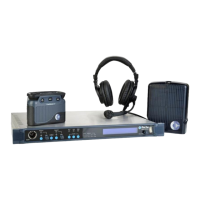
Details the three main elements of an FS II system: beltpacks, Base station, and transceiver network.
States Base station supports up to 20 beltpacks and details antenna connectivity via splitters.
Explains how allocated carrier frequencies vary by location, affecting beltpack support.
Covers coexistence of multiple Base stations in the same radio space using unique System Identifiers.
Details the FreeSpeak II devices operating in the 1.9 GHz and 2.4 GHz frequency bands.
Guides scoping a site and pairing beltpack/antenna without Base station connection.
Details positioning the Base station as the central routing unit for the FS II system.
Explains positioning antennas and splitters for coverage, considering placement factors.
Provides instructions for wiring antennas and splitters using shielded Ethernet cables.
Details recommended powering schemes and cable lengths for FS II system components.
Explains testing coverage areas and re-locating antennas for optimal coverage using scenarios.
Guides testing coverage areas extensively before system setup, using beltpacks.
Details performing a site survey using a beltpack in Site Survey mode.
Explains testing antenna handoff by walking through coverage areas for seamless switching.
Monitors beltpack connections to antennas via Base station SYSTEM menu.
Discusses beltpack capacity per antenna and coverage zone assignment.
Explains how environmental factors affect effective range and coverage zones.
Explains the mandatory process of registering beltpacks with the FreeSpeak II system via USB or OTA.
Details registering beltpacks over the air (OTA) directly from the Base station.
Provides a labeled diagram and explanation of all connectors on the FS II Base station rear panel.
Details connecting Clear-Com, RTS, and compatible partyline systems to the Base station.
Explains connecting Clear-Com/compatible wired partylines to PL CH-A and PL CH-B connectors.
Provides steps to enable and connect partyline equipment to the Base station.
Details the process of auto nulling partyline channels via the Base station's front panel.
Guides navigating menus to connect to a partyline, setting calls and type.
Explains connecting an RTS wired beltpack to channel 2 of the FS II Base station.
Guides using front-panel controls to adjust input/output levels for partyline connections.
Addresses reducing FS II beltpack echo when talking to analogue partylines.
Minimizes echo by setting VOX gate and auto-nulling the partyline.
Recommends including wireless partylines (WPL) to reduce audio level variations.
Details setting VOX level limits for audio passed from partyline to Base station mixer.
Describes the FS II Base station's five wireless partyline groups for conference calls.
Explains connecting up to four channels of 4-wire/digital matrix intercom systems.
Guides connecting Base station to matrix port using configuration editor and ports menu.
Details the pinout for the RJ-45 4-wire port on the FS II Base station.
Explains connecting Matrix Plus digital intercom port to FS II 4-wire port via CAT-5 cable.
Details connecting Eclipse digital matrix to FS II 4-wire port using CAT-5 cable.
Explains connecting to other digital matrix systems using standard 4-wire ports.
Details connecting other 4-wire audio devices like Clear-Com interfaces to FS II.
Explains connecting a program audio source to the Base station via XLR connector.
Details configuring IFB sources and destinations using Base station inputs and ports.
Explains routing a talker's voice to an external paging system via the SA OUT connector.
Covers connecting to a PC for firmware updates and system monitoring via serial port.
Details connecting PC to Base station's serial port for firmware upgrades.
Explains using LAN port for firmware updates and connection with Eclipse digital matrix.
Details connecting transceiver/antennas directly to the Base station's transceiver ports.
Guides direct connection of transceiver/antenna to Base station transceiver port via CAT-5 cable.
Explains using PD2203 splitter to connect multiple transceivers/antennas to Base station.
Details provision of 24 VDC power to antennas and antenna splitters.
Overview of the FS II Base station's role in the digital wireless intercom system.
Explains the functions of the Base station's front panel controls and display.
Outlines the four basic steps for programming the FS II system via Base station menus.
Explains navigating Base station's front-panel display menus to select programming options.
Details how changes are saved and applied automatically after adjustments.
Guides creating individual names ('labels') for wireless beltpacks and wired devices.
Provides step-by-step instructions for editing a beltpack label via the Base station menu.
Explains creating port labels to identify audio devices connected to the Base station's rear panel ports.
Guides creating alphanumeric labels for audio ports via the Base station menu.
Details creating group labels for simultaneous communication, supporting standard and wireless partylines.
Provides steps to create a name or 'label' for a group via the Base station menu.
Explains populating groups with beltpacks and wired devices for partyline-style communication.
Guides assigning members from beltpacks and wired ports to a selected group.
Summarizes completed steps: created labels for beltpacks, devices, groups, and assigned members.
Explains assigning communication routes (keys) from beltpacks to devices or groups.
Guides adjusting input and output audio levels for individual beltpacks via the Base station menu.
Determines whether beltpack keys latch for continuous audio route or are non-latching.
Allows adjustment of input and output audio levels for devices connected to Base station ports.
Explains how input level affects volume for ALL users and acts as a global volume control.
Explains how output level affects volume for individual ports hearing audio sources.
Guides setting input and output audio levels for a specific port via the Base station menu.
Configures call destinations for Partyline, 4-Wire, SA, and Program ports.
Explains setting the correct termination, gain, and call signaling for a partyline system.
Guides selecting the partyline type (Clear-Com, RTS) for a partyline port.
Details setting a cutoff level to ignore background noise for partyline ports.
Explains setting Input, Output, and nulling levels for a partyline port.
Describes system-wide capabilities accessible via the Base station's SYSTEM menu.
Explains accessing firmware version, system ID, and IP address information.
Details restoring factory default map, IP address, and IP mask settings.
Explains how the display shows active antenna status and occupied slots.
Guides setting the Base station's IP address using the Enter/Setup rotary encoder.
Allows locking front panel enable buttons for partyline A, B, and program source.
Explains how to kill microphones on beltpacks and partyline stations remotely.
Describes the display of battery life monitor screen for all connected beltpacks.
Introduces the FS II beltpack, its simultaneous channel access, and display modes.
Details the beltpack's controls, including top, front, bottom, and rear panel components.
Explains the function of beltpack top controls: talk keys A, B, C, D and the display.
Lists and describes beltpack display icons: key label, role name, volume, signal, and battery.
Details beltpack headset tones and alerts for call signal, low battery, and out-of-range events.
Explains beltpack front controls: rotary level controls, power, reply, and menu keys.
Details beltpack bottom connectors: LED torch, headset socket, stereo jack, and USB connector.
Identifies beltpack rear panel features: beltpack clip and battery compartment.
Provides instructions on how to use the beltpack, starting with registration.
Explains the mandatory process of registering beltpacks with the FreeSpeak II system.
Details how to recharge the beltpack battery using the dedicated charger or USB charger.
Explains how to turn the FS II beltpack on and off using the recessed power button.
Guides using beltpack keys for communication, adjusting volume, and talk/listen functions.
Explains how to enter and exit the beltpack's menu mode for configuration.
Details adjusting incoming audio volume for channels using rotary controls or menu options.
Guides upgrading beltpack firmware via USB connection or Over The Air (OTA).
Explains accessing beltpack menus by pressing and holding the Menu key.
Details configuring channel volumes and the beltpack master volume.
Guides adjusting individual channel volumes and master volume via beltpack menu.
Explains configuring the volume level of an audio line input.
Details configuring rotary controls for volume on keys A/B or master volume.
Covers headset settings: autodetect, sidetone level, and headset limiter.
Enables automatic detection of plugged-in headsets and audio routing.
Sets the sidetone level, which tracks the master volume level.
Limits incoming headset audio to prevent excessive sound levels.
Details microphone settings: type and echo cancellation.
Specifies microphone type (Automatic, Electret, Dynamic Unbalanced) or auto-detection.
Improves microphone audio quality by enabling or disabling echo cancellation.
Covers display settings: brightness, dim timeout, and off timeout.
Controls display brightness and automatic dimming after a timeout period.
Determines when the beltpack display dims if no key is used or no call is active.
Determines when a dimmed beltpack display will switch off after a timeout.
Covers alarm options: low battery, out of range, and call alert.
Determines beltpack behavior when battery power is low (audio, vibrate, or off).
Sets the battery level that triggers the low battery alarm (0-100%).
Determines the alarm issued when the beltpack is out of antenna range (Audio only or Off).
Determines the alert issued when the beltpack receives an incoming call (Audio, Vibrate, or Off).
Sets beltpack configuration to default settings downloaded from the configuration editor.
Allows selection of administration settings: System pairing mode, Full menu access.
Enables or disables system pairing mode for registering beltpacks over the air.
Overrides menu access levels for beltpack roles, granting full menu access.
Sets system sync mode to make antenna synchronization readings.
Configures option to play back incoming messages, setting recording time and auto-delete time.
Allows access to beltpack information, including battery and fault-finding data.
Allows selection between Intercom mode and Partyline mode for beltpack display.
Provides option to connect the beltpack to an antenna.
Enables beltpack registration without Base station/computer access, using system admin code.
Allows surveying intercom installation to determine FreeSpeak II antenna presence.
Explains transceiver/antenna role in linking beltpacks and Base station, and mounting methods.
States the transceiver/antenna has an IP rating of 65 for outdoor resistance.
Details the connector panel of the FS II transceiver/antenna, including USB, Base/Matrix, and DC connectors.
References section 3.3.1 for instructions on wiring antennas and splitters.
Explains transceiver/antenna capacity (5 beltpacks/zone) and system design considerations.
Discusses how environment and objects affect effective range and coverage zones.
Provides general rules and tips for setting up transceiver/antennas for optimal coverage.
Guides upgrading antenna/transceiver firmware via USB or centrally via Base station.
Introduces the PD2203 splitter for connecting multiple transceivers/antennas to the Base station.
Details the front connector panel of the PD2203 splitter.
Details rear panel connectors: serial, power indicator, DC IN.
Guides making connections between splitter, Base station, and transceivers/antennas.
Explains loading configurations from disk or extracting from a Base station.
Guides loading a configuration file from disk using the Load button.
Details loading configuration from Base station using a serial cable connection.
Explains loading configuration from Base station using an Ethernet network connection.
Guides loading edited configurations from Editor to Base station via serial or Ethernet.
Describes the tabs and buttons of the Configuration Editor interface.
Explains wirelessly registering beltpacks from the Configuration Editor's System tab.
Covers registering, editing key assignments, and changing input/output levels for beltpacks.
Guides selecting a beltpack slot and entering its ID and serial number.
Details registering beltpacks by connecting them to the PC via USB cable.
Explains viewing a summary of beltpack labels and serial numbers via the Overview screen.
Opens the beltpack properties screen for configuring and downloading beltpack defaults.
Resets properties to stored values using 'Remember My Default Settings'.
Reads back and displays factory default settings for resetting beltpacks.
Saves current displayed default settings for later recall using 'Remember My Default Settings'.
Describes configuring beltpack audio levels: Headset Limiter, Sidetone Level, Master Volume, Line In Vol Level.
Covers alarm options: low battery, out of range, and call alert.
Determines beltpack behavior when battery power is low (audio, vibrate, or off).
Sets the battery level that triggers the low battery alarm (0-100%).
Determines the alarm issued when the beltpack is out of antenna range (Audio only or Off).
Determines the alert issued when the beltpack receives an incoming call (Audio, Vibrate, or Off).
Sets beltpack configuration to default settings downloaded from the configuration editor.
Allows selection of administration settings: System pairing mode, Full menu access.
Enables or disables system pairing mode for registering beltpacks over the air.
Overrides menu access levels for beltpack roles, granting full menu access.
Sets system sync mode to make antenna synchronization readings.
Configures option to play back incoming messages, setting recording time and auto-delete time.
Allows access to beltpack information, including battery and fault-finding data.
Allows selection between Intercom mode and Partyline mode for beltpack display.
Provides option to connect the beltpack to an antenna.
Enables beltpack registration without Base station/computer access, using system admin code.
Allows surveying intercom installation to determine FreeSpeak II antenna presence.
Explains transceiver/antenna role in linking beltpacks and Base station, and mounting methods.
States the transceiver/antenna has an IP rating of 65 for outdoor resistance.
Details the connector panel of the FS II transceiver/antenna, including USB, Base/Matrix, and DC connectors.
References section 3.3.1 for instructions on wiring antennas and splitters.
Explains transceiver/antenna capacity (5 beltpacks/zone) and system design considerations.
Discusses how environment and objects affect effective range and coverage zones.
Provides general rules and tips for setting up transceiver/antennas for optimal coverage.
Guides upgrading antenna/transceiver firmware via USB or centrally via Base station.
Introduces the PD2203 splitter for connecting multiple transceivers/antennas to the Base station.
Details the front connector panel of the PD2203 splitter.
Details rear panel connectors: serial, power indicator, DC IN.
Guides making connections between splitter, Base station, and transceivers/antennas.
Explains loading configurations from disk or extracting from a Base station.
Guides loading a configuration file from disk using the Load button.
Details loading configuration from Base station using a serial cable connection.
Explains loading configuration from Base station using an Ethernet network connection.
Guides loading edited configurations from Editor to Base station via serial or Ethernet.
Describes the tabs and buttons of the Configuration Editor interface.
Explains wirelessly registering beltpacks from the Configuration Editor's System tab.
Covers registering, editing key assignments, and changing input/output levels for beltpacks.
Guides selecting a beltpack slot and entering its ID and serial number.
Details registering beltpacks by connecting them to the PC via USB cable.
Explains viewing a summary of beltpack labels and serial numbers via the Overview screen.
Opens the beltpack properties screen for configuring and downloading beltpack defaults.
Resets properties to stored values using 'Remember My Default Settings'.
Reads back and displays factory default settings for resetting beltpacks.
Saves current displayed default settings for later recall using 'Remember My Default Settings'.
Describes configuring beltpack audio levels: Headset Limiter, Sidetone Level, Master Volume, Line In Vol Level.
Covers alarm options: low battery, out of range, and call alert.
Determines beltpack behavior when battery power is low (audio, vibrate, or off).
Sets the battery level that triggers the low battery alarm (0-100%).
Determines the alarm issued when the beltpack is out of antenna range (Audio only or Off).
Determines the alert issued when the beltpack receives an incoming call (Audio, Vibrate, or Off).
Sets beltpack configuration to default settings downloaded from the configuration editor.
Allows selection of administration settings: System pairing mode, Full menu access.
Enables or disables system pairing mode for registering beltpacks over the air.
Overrides menu access levels for beltpack roles, granting full menu access.
Sets system sync mode to make antenna synchronization readings.
Configures option to play back incoming messages, setting recording time and auto-delete time.
Allows access to beltpack information, including battery and fault-finding data.
Allows selection between Intercom mode and Partyline mode for beltpack display.
Provides option to connect the beltpack to an antenna.
Enables beltpack registration without Base station/computer access, using system admin code.
Allows surveying intercom installation to determine FreeSpeak II antenna presence.
Details powering up Base station and selecting SYSTEM > IP to enter the address.
Guides sending firmware file from Configuration Editor to the Base station.
Guides sending FPGA file from Configuration Editor to the Base station.
Guides loading the default map file (.bsc) from Configuration Editor.
Provides a hierarchical view of Base station menu items and options.
Explains beltpack menu access levels (Basic, Normal, Advanced, None).
Lists technical specifications for the FreeSpeak II Base station, including ports and indicators.
Lists technical specifications for the FreeSpeak II Beltpack, including frequency response, power, and range.
Lists specifications for Transceiver/Antenna: beltpack support, transmission range, and dimensions.
Lists specifications for the splitter: supported units, connections, and powering.
Details RF operation, modulation, frequencies, RF output, and theory of operation.
Provides FCC compliance information, including notices and RF exposure warnings for beltpacks.
Covers Industry Canada compliance, FCC/IC RF exposure, and EU directives.
Provides instructions for disposal of WEEE by users in the European Union.
 General
| Brand | ClearCom |
|---|---|
| Model | FreeSpeak II |
| Category | Conference System |
| Language | English |

 To Next Page

