Installation
3-14 Operator's Manual
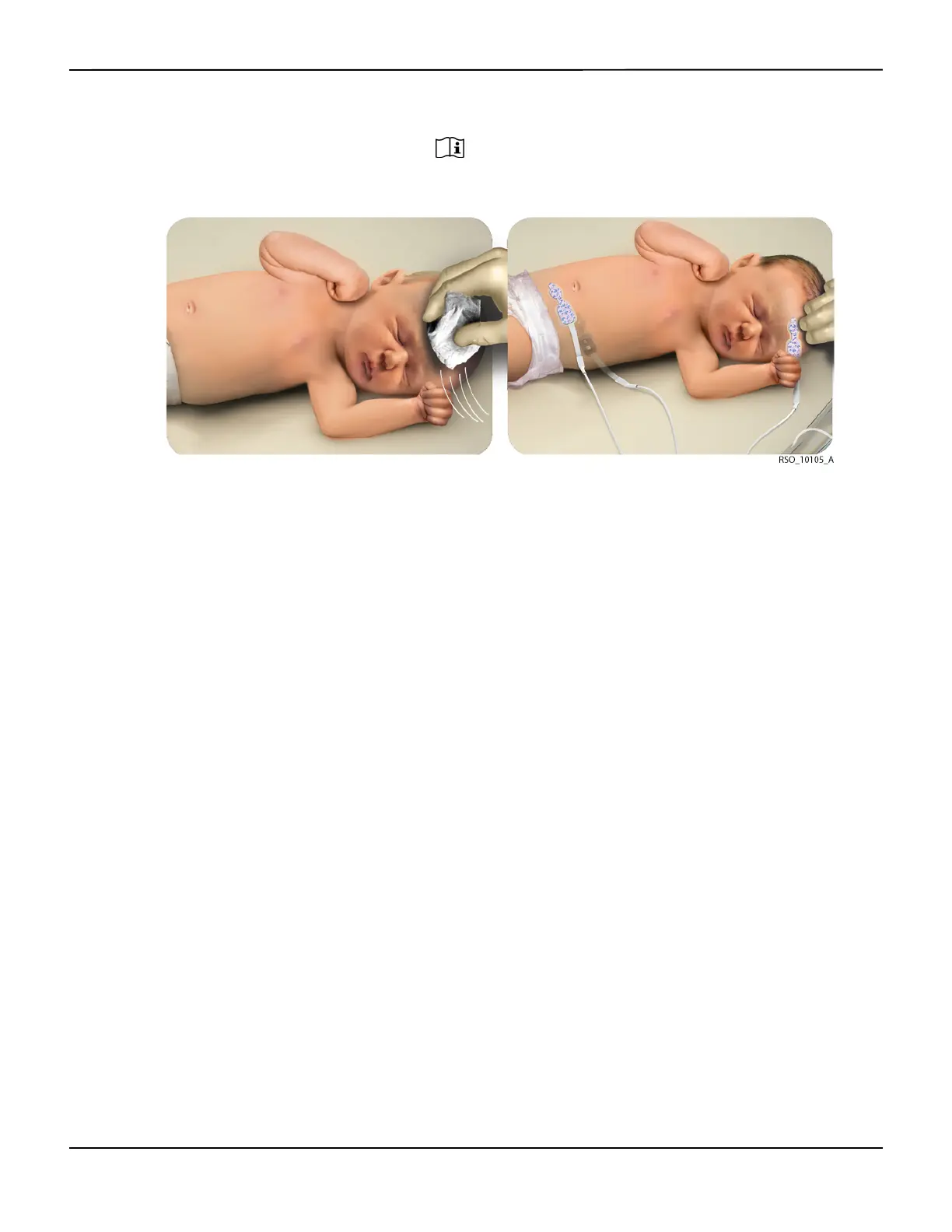
smoothing it to the skin from the center outward. Ensure edges of the sensor are sealed (see Fig-
ure3-6. and sensor instructions for use inside carton).
Figure3-6.OxyAlert NIRSensor Placements: Cerebral, Flank, and Abdominal Shown
Caution:
To avoid pressure sores, do not apply external pressure (for example, headbands, wraps, tape) to
the sensor.
Note:
Periodically check skin integrity according to your institution’s patient care policy. After the sensors are
removed or peeled back to check skin, be sure sensor is properly resealed to skin to avoid light entering.
For extended monitoring, Covidien recommends using a new sensor every 24 hours or if the adhesive is
inadequate to seal the sensor to the skin.
3.16.7 Monitoring with the OxyAlert NIRSensor
Note:
The OxyAlert NIRSensor is a disposable sensor with sensor cable that connects directly to the preamplifier.
There are no reusable sensor cables in this configuration.
Plug the sensor cable into the preamplifier 9-pin connector. Make sure that the wide side of the
9-pin connector on the sensor’s cable is positioned toward the wide side of the 9-pin female con-
nector of the preamplifier. Secure the sensor cable to a fixed object to avoid strain on the sensor-
to-skin interface using strain-relief clips. Ensure the cable is properly inserted into the preamplifier.
Calibration is automatic and monitoring will begin in seconds.
Status messages on the INVOS™ system screen will appear if monitoring conditions are compro-
mised.




 To Next Page