58 • Camera Performance and Features Linea Lite GigE Series Camera
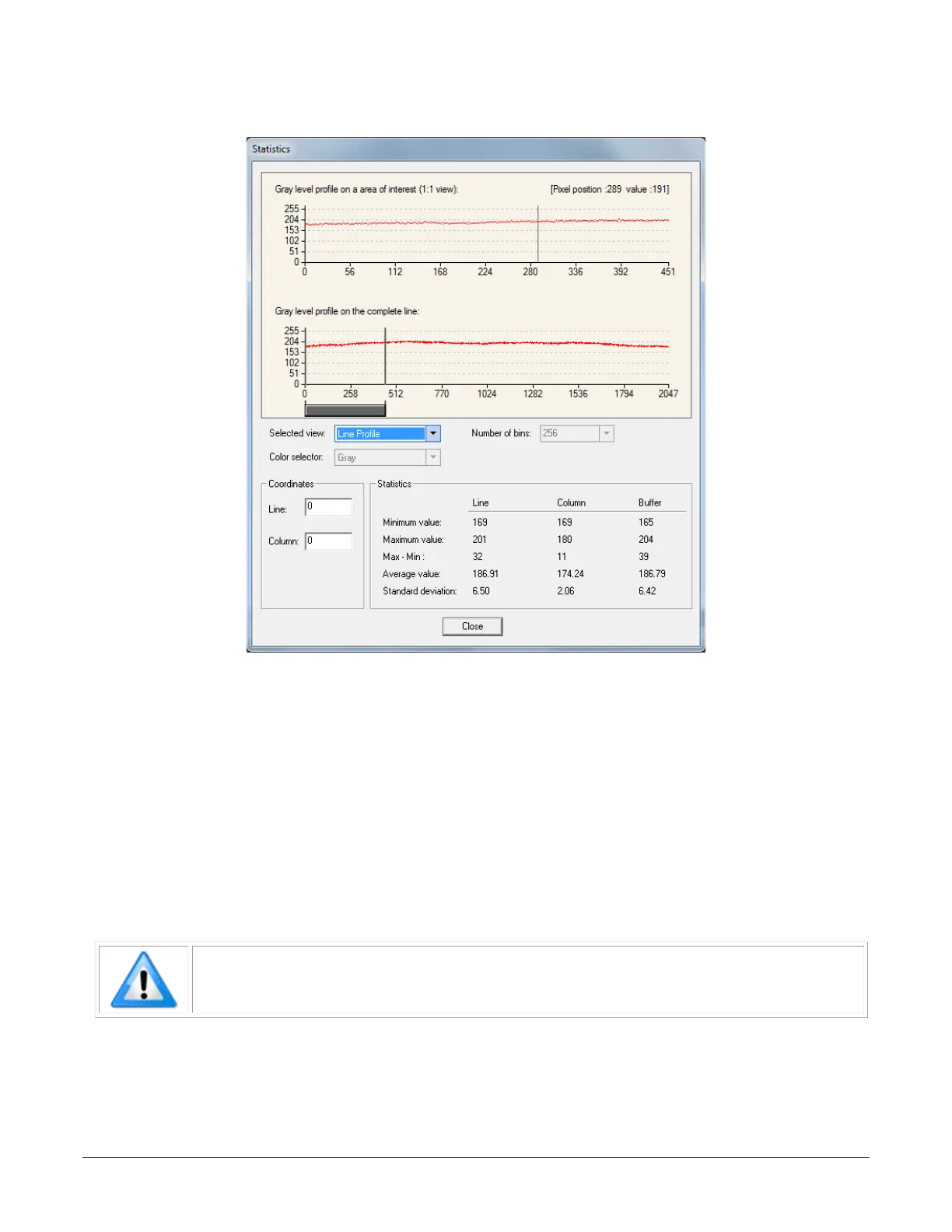
To evaluate a bare image of a uniform white target scene use the line profile tool shown below.
Figure 48: CamExpert Statistics Dialog – Line Profile
A line profile is mainly determined by two factors: Flatness and Height
1) Flatness: The Line profile represents a Flat Field measurement. Due to lens-shading effect,
light falls-off near the edges and results in lower output. This produces higher noise levels near the
edge. A smaller aperture opening and longer focal length can reduce lens - shading effect. In some
demanding applications, optimized low - shading lenses should be considered.
2) Height: An average value near your calibration target is ideal.
An extremely low output compared to the target will increase noise level significantly after the
PRNU is corrected. To avoid SNR and / or DNR not meeting your application requirements, the
profile should reach a level near the calibration target.
Note: Changes to gain do not improve image quality from a SNR perspective.
Gains are analog and digital multipliers that scale up signal and noise
Before performing a FFC follow these guidelines:
• Ensure the camera’s temperature is at nominal operating condition. Power-on for minimum 30
min.


 To Next Page
 Loading...