If air enters the fuel system, the air must be purged from the fuel system before engine can be started. Air can enter the
fuel system when the following events occur:
• The fuel tank is empty or the tank has been partially drained.
• Two low-pressure fuel lines are disconnected.
• A leak exists in the low-pressure fuel system.
• The fuel filter has been replaced.
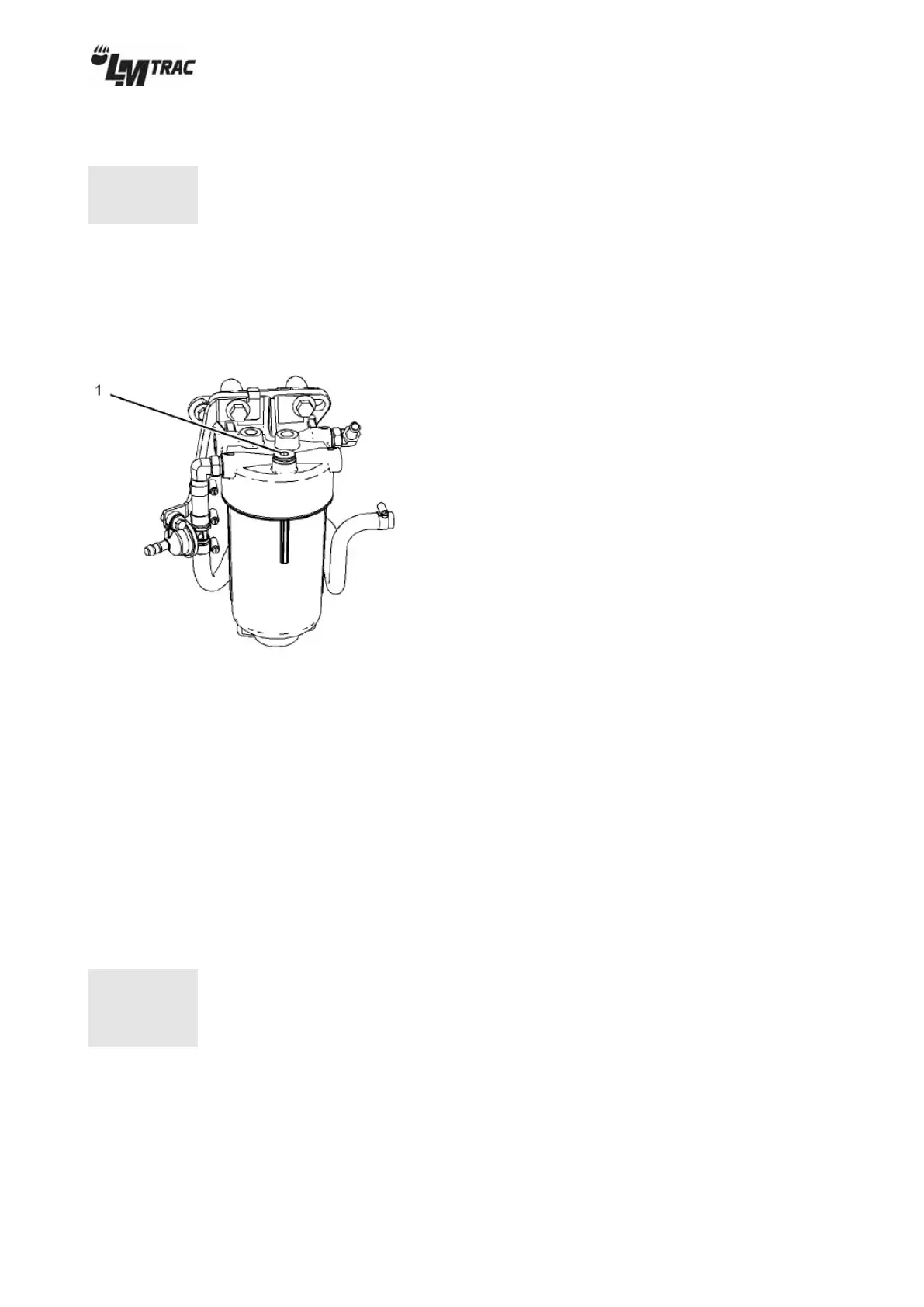
Figure 67
Use the following procedures to remove air from the fuel system:
► Ensure that fuel tank is full.
► Place a suitable container under the secondary fuel filter in order to catch any fuel that might spill. Clean up any
spilled fuel. Clean the outside body of the filter assembly.
► Loosen the vent screw (1) on the secondary fuel filter. Turn the ignition switch to the “RUN” position. The ignition
switch will allow the electric priming pump to operate.
► When fuel free from air comes from the vent screw (1), tighten the vent screw to a torque of 24 Nm (212 lb in). Then,
operate the electric priming pump for two minutes.
► Turn the ignition switch to the “OFF” position. The fuel system will now be primed and the engine should be able to
start.
► Operate the engine starter and crank the engine. After the engine has started, operate the engine at low idle for a
minimum of five minutes. Do not apply load for five minutes.
Operating the engine for this period will help ensure that fuel system is free
of air. DO NOT loosen the high-pressure fuel lines to purge air from the fuel
system. This procedure is not required.
► Ensure that the fuel system is free from leaks.
After the engine has stopped, you must wait for ten minutes to allow the fuel pressure to be purged from the high-
pressure fuel lines before any service or repair is performed on the engine fuel lines. The ten minute wait will also allow
static charge to dissipate from the low-pressure fuel system. If necessary perform minor adjustments. Repair any leaks
from the low-pressure fuel line that has leaked.
If you inspect the engine in operation, always use the proper inspection procedure to avoid a fluid penetration hazard.


 To Next Page