Chapter 7. Performing Measurements
79
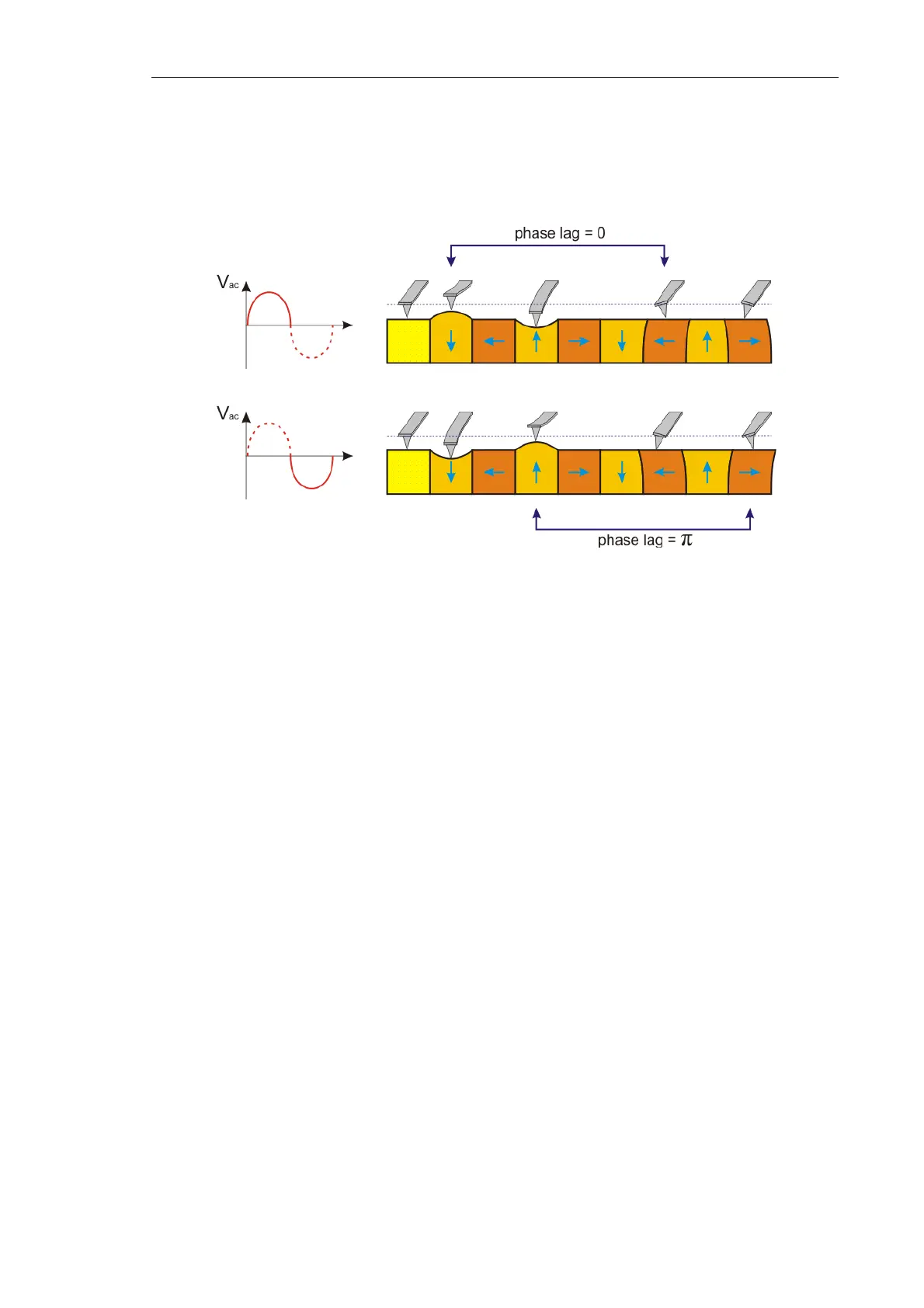
Fig. 7-35 illustrates displacements of the structure whose domains are oriented both
vertically and horizontally. The case of the altering electric field is considered. Oscillations
of the surface are shown both for the positive direction of the electric field, above, and for
the negative, below.
Fig. 7-35
Provided that domains have the same sizes, the magnitude of surface oscillations is the
same. Correspondingly, the magnitude of the cantilever normal deflection is also the same.
However the oscillation phase will be different for those domains with different orientation
of the polarization vector.
In the case of horizontally oriented domains, surface displacements will be lateral with
respect to the surface rather than normal. Respectively, the magnitude of normal
oscillations of the cantilever is equal to zero. However, due to friction between the tip and
the sample surface, some displacement of the tip will occur and, also, its orientation to the
surface will be changing. At the same time, as in the case of normal oscillations, phase of
lateral oscillations depends on the direction of the polarization vector of the domains
oriented horizontally.
Therefore, Piezoresponse Force Microscopy yields both surface topography images and
distributions of amplitudes of lateral and normal oscillations. In addition, the user obtains
phase distributions of lateral and normal oscillations (Fig. 7-36). This information makes it
possible to study the domain structure of the sample under investigation.


 To Next Page