20
MPS4232
Section 3: Operation
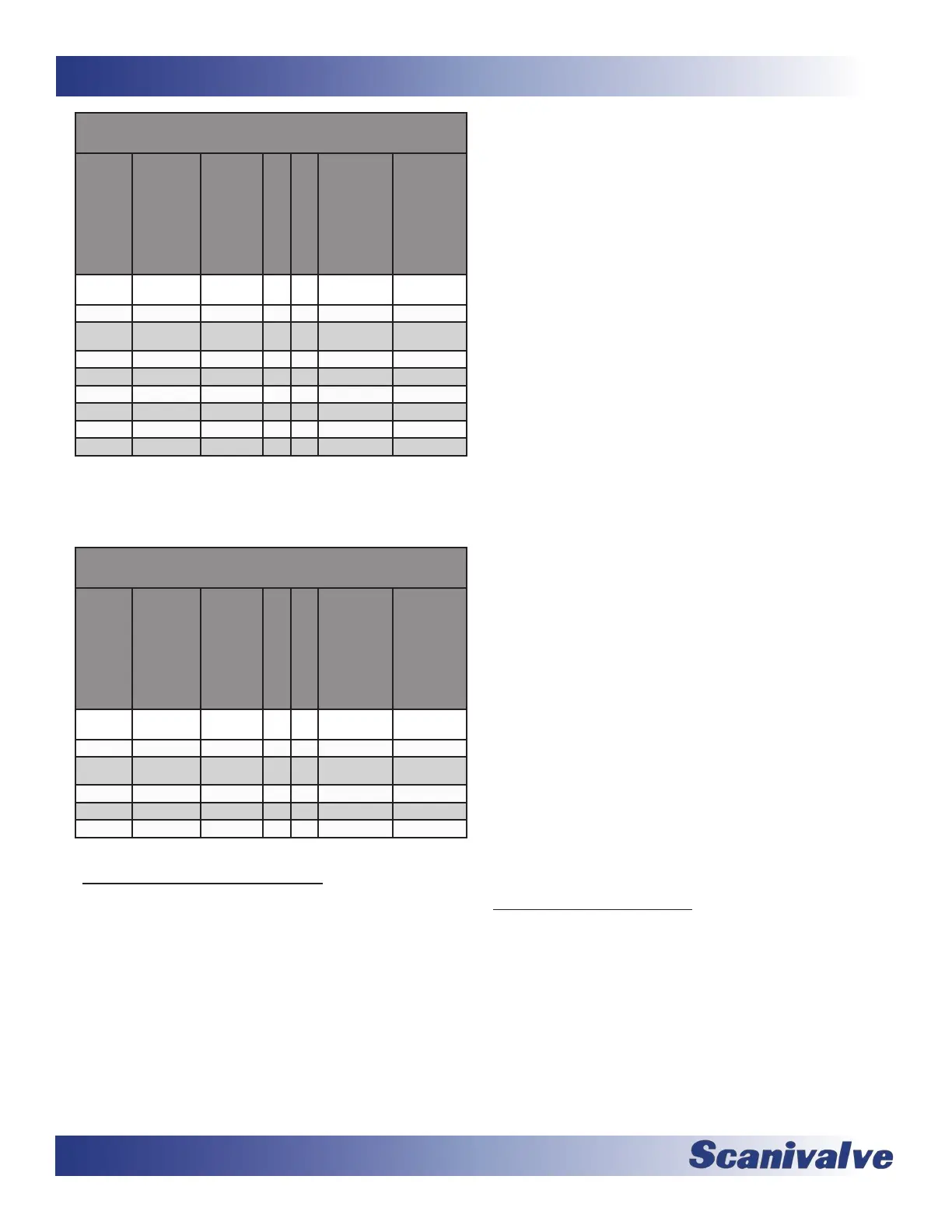
Two (2) MPS4200s congured with:
SST = 12:00:00, SSD = 2021/2/10, RATE = 1Hz
1588 Date
(hh:mm:ss)
1588 Time
(YYYY/MM/DD)
Event
MPS 1 Frame #
MPS 2 Frame #
MPS 1 PTP
Time Stamp
(seconds)
MPS 2 PTP
Time Stamp
(seconds)
11:59:55 2021/2/10
SCAN
to MPS 1
11:59:56 2021/2/10
11:59:57 2021/2/10
SCAN
to MPS 2
11:59:58 2021/2/10
11:59:59 2021/2/10
12:00:00 2021/2/10
12:00:01 2021/2/10 1 1 1612987201 1612987201
12:00:02 2021/2/10 2 2 1612987202 1612987202
12:00:03 2021/2/10 3 3 1612987203 1612987203
The following table describes a start scan me with two
MPS4200 units when SSD and SST are a me in the past.
Two (2) MPS4200s congured with:
SST = 12:00:00, SSD = 2021/2/10, RATE = 1Hz
1588 Date
(hh:mm:ss)
1588 Time
(YYYY/MM/DD)
Event
MPS 1 Frame #
MPS 2 Frame #
MPS 1 PTP
Time Stamp
(seconds)
MPS 2 PTP
Time Stamp
(seconds)
12:59:55 2021/2/10
SCAN
to MPS 1
12:59:56 2021/2/10 1 1612990796
12:59:57 2021/2/10
SCAN
to MPS 2
2 1612990797
12:59:58 2021/2/10 3 1 1612990798 1612990798
12:59:59 2021/2/10 4 2 1612990799 1612990799
1:00:00 2021/2/10 5 3 1612990800 1612990800
When working with mulple scanners, the operaon can
be greatly simplied by using the integrated “mulple
unit” architecture. When the desired units are congured
into “clusters” of modules, a single connecon can be
established to any one of the modules in the cluster. Once
this connecon is established, any of the “Mulple Unit”
commands can be sent to the master unit which will in turn
pass of the command to the other modules in the cluster.
This allows many units to be started scanning, stopped or
calibrated all at the same me from a single command sent
to a single MPS4200 unit.
The MPS4200 uses the network mulcast feature to estab-
lish a MPS4200 device cluster. In all cases the user connects
to one MPS. This device becomes the master device. This
master then passes the relevant commands on to the other
devices that are members of the device cluster. Each MPS
has the ability to be a master or slave.
The membership of a MPS4200 into a cluster is estab-
lished by seng the variable MCAST to the same mulcast
address. All MPS4200 devices with the same MCAST seng
become members of the same MPS4200 cluster. Note that
changing the MCAST variable requires a SAVE to be issued
to the unit and the MPS to be rebooted before the change
becomes eecve. Mulple clusters may exist on the same
network. Mulcast addresses are limited to the range from
224.0.0.0 through 239.255.255.255.
Once the MPS units have been congured to be included
in a cluster and a connecon has been established with the
“master” unit - issue the command:
MFIND
A list of MPS modules included in the cluster will be
returned. Review the list to ensure it in inclusive of all units
that are expected to be included in the cluster. Once this
has been veried, a scan on all units can be iniated with
the command:
MSCAN
If at any point the scan needs to be terminated, issue the
command:
MSTOP
These “mulple unit” commands that allow control of the
cluster of scanners.
Other mulcast commands accepted include calibraon
and validaon commands that can be used for mulple
unit eld calibraons or validaons. For more informaon
on eld calibraons and validaons, please see the “Field
Calibraon and Validaon” procedure.
Mulple MPS units are started scanning by connecng
to one MPS and issuing a MSCAN command. This device
becomes the master and reissues a mulcast SCAN
command. See the table below for the scan start packet
format. All devices that are set up to listen to this mulcast
address will respond to the SCAN command. The slave
devices must sll fulll the SSD and SST requirements for
starng a scan.



 To Next Page