MV-32/64 Multiviewer www.snellgroup.com Introduction
Issue 1 Rev 11 Page 9 © 2014 Snell Limited
2. Introduction
The MV-series multiviewers enable up to 64 channels of video to be viewed on a single
display device. However, each multiviewer has a pair of DVI-I outputs that may be
independently configured if required. The video inputs are auto-sensing for video sources,
see section 2.1.1 for details of the video input types supported by each card type.
Multi-definition standards up to 3G 1080p are supported. Comprehensive alarm functions,
audio metering and monitoring capabilities are also incorporated.
MV-32/MV-64 multiviewers are designed to optimize monitoring flexibility within the
multi-channel video environment, including video production, television broadcast, CCTV,
medical, aerospace, exhibition and conference applications. It is supplied in either single or
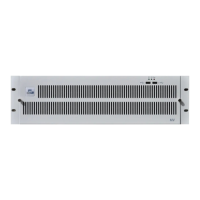
dual multiviewer configurations as a 3U rack mounting frame. The MV-32/MV-64 can be
connected to an optional external backup power supply (MV-Power). The MV-32/MV-64
multiviewers are easily controlled from a PC web browser hosted by the frame itself, either
directly via an Ethernet cable or over a network.
The MV-32/MV-64 multiviewers are can also be used as a multi-channel audio matrix,
de-embedder and analog to AES/EBU digital cross converter, depending on the I/O cards
fitted.
Various combinations of video/audio inputs can be configured. The maximum number of
audio outputs is 64 channels (using 2 x output boards). Any input may be routed to single or
multiple outputs.
2.1 System concept
The modular architecture is designed for scalability. Of the two 3U frame types available, the
single multiviewer frame (MV-64), is equipped with one controller (CPU), one Buffer card and
one power supply module (PSU). The dual multiviewer frame (MV-32) is centrally divided and
capable of housing two separate multiviewers, each with its own CPU and Buffer card. The
Buffer card generates the 5 Volt power and distributes it to the rear cards. The card also
buffers signals generated on the CPU (such as clocks, data and I
2
C) and distributes them to
the VIP cards and rears.
Each video input card handles 4 sources. The single MV-64 frame will accommodate up to 16
video cards, providing a maximum capacity of 64 video channels. The dual MV-32 frame
provides a maximum capacity of 32 video channels for each multiviewer (8 video cards per
side). The video cards include support for SDI embedded audio. If external audio interfacing
is required, audio input or output cards may be fitted. These will reduce the capacity available
for video cards in the MV-32 but the MV-64 has two dedicated audio slots in addition to
16 video/audio slots. A maximum of eight audio cards (any mix of input and output) can be
fitted in an MV-64 multiviewer.
The video input cards will simultaneously support sources of differing rate, for example, 50Hz
and 60Hz. However, synchronisation is achieved by frame add and drop rather than
standards conversion. The system rate is either locked to the reference signal provided or a
designated video input source.


 To Next Page