4
Note: The results for the last two pipettes pulled are available from the Menu screen. The
Heat-on Time for each line of program executed is recorded.
4.7.2 Notes on Program Operation
There is always the possibility that the puller will be given a set of values that ‘stall’ its
operation. For example, the HEAT value has not been set high enough to melt the glass, thus
the glass cannot be pulled and no VELOCITY can be achieved. If it appears that a situation
of this type has arisen, press the STOP key. This action aborts program execution and allows
editing to take place. The safe-heat mode (turned on) should prevent this event from
occurring.
All programs entered into memory (maximum of 100) remain there even after the power is
turned off or the RESET switch is pressed. Nevertheless, it is strongly suggested that you
keep a written record of your programs in case of unexpected difficulties.
4.8 Parameter Adjustment
4.8.1 General Information
Micropipette and microinjection needle programs are sufficiently different from patch pipette
programs that the following information on parameter adjustments has been divided into
three sections: Micropipette/microinjection needle fabrication, Patch pipette fabrication and
Technical Tips. Even if your research only requires one type of pipette, we recommend that
you read all three sections for full appreciation of the capabilities of the puller. Please note
that the programs referred to in the following text are not necessarily meant to pull
functional pipettes, but are intended as an exercise to help develop an understanding of the
programming process. Unless otherwise stated, parameter adjustments assume that the
puller is in the TIME mode of active cooling.
4.8.2 Micropipette/Microinjection Needle Fabrication
Consider the following programs using a 2.5 x 2.5 mm box filament:
Sharp Microelectrode Program using 1.0 x 0.5 mm borosilicate glass
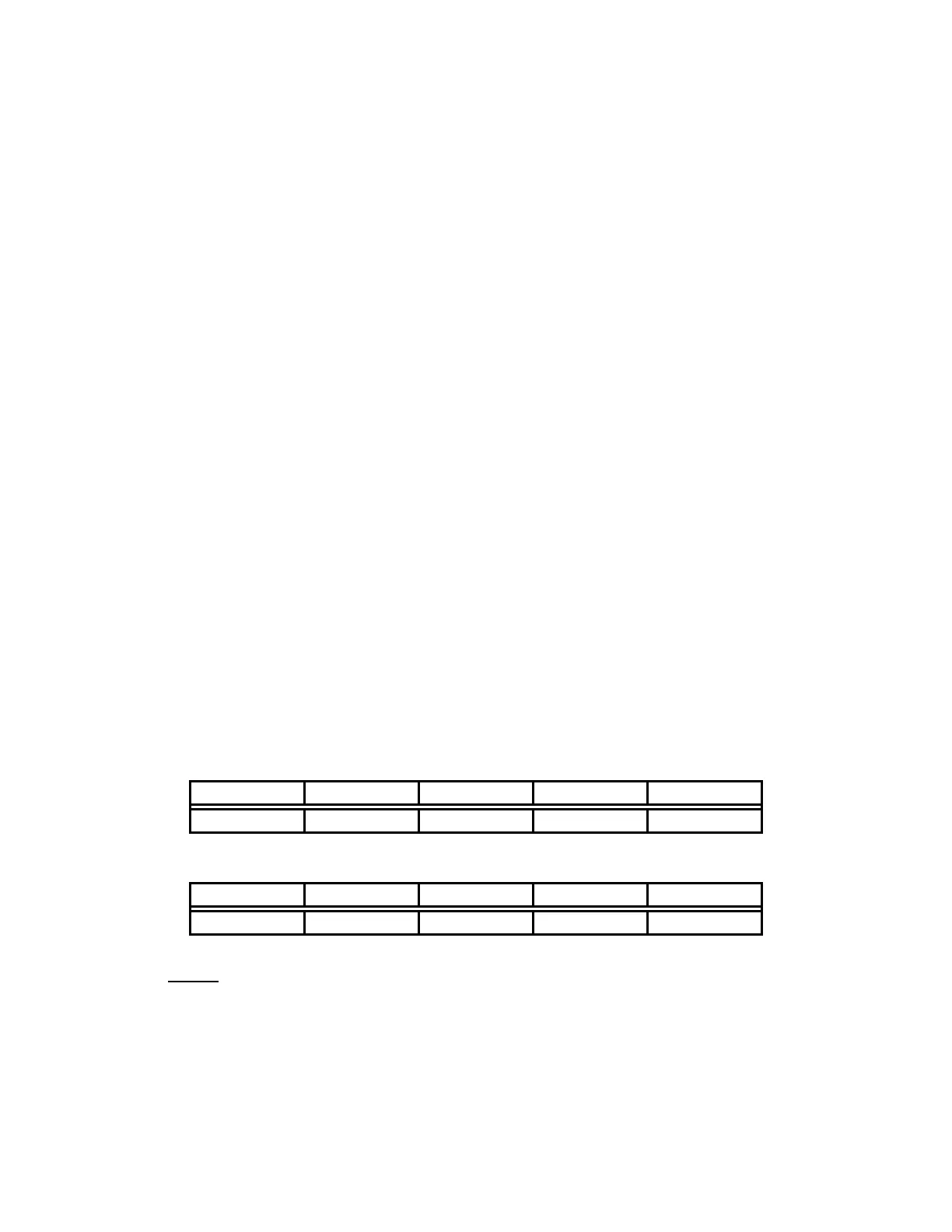
HEAT PULL VELOCITY TIME PRESSURE
Ramp 150 75 250 500
Microinjection Pipette Program using 1.0 x 0.78 mm borosilicate glass
HEAT PULL VELOCITY DELAY PRESSURE
Ramp 60 80 90 200
4.8.2.1 HEAT
The HEAT setting will affect the length and tip size of the pipette. In general, higher HEAT
settings tend to give longer and finer tips. For trough filaments, the recommended starting
HEAT value is the ramp test value plus 10%. For box filaments, the recommended starting
HEAT value is the ramp test value. The program listed above will typically have heat on for 5
to 8 seconds after the <PULL> button is pressed. If the time is longer than eight seconds,
and you are trying to pull a fine micropipette, increase the HEAT in 5 unit increments until
P-1000 FLAMING/BROWN MICROPIPETTE PULLER SYSTEM OPERATION MANUAL – REV. 3.02 (20161118)


 To Next Page