Care, Maintenance, and Tests
282
F.2.4 Clinical Considerations
The clinician should note that the use of static hold maneuvers may
distress the patient as it prolongs the inspiratory phase of the breath,
delaying exhalation. Active breathing during the hold manuever will
affect the measurement adversely by creating pressures not related to the
relaxed tissue properties of their respiratory system. It is therefore advised
that this maneuver be performed on a patient during sleep, or when the
patient is not conscious.
F.3 End Expiratory Hold
In order to allow the respiratory system pressure to equilibrate during the
expiratory phase, it is necessary to occlude the patient’s airway and allow
the lung pressure to equilibrate with the mouth pressure. To achieve this,
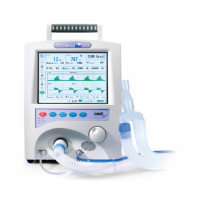
the iVent201 can perform an expiratory hold maneuver. The resultant
equalized pressure indicates the total amount of pressure that resides in
the alveoli that does not have time to empty between breaths. This is
known as intrinsic PEEP or auto PEEP . Clinicians utilize this
measurement to understand if they have set the proper I:E ratio for this
patient. It may be necessary to increase the time interval between breaths
in order to allow for more emptying.


 To Next Page