3-30 DHS-E Installation
The SMDR port baud rate is programmable from 110 to 19,200 BPS. Data Format is: 8 data
bits, 1 stop bit, No parity bit. Connection of the SMDR serial port to a computer for call
accounting is usually quite simple, since a straight-through cable will typically mate the
devices.
10. Connecting and Programming Caller ID
When Incoming Caller ID is to be used with the DHS-E it is necessary to use a caller ID box.
The caller ID box must be connected to the DHS-E system ICLID/PC Programming port
using the SP7081-00 Cable. The caller ID box collects data at each CO line to be used for
Incoming Caller ID and passes the data to the DHS-E system for processing. Each CO Line
Port on the DHS-E must be programmed for the associated caller ID box port in customer
database programming. The caller ID box supports eight CO Lines. The CO Line
programming parameter ICLID PORT# has been added to the DHS-E database
programming to facilitate this need. An example of this programming is. assume a CO
line is connected to the CO position 1 and to the caller ID box line position 1.
The caller ID box is connected to the DHS-E system via the ICLID/PC Programming port on
the Main Processor Board. Consequently, the PC Programming port cannot then be used
for PC-based remote programming and Incoming Caller ID data collection
simultaneously. When all hardware connections are complete, adjust the caller ID box
option switches for 1200 BPS operation. Program the DHS-E system PC Programming
port for 1200 BPS operation.
When installing Caller ID, the cable that connects from the KSU to the caller ID box must
be a standard null modem cable (DB9 male to DB9 male).
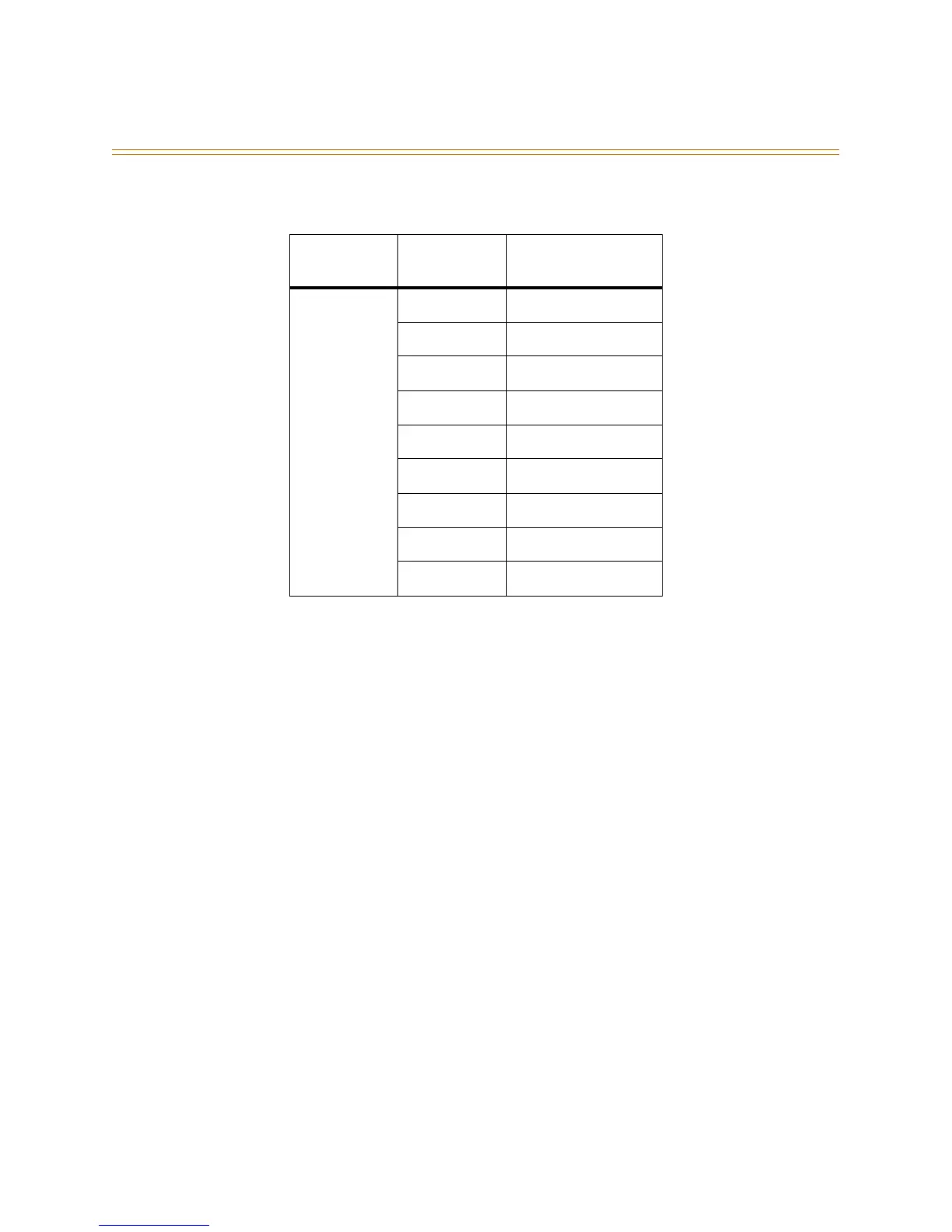
Table 3-14: RS-232C DB-9 Connector
DCE
Male
DB-9
Designation
K
S
U
1DCD
2RX
3TX
4DTR
5GND
6DSR
7RTS
8CTS
9RI


 To Next Page