Section B Messages and Hints
B-20
Level of the message
buffer for reacquisition
after overflow This number defines the nominal level of the message list after an over-
flow. After an overflow has occurred, entries in the message list are de-
leted in accordance with a positive-displacement algorithm. This is re-
peated until the level within the message list corresponds to the value
stated here.
The positive-displacement algorithm is composed of the following steps:
1) Deletion of hint messages.
2) Deletion of active, acknowledged messages. First the oldest message
is deleted and then more recent messages are deleted consecutively.
Deletion begins with priority level 4 and continues consecutively to
priority level 0.
3) Deletion of the oldest inactive, unacknowledged message. Otherwise
thesameas2).
4) Deletion of the oldest active, unacknowledged message. Otherwise
thesameas2).
B 5.1 Tab Display
Message list
Display of Selecting Value or Long text specifies the output format of a message in
the message list at the control station.
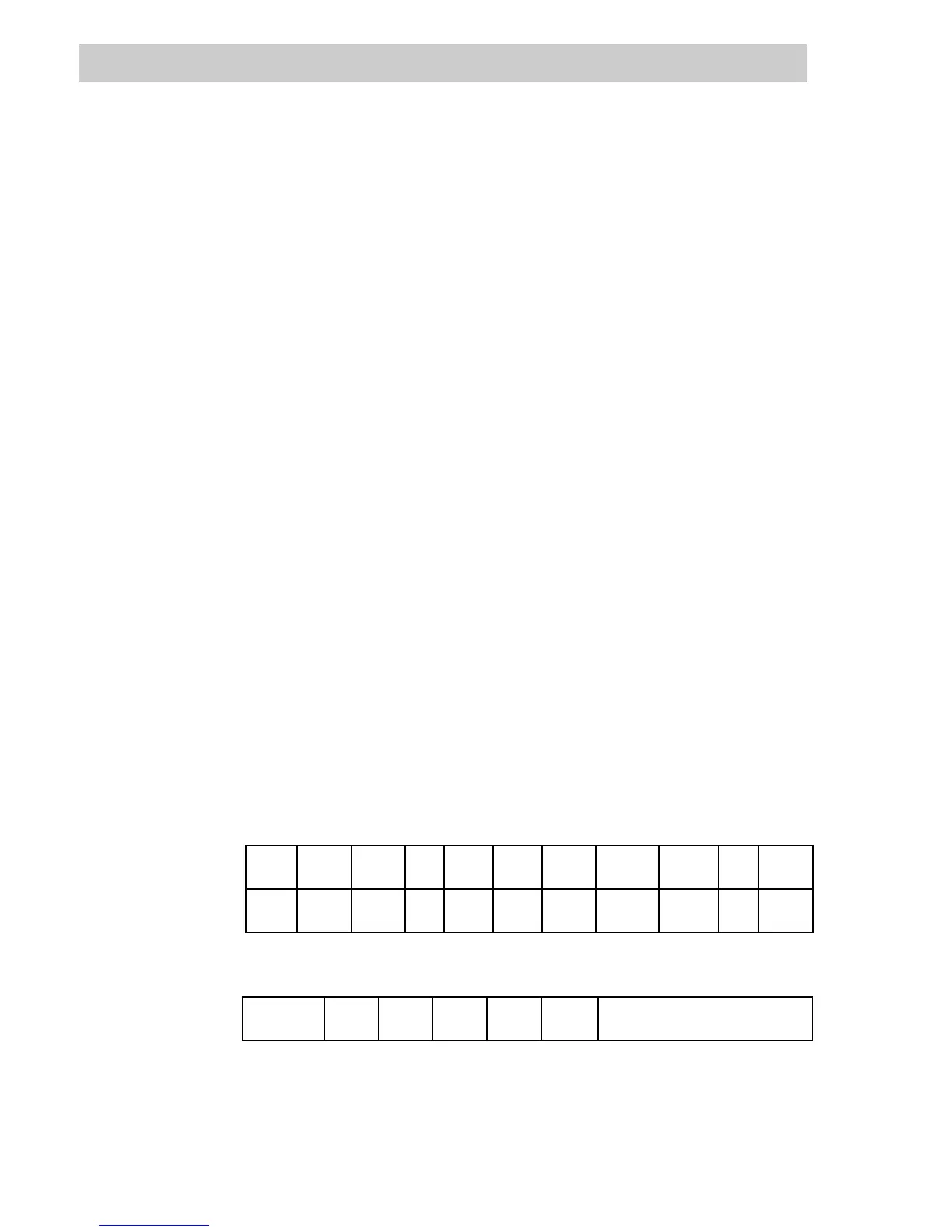
Formats A choice of two display formats is available for fault and switch messages:
Value
Sound Priority Time Plant
area
Tag
name
S-Text ST-Text M-value,
Dim.
Type Date
Long
Sound Priority Time Plant
area
Tag
name
S-Text L-Text ST-Text Date
System messages have a fixed display format
System
message
Sound Group Time Plant
area
Tag
name
Fault text
Abbreviations:
Sound Label identifying messages connected with a configured sound file. For
system messages this field is empty.
Gross Automation, 1725 South Johnson Road, New Berlin, WI 53146, www.ssacsales.com, 800-349-5827



 To Next Page