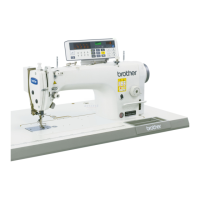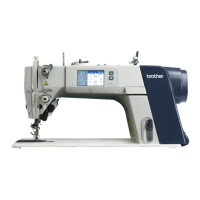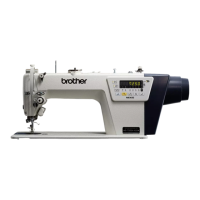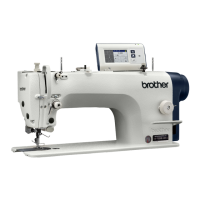
What to do if my Brother S-710A's stitch number display is flashing?
- TTimothy ClaySep 10, 2025
If the stitch number display on the operation panel is flashing, it indicates a problem with the control box. Replace the control box.
What to do if my Brother S-710A's stitch number display is flashing?
If the stitch number display on the operation panel is flashing, it indicates a problem with the control box. Replace the control box.
What to do if the Brother Sewing Machine starts operating before the presser foot is lowered?
If the sewing machine starts operating before the presser foot is lowered (solenoid-type presser lifter specifications), set DIP switch 2 inside the control box to ON.
Why is there a large degree of puckering on my Brother S-710A?
Excessive puckering may occur if the upper or lower thread tension is too strong; make them as weak as possible. The thread tension spring tensions may also be too strong; weaken them. If the thread tension spring operating range is too large, lower its position as much as possible. Adjust the presser foot pressure if it's too strong. Reduce the sewing speed if it's too fast. Tilt the front of the feed dog down slightly if its angle is incorrect.
Why does my Brother Sewing Machine have skipped stitches at the start?
Skipped stitches at the start may occur if the thread tension spring tensions are too strong; reduce the tension. If the thread tension spring operating range is too large, lower its position. Adjust the pretension if the trailing lengths of the upper threads are too short after thread trimming. Sharpen the fixed knives or replace them if the threads aren't being trimmed cleanly. Try a needle with a count that is one lower if the needle is too wide. Replace the stopper spring in the bobbin case if the length of thread trailing out from the bobbin case is too short after thread trimming and the bobbin is spinning loosely. Use the slow start feature if the sewing speed is too fast at the sewing start. Adjust the synchronizer if the needle up stop position is too high.
How to troubleshoot a Brother Sewing Machine when the lower thread is tangled at the start?
If the lower thread is tangling at the sewing start, ensure the bobbin spins in the opposite direction to the rotary hook when the lower thread is pulled. Make sure the bobbin winding amount is not more than 80%. Attach the free spinning prevention spring. Replace the bobbin if it is not turning smoothly. Use only bobbins specified by Brother.
What to do if my Brother Sewing Machine has uneven seams?
If you're experiencing uneven seams, it might be because the presser foot pressure is too weak, so adjust it. Another cause may be that the feed dog is too low, so adjust its height. Also, check the bobbin for scratches; if it's damaged, smooth it with an oiled grindstone or replace it.
What to do if the oil gauge is not visible in the oil sight glass of my Brother Sewing Machine?
If the oil gauge is not visible in the oil sight glass, fill the oil tank with oil. Check the rotary hook lubrication amount, and adjust the rotary hook lubrication adjusting screw if it is too loose. Replace the oil gauge if it is damaged.
What to do if my Brother S-710A Sewing Machine stops during sewing?
If the machine stops during sewing, check the power supply voltage to ensure it is sufficient.
What to do if my Brother Sewing Machine motor doesn't operate smoothly or makes abnormal noises?
If the motor doesn't operate smoothly or makes an abnormal noise, it indicates a problem with the speed sensor. Replace the motor.
What to do if my Brother S-710A Sewing Machine does not operate when power is on?
If the machine doesn't operate when powered on and the treadle is pressed, ensure the power supply connector is securely connected to the control box. Check the power plug wiring and voltage. Verify that DIP switch No. 8 inside the control box is set to OFF. Also, confirm that the treadle unit connector inside the control box is securely connected.
Explains the meaning of DANGER, CAUTION, and symbols used for safety.
Provides important safety notes regarding environmental requirements and installation.
Identifies and explains warning labels found on the sewing machine.
Explains the purpose and connection of the ground symbol.
Details specifications for the sewing machine head, including models and features.
Lists the available operation panels and their part codes.
Catalogs optional parts with part names and codes for various machine configurations.
Covers machine setup location, carrying, tilting, and returning the head.
Explains the components and operation of the upper shaft and needle bar system.
Describes the lower shaft, rotary hook, and related components.
Details the vertical and horizontal movement of the feed bar.
Explains the operation of the quick reverse stitching mechanism.
Describes the lubrication system for the thread take-up lever and rotary hook.
Explains the operation of the thread trimmer mechanism.
Details the process of trimming both upper and lower threads.
Describes the mechanism for releasing thread tension.
Explains the operation of the thread wiper.
Details the presser foot lifting mechanism, often including options.
Explains how the lower thread detection system works.
Instructions for disassembling the bed cover and safety switch.
Details the disconnection and identification of various connectors.
Steps for disassembling the solenoid-type presser lifter.
Instructions for removing the lower thread detector.
Steps for disassembling covers and the operation panel.
Procedures for removing tension release wire, ground wire, and trimmer solenoid.
Instructions for disassembling wick holder and oil tube.
Steps for removing the oil tank, bed under cover, and sub tank.
Details how to remove the quick reverse solenoid.
Instructions for disassembling the needle, presser foot, and reverse actuator.
Steps for disassembling the thread tension mechanism.
Instructions for removing the needle plate and feed dog.
Steps for disassembling these complex parts.
Instructions for disassembling the feed bar mechanism.
Details on removing the feed rocker shaft.
Steps for disassembling the presser foot mechanism.
Instructions for disassembling the knee lifter lever mechanism.
Steps for disassembling the needle bar and thread take-up mechanism.
Instructions for removing the pulley and motor.
Details on removing the timing belt.
Steps for disassembling the spring and feed regulator.
Instructions for disassembling these shaft and gear components.
Steps for removing plunger, rotary hook shaft, gear, and trimmer cam.
Instructions for disassembling the stitch length dial.
Details for removing the reverse stitching lever and feed regulator.
Instructions for assembling stitch length dial, reverse lever, and feed regulator.
Steps for assembling rotary hook shaft, trimmer cam, and gear.
Instructions for assembling the plunger.
Details for assembling these shaft and gear components.
Steps for assembling the timing belt, motor, and pulley.
Instructions for assembling the knee lifter lever mechanism.
Steps for assembling the needle bar and thread take-up mechanism.
Instructions for assembling the presser foot mechanism.
Details for assembling the feed rocker shaft.
Instructions for assembling the spring.
Steps for assembling the feed bar mechanism.
Instructions for assembling lubrication system components.
Steps for assembling the thread tension mechanism.
Instructions for oiling the feed rocker shaft.
Steps for assembling the thread trimming mechanism.
Steps for adjusting the timing between the needle and feed mechanism.
Instructions for installing the thread trimming knives.
Details for adjusting the thread trimmer timing.
Steps for assembling and adjusting the rotary hook and bobbin case holder.
Instructions for assembling the ruler plate and needle plate.
Steps for assembling the reverse actuator and presser foot.
Details for adjusting the presser foot height.
Instructions for adjusting the thread guide height.
Steps for adjusting the vertical position of the tension spring.
Details for adjusting the forward/back position of the thread tension bracket.
Instructions for assembling the tension release wire.
Steps for assembling the quick reverse solenoid.
Instructions for installing the bed under cover and lubricating the gear box.
Steps for assembling the oil tank and related tubes.
Instructions for assembling the tension release wire.
Steps for connecting the ground wire.
Instructions for installing the operation panel.
Steps for installing the face plate and thread take-up cover.
Instructions for installing the safety switch.
Steps for assembling covers and the bobbin winder tension.
Instructions for connecting various wires and connectors.
Details the procedure for lubricating machine components.
Steps for installing the bed cover and knee lifter lever.
Guides for performing a test operation of the machine.
Instructions for adjusting the safety switch position for proper operation.
Covers adjusting thread tension spring position and tension.
Instructions for adjusting the position of the arm thread guide.
Steps for adjusting the presser foot height.
Details on adjusting the feed dog height.
Instructions for adjusting the feed dog angle.
Steps for adjusting the needle bar height.
Details on adjusting the timing between needle and feed.
Instructions for adjusting the timing between needle and rotary hook.
Details on adjusting the quick reverse mechanism.
Procedure to match stitch lengths for normal and reverse feed.
Instructions for adjusting the synchronizer and needle stop position.
Details on adjusting the tension release wire for proper thread trimming.
Details adjusting treadle pressure, return pressure, and stroke.
Instructions for adjusting rotary hook lubrication amount.
Explains how the control system operates based on treadle input.
Step-by-step guide for removing and installing the control box.
Details on control box specifications, serial numbers, and compliance.
Details on motor types, serial numbers, and part codes.
Identifies parts and their functions on the control circuit board.
Explains the function of connectors, fuses, terminal board, DIP switch, etc.
Explains the functions of DIP switches for machine operation settings.
Provides flowcharts and details for setting machine parameters.
Lists and describes various machine parameters and their ranges.
Lists and explains the functions of various memory switches.
Describes the two types of treadle units and their differences.
Lists standard setting values for treadle units G and H.
Step-by-step guide for setting treadle depression strokes.
Instructions for installing the foot plug set if not originally equipped.
Details the connectors for the standing operation pedal.
Explains the timing of puller operation relative to sewing.
Provides information on the puller connector assembly and part codes.
Instructions for securing the puller cord.
Explains the timing signals for the auto bobbin changer.
Provides information on the bobbin changer connector and part codes.
Instructions for securing the bobbin changer cord.
Lists and defines various speed settings available for the machine.
Step-by-step guide for setting machine speeds using the operation panel.
Procedures for verifying the set machine speeds.
Explains methods for clearing memory data and confirming the process.
Instructions for checking motor resistance for normal operation.
Guide for measuring power supply voltage against specifications.
Resistance checks for solenoids in the machine head.
Resistance checks for the presser lifter solenoid.
Resistance check for the lower thread detector solenoid.
Diagrams showing control circuit board layout, components, and schematics.
Diagrams for power supply circuit boards for different models and voltages.
Diagrams for power supply circuit boards for DD7100 models.
Diagrams showing transformer connections and types.
Diagrams for B-40 operation panel and its circuitry.
Diagrams for B-100 operation panel and its circuitry.
Lists common sewing problems, their causes, and solutions.
Explains error codes displayed on the operation panel and their troubleshooting steps.
| Brand | Brother |
|---|---|
| Model | S-710A |
| Category | Sewing Machine |
| Language | English |