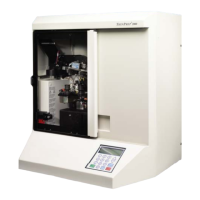
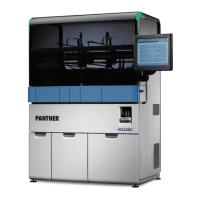
ThinPrep™ 5000 Processor with AutoLoader Operator’s Manual
4.5
GYNECOLOGIC SAMPLE PREPARATION
SPECIAL PRECAUTIONS
PreservCyt
™
Solution
For more information on PreservCyt Solution, refer to Chapter 3, PreservCyt™ & CytoLyt™
Solutions
.
Interfering Substances
The Clinical and Laboratory Standard Institute Guidelines (formerly NCCLS) recommend that no
lubricant be used during Pap testing.
1
ACOG recommends that care be taken not to contaminate the specimen with lubricant because this
may lead to unsatisfactory results.
2
This applies to both conventional Pap testing and liquid based
cytology.
If you are using a plastic speculum, or in instances where a lubricant must be used, take care not to
contaminate the cervix or collection devices with the lubricant. A tiny amount of lubricant may be used,
just enough to sparingly coat the speculum with a gloved finger, avoiding the tip of the speculum.
The Clinical and Laboratory Standard Institute Guidelines and ACOG recommend that you not take
a Pap during menses.
1-2
For samples to be processed on the ThinPrep 5000 processor, lubricants can adhere to the filter
membrane and may cause poor cell transfer to the slide. If its use is unavoidable, the lubricant
should be used in minimum amounts.
Handling/Disposal
Handle all chemical-containing materials carefully in accordance with safe laboratory practices. When
required by reagent composition, additional precautions are marked on the reagent containers.
After sample transfer to the PreservCyt Solution vial, the sample
should stand for at least 15 minutes before processing.
1. Papanicolaou Technique Approved Guidelines (CLSI Document GP15-A3, third edition,
2008)
2. ACOG Practice Bulletin, no. 45, August 2003


 To Next Page