L-DALI User Manual 263 LOYTEC
Version 5.2 LOYTEC electronics GmbH
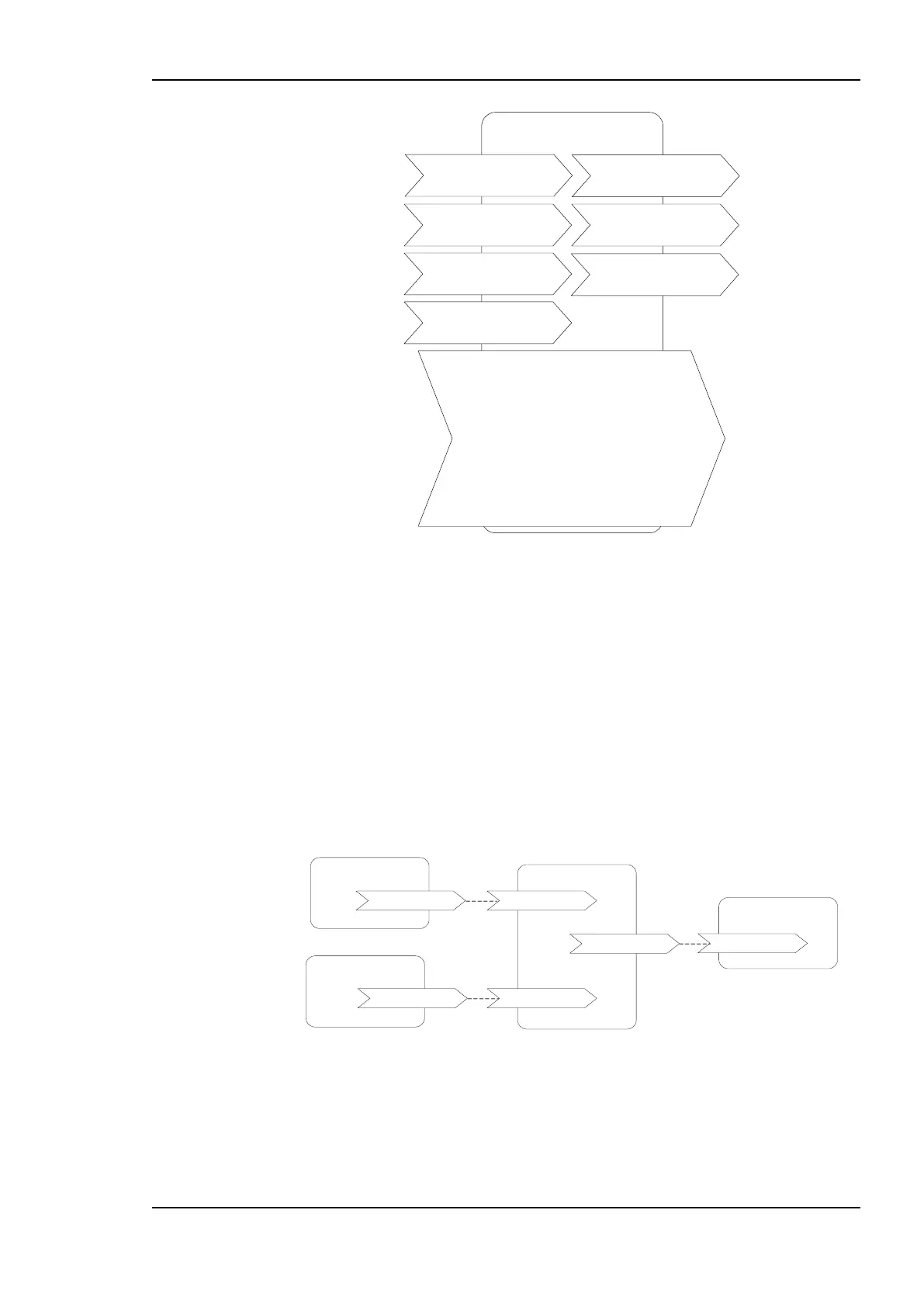
Constant Light Controller
#3050
nviLuxLevel
SNVT_lux
nvoLampValue
SNVT_switch
nviCLSetting
SNVT_setting
nvoLamp2Value
SNVT_switch
nciCLMode nciHoldTime
nciLuxSetpoint nciPrimeVal
nciLocation nciUnoccupiedLevel
nciLuxUpperLimit nciIgnoreTime
nciLamp2Offset nciMinSendTime
nciLamp2Limit nciMaxSendTime
nciStep nciMaxRcvTime
nciOnHysteresis nciArtificialLight
nciOffHysteresis nciGain
nciCLOnDelay nciSblndHyst
nciCLOffDelay nciDimCurve
nviCLOverride
SNVT_switch
nviOccup
SNVT_occupancy
nvoCLAutoMode
SNVT_switch
Figure 218: Constant Light Controller Object
This object type is enabled in the default interface. It can be disabled.
8.2.8.1 Interaction with other LONMARK Objects
To minimize the number of bindings that have to be created the constant light controller
uses default connections to the local light sensor, occupancy sensor, and group objects in
case no “real” bindings are done. This function is referred to as Automatic Internal
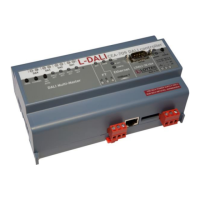
Bindings. Figure 219 shows these default connections of the constant light controller
object. Per default the constant light controller with index X controls the group object with
index X. The current lux level is received from the light sensor object with index X and the
occupancy state is received from the occupancy sensor X. The default connections can be
changed by creating bindings with the network management tool. A detailed description
under which conditions the default connections apply is given in Table 22.
Occupancy Sensor X
Light Sensor X
Constant Light Controller X
nvoLampValue
SNVT_switch
nviLuxLevel
SNVT_lux
nviOccup
SNVT_occupied
Group Object X
nviGPValue
SNVT_switch
nvoLuxLevel
SNVT_lux
nvoOccup
SNVT_occupied
Figure 219: Default Connections to other LONMARK Objects
Per default automatic bindings are enabled. They can be disabled using the LINX
Configurator software (see Section 7.16.2) or the Web-Interface (see Section 5.3.2).


 To Next Page